East Madeira in a Day: Ponta de São Lourenço, Machico and Caniçal
What does a day trip to east Madeira cover?
Most east-coast days combine the Ponta de São Lourenço trail (PR8), a stop in Machico, and Caniçal's Whale Museum, and can be done by hire car, taxi, bus or organised tour in around eight hours. The peninsula walk is the main event: bring water, a hat and sun protection even for a short stretch, since there is no shade at all.
A different island by the time you reach the tip
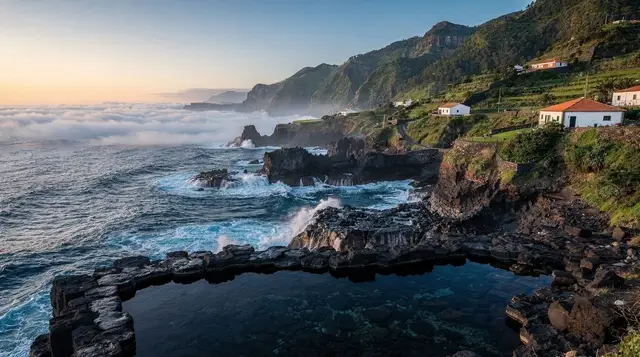
Most first-time visitors picture Madeira as green: laurel forest, terraced hillsides, levadas dripping under tree cover. Drive east from Funchal for forty minutes and that picture stops making sense. The land dries out, the vegetation drops to scrub, and the coastline turns red, ochre and black where old volcanic cones have been cut open by the sea. This is the Ponta de São Lourenço, the narrow peninsula at Madeira’s eastern tip, and it is the reason most people build a day around this stretch of coast.
A sensible east-coast day links three things: the walk out onto the peninsula itself, a stop in Machico, the town where Portuguese sailors first landed on Madeira in 1419, and Caniçal, a former whaling port that now runs a museum about the animals it used to hunt. None of the three needs more than a few hours, which is exactly why they work well stacked into one day rather than spread across three.
This page is the itinerary layer. For the walking route itself, trail markers and turnaround points, use the dedicated Ponta de São Lourenço things-to-do guide; for Machico’s history and beach, see the Machico destination page; and for the whaling story and museum practicalities, see the Whale Museum and Caniçal guide.
Ponta de São Lourenço: the walk that anchors the day
The peninsula is walked on PR8, an official numbered trail that runs roughly 8 km there and back from the car park near Baía d’Abra to the final viewpoint above Ilhéu de Ponta de São Lourenço. Most people take three to four hours out and back, including stops, though a fit walker moving briskly can do it faster. There is a shorter option too: the first kilometre or so to the initial viewpoint is flat and takes under an hour round trip, and plenty of visitors treat that as the whole visit.
What makes PR8 different from Madeira’s laurel-forest trails is that it is entirely exposed. There is no tree cover anywhere on the peninsula, the path runs along a narrow spine of land with the Atlantic on both sides, and wind funnels straight down it with nothing to break it. That combination is easy to underestimate precisely because the walk looks short on a map and easy on the elevation profile. It is not a levada with a gentle gradient and shade; it is a coastal ridge walk in full sun and full wind, and treating it that way changes what you pack.
Bring more water than feels necessary, a hat that will not blow off, sunscreen reapplied partway through, and proper shoes rather than sandals — the surface turns to loose volcanic gravel in places, and the drop either side is real. A short walk on paper is still a walk with zero shelter from midday sun, and that is the single most common thing people get wrong when planning this stretch.
For the fee, timing and full turn-by-turn detail, the dedicated Ponta de São Lourenço guide and the island-wide hiking permits and trail fees guide cover what to book before arriving — PR8 is an official PR-numbered trail, and Madeira’s paid-trail system, in place since August 2021, applies here exactly as it does on the levadas further north.
Those who want the geology explained rather than just admired can join a guided walk that reads the landscape properly.
a guided walk across the Ponta de São Lourenço peninsula puts a local guide alongside you on the exposed section, which also solves the shade-and-water problem by pacing the walk sensibly and carrying supplies.
For visitors more interested in why the rock looks the way it does than in the walk itself, a tour built around the island’s volcanic history covers the same ground with a different focus.
a geology-focused tour explaining the island’s volcanic origins spends time on the exposed red and ochre cliffs of the peninsula specifically, which is the clearest single place on Madeira to see the island’s origins laid bare.
Machico: where the story of Madeira actually begins
Machico sits at the base of the peninsula, roughly fifteen minutes’ drive back towards Funchal, and it is where João Gonçalves Zarco and Tristão Vaz Teixeira first came ashore in 1419, a year after their initial landing on Porto Santo. The town keeps that history visible without overplaying it: a small fort, a parish church from the early colonial period, and a waterfront that has since become a straightforward beach stop.
That beach is worth understanding before arriving. Machico’s gold sand was not always there — it was imported and laid down in 2008 to create a swimmable beach where the natural shoreline was mostly rock and shingle. It works well as a lunch-stop swim, and the water is calm because the bay is sheltered, but it is worth knowing it is not a natural formation, since Madeira’s east coast otherwise looks nothing like it. The Machico destination page and Machico beach page have the practical detail on facilities and access.
Machico also makes a sensible lunch stop between the peninsula walk and Caniçal, since it has more restaurant choice than either of its neighbours. A window seat with a view back towards the airport runway is a common and easy request, since Madeira’s airport sits just along the coast at Santa Cruz, close enough that landing aircraft are visible from town on a clear day.
Caniçal and the Whale Museum
Caniçal, a further ten minutes east, was Madeira’s last active whaling port, and the island did not stop hunting whales until 1981 — recent enough that people who worked the boats are still, in places, remembered by name locally. The Museu da Baleia sits in the old port area and covers that history directly: harpoons, boats, and the switch from hunting to protecting the same animals the port once killed. It is a compact museum, generally an hour or so, and it pairs naturally with the marine life visible from Madeira’s waters today rather than sitting apart from it.
Caniçal itself is modest — a working harbour, a handful of simple seafood restaurants, not much built for tourism beyond the museum — which is part of its appeal after a morning on an exposed trail and a beach stop. The Whale Museum and Caniçal guide covers opening hours and what the museum actually contains in more depth than fits here.
Travellers who want the whale-and-dolphin story told on the water rather than in a museum case have that option too, on trips that run from ports along this coast.
an east-island tour that pairs the coastal scenery with a rum tasting is a way to see Machico and Caniçal alongside a stop at one of the sugar-cane rum producers the east is known for, with someone else driving.
Building the day: order, timing, transport
The peninsula is the part of the day with the narrowest good window. Heat and glare build through the middle of the day on a shadeless trail, and the car park at Baía d’Abra fills by mid-morning in high season. Starting there first, before either town, uses the cooler part of the day for the only genuinely strenuous stretch and leaves Machico and Caniçal, both of which have shade and shelter, for the warmer hours.
| Stop | Typical time needed | Best timing |
|---|---|---|
| Ponta de São Lourenço (PR8) | 2–4 hours | Early morning, before 10:00 |
| Machico | 1.5–2 hours (with lunch) | Late morning to early afternoon |
| Caniçal / Whale Museum | 1–1.5 hours | Early to mid afternoon |
That order also matches the geography: driving from Funchal, the peninsula car park is the furthest point, so it makes sense to go there directly and work back towards the city through Caniçal and Machico, rather than doubling back.
A hire car gives the most control over this schedule, particularly the early peninsula start, and driving in Madeira on this route is straightforward compared with the island’s mountain roads — the coastal stretch out to the east is mostly fast and well-surfaced. See the car rental guide for booking notes. Buses reach Machico and Caniçal from Funchal but do not serve the Ponta de São Lourenço trailhead directly, which makes public transport a poor fit for this particular day unless walking the last stretch to the car park is acceptable. A taxi or private transfer solves that gap at a price, and organised tours solve it by design.
For a version of the day with no logistics to plan at all, a full tour covering the peninsula, Machico and Caniçal together removes the timing decisions entirely.
a full east Madeira tour covering the peninsula, Machico and Caniçal in one trip follows broadly the same order used above, with a guide setting the pace on the exposed section.
Those who would rather drive themselves but still want the sense-of-occasion of an open car have another option specific to this coast.
a self-drive cabriolet road trip along the east coast covers the same roads at a driver’s own pace, with the top down for the coastal stretches between Machico and the peninsula.
What to bring, specifically
Given how often the exposure on this route catches people out, it is worth being precise rather than general:
- Water: more than for an equivalent inland walk — there is nowhere to refill and no shade to rest in.
- Sun protection: hat, sunscreen, and sunglasses; reapply sunscreen partway if the walk runs long.
- Wind layer: a light windproof jacket, since the peninsula channels wind even on calm days elsewhere on the island.
- Footwear: closed shoes with grip — the path surface is loose volcanic gravel in stretches, not paved.
- Cash and a printed or downloaded trail permit, since the Ponta de São Lourenço fee is checked on the trail and mobile signal is patchy at the far end of the peninsula.
None of this is unusual gear for Madeira generally, but it is easy to leave the sun hat and extra water behind on a day that also involves a beach and a museum, on the assumption the walk is “short.” The walk is short; the exposure on it is not.
The mistake worth repeating
If there is one thing to take from planning this specific day, it is this: Ponta de São Lourenço looks, on a map and in most photographs, like a gentle coastal stroll, and for the first stretch it is. Further out, the path narrows, drops away on both sides without barriers, and offers no shade or shelter at any point along its length. Treating an 8 km round trip as a minor add-on to a beach-and-museum day, rather than as the main physical activity of the day, is the single most common planning mistake for this route — and the easiest one to avoid, since the fix is simply carrying enough water and sun protection from the start.
Frequently asked: planning an east Madeira day trip
How long does the Ponta de São Lourenço walk take?
The full out-and-back trail runs about 8 km and takes most walkers three to four hours at an easy pace, including stops for photos. A shorter version to the first viewpoint and back takes under an hour if time is tight.
Do I need to pay for the Ponta de São Lourenço trail?
Yes. It is an official PR trail, and since 1 August 2021 Madeira’s PR-numbered paths have charged a small per-person, per-day fee, reserved online in advance and checked on site. Treat it as a fixed cost of the day, not an optional extra.
Is the walk suitable for young children or anyone with limited mobility?
The first stretch to the main viewpoint is flat and manageable for most families, but the path narrows and drops away sharply further out, with no barriers in places. Turning back early is a completely normal choice here, not a compromise.
Can I visit east Madeira without a hire car?
Yes, buses run from Funchal to Machico and Caniçal, and organised day tours cover the full loop with a driver. A car simply gives more control over timing, particularly for reaching the Ponta de São Lourenço car park before the mid-morning rush.
Is Machico’s beach natural sand?
No. Machico’s golden sand was imported and laid down in 2008 to create a beach where the original coastline was mostly rock and shingle. It is pleasant to swim from, but it is not a natural formation.
What is there to do in Caniçal besides the Whale Museum?
Caniçal keeps a working fishing-port feel, with a small harbour, modest seafood restaurants and not much tourist infrastructure beyond the museum. It suits an hour’s stop rather than a full afternoon.
What should I pack for this specific route?
Water, a hat, sunscreen and sturdy shoes are the non-negotiables, since the peninsula has zero shade and can be exposed to strong wind. A light waterproof is worth carrying too, as the east coast weather can turn faster than the forecast suggests.
Day trips to Porto Santo on GetYourGuide
Verified deep-linked GetYourGuide tours. Book through these links and we earn a small commission at no cost to you.
GetYourGuide does not provide a product photo for this activity — the image shows the meeting point, photographed by us.