An Island Built Around One Beach
Porto Santo is the smaller, flatter, drier sibling in the Madeira archipelago, and it earns its reputation on a single fact: its beach is the only stretch of natural sand in the whole group. Nine kilometres of gold run almost unbroken along the south coast, backed by low dunes and a scatter of low-rise hotels rather than the cliffs and cane terraces of Madeira. Everything else on the island — Vila Baleira’s quiet old town, a scatter of volcanic hills, a scrubby, semi-arid interior — sits in the shadow of that beach, and most visitors plan their time around it rather than around a checklist of sights.
The island sits about 43km north-east of Madeira, reached from Funchal either by a Porto Santo Line ferry of roughly 2h15 or by a flight of about 15 minutes from Madeira Airport. Those two options are not interchangeable in reliability. The ferry is the cheaper, more scenic and more romantic way to arrive, but it is genuinely weather-dependent: Atlantic swell cancels sailings with some regularity in winter, and occasionally in spring and autumn too. Never plan a trip — and especially never plan a same-day return — assuming the ferry will run. The flight is short, frequent enough, and the sensible back-up whenever the sea forecast looks doubtful.
Getting There: Ferry or Flight
The ferry crossing departs from Funchal’s marina area and takes around 2h15 in normal conditions, with one or two rotations a day depending on the season — more sailings in summer, fewer in winter, and occasional full cancellations when the swell is up. It is a genuine sea crossing across open Atlantic water, not a sheltered hop, and passengers prone to seasickness should come prepared. Buying tickets a day or two ahead in high season is worth doing, since sailings do sell out.
The flight takes about 15 minutes gate to gate and operates several times daily. It costs more than the ferry but removes the weather risk almost entirely, which makes it the better choice for anyone doing Porto Santo as a tight day trip rather than an overnight stay. A workable rule for planning: if your schedule cannot absorb a cancelled sailing, fly one way at least.
| Option | Duration | Frequency | Reliability |
|---|---|---|---|
| Ferry | About 2h15 | 1-2 sailings daily, seasonal | Cancels in swell, especially winter |
| Flight | About 15 minutes | Several times daily | Rarely affected by weather |
Once on the island, distances are short enough to cover on foot from Vila Baleira for a beach-only stay, but a rental car or a guided tour opens up the interior — the hills, the viewpoints and the quieter western coast — in a way walking cannot.
The Beach
The beach itself needs little introduction beyond its length: nine kilometres of continuous golden sand running along the entire south side of the island, from close to the airport in the east past Vila Baleira and on towards the western end. It is wide, gently shelving and largely undeveloped compared with mainstream Atlantic resort beaches — a handful of beach bars and sunbed concessions near town, then long open stretches further out where the crowds thin fast.
Locally the sand is promoted for its therapeutic properties — the areia terapeutica claim, based on its fine grain and mineral content — and a modest wellness-tourism trade has grown up around it, with some hotels offering sand treatments. Whatever the medical merits, the practical appeal is simpler: this is the only place in the archipelago where families can rely on a proper natural sandy beach rather than the volcanic shingle and imported sand found around Madeira, at spots like Machico’s beach or Calheta’s.
Vila Baleira
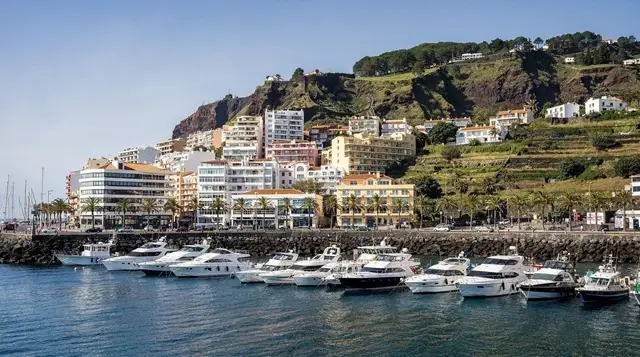
Vila Baleira, the island’s capital, is a low, whitewashed town built around a compact grid of streets a short walk back from the beach. It has the feel of a place that has not been rebuilt for tourism so much as gently accommodated it — pastel houses, a modest central square, and a handful of cafés that fill with locals as much as visitors.
Among its sights, the Casa Colombo stands out, the house associated with Christopher Columbus, who lived on Porto Santo and married Filipa Moniz, daughter of the island’s first captain-donatary, around 1479. It is one stop among several in the old town rather than a destination in its own right, worth folding into a wander through Vila Baleira alongside the church and the small museum quarter, rather than building a special trip around it.
Pico do Facho and Pico Branco
Away from the beach, Porto Santo’s volcanic origins show clearly in its hills. Pico do Facho, the island’s old signal-fire lookout point, gives a panoramic sweep over the airport runway, the golf course and the full run of the southern coastline — one of the easiest big views on the island for the effort involved, and a popular short walk or drive.
Pico Branco, on the north-eastern side, is a tougher proposition and the better one for anyone who wants an actual hike rather than a viewpoint stop: a rockier, more exposed trail with views back over the whole island and out towards Madeira on a clear day. Both summits feature on the guided walking and jeep tours that operate on the island, which is often the easiest way to see them without arranging your own transport.
Activities on and off the Water
Porto Santo’s tourism economy runs on a short but well-formed list of activities, most of them built around its calm, clear, protected waters and its dry, sunny climate.
A guided walk through the island’s Unesco biosphere reserve is the best introduction to the interior for anyone without a car, covering the hills, native flora and coastal viewpoints with a local guide filling in what a self-guided visit would miss. For a faster overview, an island-highlights 4x4 tour with hotel pick-up reaches spots the beach crowd rarely sees, including tracks up towards Pico Branco and the quieter western shore.
On the water, the island’s sheltered bays make for some of the calmest snorkelling in the archipelago; a guided snorkelling trip in the island’s protected waters is a gentle, family-friendly way to see the marine life without the currents found off parts of Madeira. For a faster, more exposed circuit of the coastline by sea, a rigid inflatable boat ride around the island covers sea caves and cliff sections inaccessible from land.
Walkers who want a single half-day outing rather than a full guided circuit can take the panoramic trail up to Pico do Facho on its own, a shorter option than the full biosphere walk and one that still delivers the island’s best single viewpoint.
Golfers should note the island also has an 18-hole course, one of relatively few in the archipelago, and it draws a steady stream of visitors on its own merits independent of the beach crowd.
Beyond Porto Santo: The Desertas
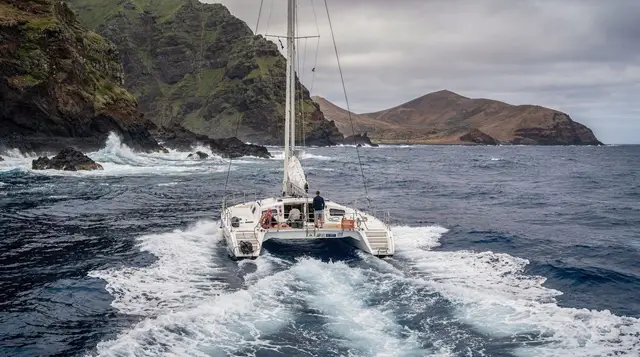
South-east of Madeira and visible on clear days from parts of Porto Santo’s approach, the Desertas Islands are a strict nature reserve and the last refuge of the Mediterranean monk seal in this part of the Atlantic. Landing is not permitted without authorisation, but day catamaran trips from Funchal approach the islands for wildlife-watching. They are a separate excursion from Porto Santo, reached from Madeira rather than from the island itself, but worth knowing about as the archipelago’s other, wilder outlying land — uninhabited where Porto Santo is settled, protected where Porto Santo is developed.
Food and Where to Eat
Porto Santo’s food scene is smaller and more local than Funchal’s, built around fresh fish, simple grills and the island’s own small wine and produce. Restaurants cluster around the beachfront promenade and the streets just inland from it in Vila Baleira, with fewer options once you head out towards the western end of the island. Seafood is the safe, reliable choice almost everywhere — grilled fish landed the same day is the norm rather than the exception — and prices generally run a little below equivalent meals in Funchal, reflecting the island’s slower, less commercial pace.
Self-catering is common among visitors staying a few days, and small grocery shops in Vila Baleira cover the basics, though the range is narrower than on Madeira. Anyone planning several days rather than a single visit should expect an early close to the evening — this is a quiet island after dark outside peak summer weeks.
When to Go
May to September is the reliable window: warm, dry, sunny days, the calmest sea conditions of the year, and the most consistent ferry service. July and August bring the biggest crowds and the highest accommodation prices, since this is also when Madeirans themselves cross over for beach holidays.
Outside that window the island still functions and the beach still looks the part on a calm day, but the odds of a cancelled ferry sailing rise noticeably from October through March, and some boat-based activities pause or reduce in frequency. Anyone visiting off-season should build slack into the schedule and lean on the flight rather than the ferry wherever possible.
Practicalities
A rental car makes the most sense for anyone staying more than a day, since it opens up Pico do Facho, Pico Branco and the quieter western beaches without depending on limited local transport. Distances are short — nothing on the island takes more than half an hour to reach by road — so even a compact hire car covers everything comfortably.
Day-trippers without a car generally base themselves around Vila Baleira and the beach, using a taxi or an organised tour for anything further afield. Given the choice, a guided tour is often the more efficient way to see the interior on a single-day visit, since it removes the logistics of pick-up, drop-off and route-finding on unfamiliar roads within a short window.
Budget for the day runs modestly by Madeira standards, roughly €60-100 per person once meals, a beach chair or two and one activity are factored in — noticeably calmer on the wallet than a comparable day on Madeira itself, in keeping with the island’s overall unhurried character.
Porto Santo, Frequently Asked Questions
Is the Porto Santo ferry reliable?
No — treat it as weather-dependent. The Porto Santo Line crossing takes about 2h15 and runs once or twice a day depending on season, but Atlantic swell cancels sailings regularly in winter and sometimes in shoulder season. Always check status the day before, and know that a 15-minute flight covers the same route when the sea is against you.
How far is Porto Santo from Madeira?
About 43km north-east of Madeira, across open Atlantic water. That is close enough for a day trip by air, but the ferry crossing still takes roughly 2h15 each way, so a same-day return by boat means a long day with only a few hours ashore.
Is Porto Santo’s beach natural?
Yes, and that is what sets it apart from the rest of the archipelago. Its nine kilometres of golden sand run continuously along the south coast and are entirely natural, unlike the imported sand at beaches such as Machico or Calheta on Madeira itself.
Can you visit Porto Santo as a day trip from Madeira?
Yes, and it is the most common way people see the island. Flying keeps the day trip realistic, since the ferry’s 2h15 crossing each way leaves little time on the ground and no safety margin if sailings are delayed or cancelled.
What is there to do beyond the beach?
Vila Baleira for its old town and the Columbus House, Pico do Facho and Pico Branco for panoramic walking, 4x4 tours across the island’s volcanic interior, and boat trips or snorkelling in the protected waters offshore. A day or two covers the main sights comfortably.
Is Porto Santo good for families?
Yes — the flat, shallow, sandy beach and the island’s small scale make it easier going with children than Madeira’s steep terrain and levada paths. The main drawback is limited choice of restaurants and activities outside the summer season.
When is the best time to visit Porto Santo?
May to September gives the calmest seas, the most reliable ferry crossings and the warmest water. Winter can still be pleasant on land, but rough Atlantic swell makes boat crossings and some boat-based activities unpredictable.