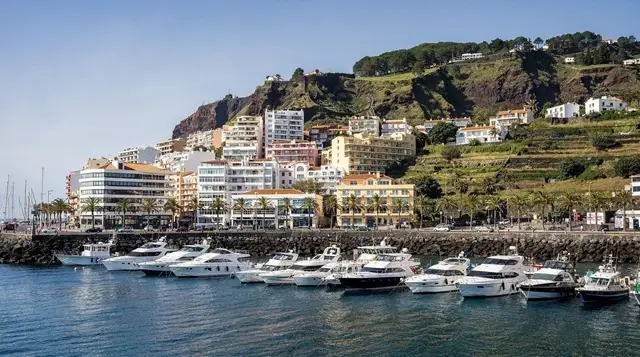
Nine kilometres of golden sand run in an unbroken line along the south coast of Porto Santo, and after a week of Madeira’s black pebbles and volcanic pools, that single fact is usually enough to justify the trip. This is the only proper sand beach in the archipelago — not an imported strip like Machico beach, but a genuine geological feature of the island itself, fine and pale gold, backed by low dunes and a scatter of low-rise hotels rather than cliffs.
This page covers the beach: getting there, what a day on the sand actually looks like, and the crossing that catches out more visitors than any other single detail on this island. For the hilltop viewpoint that looks down over this same coastline, see the Pico do Facho page separately.
Why nine kilometres of sand exists here and nowhere else
Madeira and Porto Santo formed from the same volcanic hotspot in the Atlantic, but they aged differently. Madeira’s slopes stayed steep and its coast stayed rocky, cooling into basalt cliffs and pebble coves. Porto Santo eroded flatter and drier over millions of years, and the sea did the rest, grinding shell and coral fragments into the pale, fine sand that now runs the length of its southern shore. The result is the flattest, sandiest coastline in the archipelago, and the only place in the region where you can walk for an hour without once stepping on stone.
The sand carries a local reputation for therapeutic properties — areia terapeutica, as it is known on the island. Visitors, mostly older Portuguese and Madeiran regulars, bury themselves waist-deep in the warm sand for twenty or thirty minutes at a stretch, believing it eases arthritis, rheumatism, and skin complaints. It is a genuine and long-running tradition, visible on the beach most sunny mornings between May and October, but it is folk medicine rather than anything backed by clinical study. Try it if you like; go in with realistic expectations.
Reaching Porto Santo: ferry or a fifteen-minute flight
There are two ways across the roughly forty kilometres of open Atlantic that separate Porto Santo from Madeira, and the choice matters more than it looks on paper.
The Porto Santo Line ferry sails from Funchal in about two hours and fifteen minutes, with one to two return sailings a day depending on season — often reduced to a single daily crossing, or suspended altogether, once autumn swell arrives. This is the detail most guides skip past, and it is the one that actually changes a trip: the ferry is not a guaranteed service. Winter cancellations are routine, not exceptional, and a rough forecast can cancel the crossing with only a few hours’ notice. Never plan a Porto Santo day trip around the assumption that the boat will run, particularly outside the June-to-September window.
The alternative is a flight of around fifteen minutes between Madeira’s airport and Porto Santo’s own small runway. It costs more than the ferry fare, but it is far less exposed to weather and is the only dependable option once winter swell sets in. If your schedule has no slack — a return flight home the same evening, for instance — book the plane, or at minimum have it ready as backup before you rely on a winter ferry.
| Option | Duration | Frequency | Reliability |
|---|---|---|---|
| Ferry (Porto Santo Line) | ~2h15 | 1-2 daily, seasonal | Frequently cancelled by swell, especially Oct-Mar |
| Flight | ~15 minutes | Several daily | Dependable year-round, weather permitting |
For the full breakdown of fares, timetables, and how to check sailing status before you leave the hotel, see the dedicated Porto Santo ferry guide; for a wider comparison of visiting for a day versus staying over, the Porto Santo day trip guide and the Porto Santo versus Madeira guide both cover ground this page doesn’t.
A day on the beach: what to actually expect
Most ferries and morning flights land you close to Vila Baleira, the island’s small capital, which sits right against the eastern end of the beach. This is where the crowd concentrates: sunbeds, beach bars, a scatter of hotels, and the easiest stretch of sand to reach without a car. It is not crowded by any normal standard — even in August the beach absorbs visitors easily — but if you want real solitude, walk. The nine kilometres run largely uninterrupted west toward Ponta da Calheta, and facilities thin out fast past the first kilometre or two. Bring water and shade if you are heading that direction; there is little of either once you leave the hotel strip.
The sea here is notably calmer and shallower than most of Madeira’s coast, sloping gently rather than dropping off, which is part of why it suits families and weaker swimmers better than the archipelago’s volcanic pools or the open swell around Ponta de Sao Lourenco. Water temperature tracks Madeira’s own, roughly 18-23°C depending on season, warmest from July through September.
Renting a sunbed and umbrella near Vila Baleira costs a modest daily fee; walk further along and the sand is free and empty. A simple beach day — sunbed, a coffee, lunch at one of the beachfront cafes — runs comfortably within a budget of EUR 60-100 per person, well below what a comparable day costs on Madeira’s south coast resorts, since Porto Santo’s tourism infrastructure is smaller and less geared toward premium pricing.
Beyond the sand, without leaving the coast
The beach is the headline, but a few things sit close enough to fold into the same day without cutting into your time on the sand. Vila Baleira itself is a short, easy walk from the beach’s eastern end, with a handful of cafes and the small Casa Colombo, the house associated with Christopher Columbus’s years on the island — worth twenty minutes if you have them, not a detour that costs a whole morning.
For a different angle on the coastline, a rigid inflatable boat ride along the shore gives you the nine kilometres from the water rather than the sand, a quick way to see the scale of the beach and the low dune line behind it — you can book a rigid inflatable boat ride along Porto Santo’s coast for a couple of hours either side of your beach time.
If you’d rather explore inland, a guided walk through the island’s protected biosphere reserve covers the drier, scrubbier interior that most beach-day visitors never see — it’s possible to join a guided walking tour through Porto Santo’s Unesco biosphere reserve if you’re staying more than a single day.
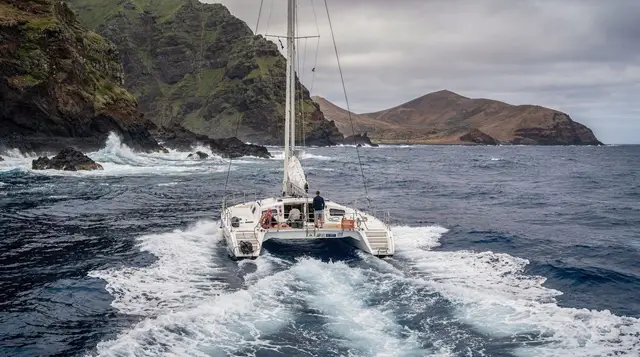
Travellers approaching from Madeira’s own east coast sometimes combine the crossing with a look at the water in between — sailing trips that run along Madeira’s eastern shoreline occasionally continue toward the open channel Porto Santo sits across, and it’s worth checking whether you can sail along Madeira’s east coast toward the strait Porto Santo lies across as a way to see the crossing itself as scenery rather than just transit.
Where to stay if a day isn’t enough
A single day from Funchal — ferry or flight over, several hours on the sand, return by evening — is how most visitors experience Porto Santo, and it works well if the crossing runs on schedule. But the island rewards slowing down. Staying two or three nights means catching sunrise and sunset over open Atlantic with no crowd at all, since day-trippers cluster around midday, and it removes the pressure of racing a return sailing. Vila Baleira has the highest concentration of hotels and guesthouses, all within walking distance of the beach; further west toward Ponta da Calheta the options thin out but so do the crowds.
If you’re weighing a longer stay against a single day trip, the Porto Santo versus Madeira guide sets out the trade-offs directly, and the Madeira and Porto Santo week itinerary shows how to fold two or three nights here into a longer Madeira trip without wasting travel days.
Practical planning: budget, timing, and the ferry trap
Treat the crossing as the variable that decides your whole day, not a formality. Check the Porto Santo Line’s sailing status the evening before and again the morning of departure — cancellations are announced with little notice when swell builds overnight. If your return leg matters (a flight home from Madeira airport the next day, for instance), either book the flight to Porto Santo instead of the ferry, or build a full spare day into your plan so a single cancelled sailing doesn’t cost you your onward connection.
Money-wise, a day trip runs cheaper than a comparable day on Madeira’s south coast: ferry or flight fare, a modest sunbed fee if you want one, lunch, and incidentals typically land within the EUR 60-100 per person range set out above. Peak season for the beach itself runs June to September, when the sea is warmest and the island’s own hotels and beach bars are fully open; the sand-therapy tradition is most visible May through October, tapering off once the sea cools and fewer people linger in the shallows for long stretches.
Pack for sun exposure rather than for hiking — this is flat, open, shadeless coastline for most of its length, closer in feel to a mainland Portuguese beach than anything on volcanic Madeira. Sun cream, a hat, and water matter more here than boots or a waterproof.
For the wider context of what beaches exist across the archipelago and how Porto Santo compares with Madeira’s own natural pools and pebble coves, the beaches of Madeira guide is the place to start; and if you want a first-hand read on whether the crossing and the day are worth the hassle, is Porto Santo worth a day covers that question directly.
Porto Santo beach: your questions answered
Is the ferry to Porto Santo reliable?
Not always. The Porto Santo Line crossing is frequently cancelled or delayed by Atlantic swell, particularly from October to March. Check the sailing status the evening before and the morning of, and treat the flight as your fallback rather than an afterthought.
How long is the crossing and how many sailings are there?
The ferry takes about two hours and fifteen minutes, with one to two return sailings a day depending on the season. Winter often drops to a single daily crossing, or none at all in bad weather.
Is the flight to Porto Santo expensive?
It runs at a premium compared with the ferry, but the flight takes only fifteen minutes and is far more dependable in winter, when swell regularly cancels the boat.
Is Porto Santo’s sand actually therapeutic?
Locals and some visitors bury themselves in the warm sand believing it eases joint pain and skin conditions, a tradition known as areia terapeutica. There is no rigorous clinical proof behind it, but the custom is genuine, long-standing, and easy to try for free.
Can you do Porto Santo as a day trip from Funchal?
Yes, and most visitors do. An early ferry or flight gets you several hours on the beach before a late-afternoon return, though a cancelled ferry sailing can strand you overnight, so build in slack if you have an onward flight the next day.
Is the beach busy or quiet?
It is long enough that crowding is rarely an issue, even in August. Most visitors cluster near Vila Baleira and the main hotel strip; walk a kilometre in either direction and the sand empties out.
Are there facilities along the beach?
Sunbeds, cafes, and showers cluster around Vila Baleira and the hotel zone. Further along the nine kilometres, facilities thin out fast, so carry water and shade if you are walking the quieter stretches.