Porto Santo Day Trip: The Beach, Casa Colombo and the Ferry
Is a Porto Santo day trip from Madeira worth it?
Yes, if you go for the nine-kilometre beach and accept it as a beach-and-town day rather than a full-island tour. The ferry crossing takes around two hours fifteen minutes each way and is often cancelled by swell in winter, so the flight is the safer bet if your day is fixed.
What a day on Porto Santo actually looks like
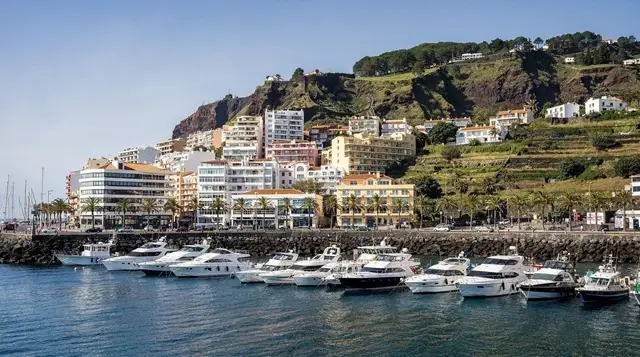
Porto Santo sits about 43 kilometres northeast of Madeira, and it is the one place in the archipelago that looks nothing like the rest of it: flat, dry, and fringed by nine kilometres of continuous golden sand where every other beach in the group is volcanic black, imported, or a rocky natural pool. That contrast is exactly why so many visitors staying in Funchal build a single day around it. It is also why the day needs planning rather than optimism, because the crossing itself is the least predictable part of the trip.
This guide sets out what a realistic day trip covers, what it leaves out, and where the two genuine risks sit: the ferry timetable and Atlantic swell. For the sailing schedule itself, current frequency and how to check for cancellations, see the dedicated Porto Santo ferry guide — this page focuses on what to do once you are actually on the island. If you are still deciding between a single day and staying over, the Porto Santo versus Madeira comparison walks through that trade-off directly.
Getting there: ferry or flight, and why one is a gamble
Porto Santo Line runs the ferry from Funchal, a crossing of around two hours and fifteen minutes each way. In peak summer there can be two rotations a day; outside that window it often drops to one, and schedules shift year to year, so treat any specific departure time you read here as provisional and confirm it before booking anything else around it. The ferry guide covers current timings in more detail.
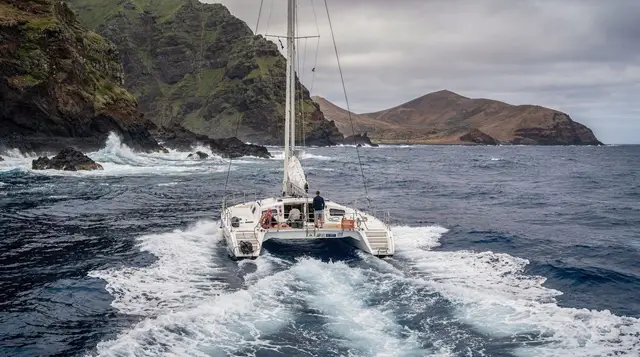
The important point for a day trip is this: the crossing is a genuine Atlantic sailing, not a sheltered ferry hop, and it is routinely cancelled by swell, particularly from autumn through spring. A cancelled morning sailing does not just delay your day — it can cancel it outright, since the next available crossing may not get you back before dark, or at all. Never present this ferry as a guaranteed way to reach the island, and never book a same-day return flight or a tight onward connection around it.
The alternative is a fifteen-minute flight between Madeira Airport and Porto Santo’s own small airfield. It costs more than the ferry and gives you less time to enjoy the crossing itself, which locals treat as part of the outing, but it is far less exposed to weather and gives you more hours on the ground. If your day is genuinely fixed — a cruise stop, a flight home that evening — the flight is the safer choice. See the Madeira airport guide for connections between the two airports.
| Option | Duration | Reliability | Typical cost feel |
|---|---|---|---|
| Ferry (Porto Santo Line) | ~2h15 each way | Frequently cancelled by swell, especially winter | Moderate, cheaper than flying |
| Flight | ~15 minutes each way | Far more reliable, weather permitting | Higher, especially booked last-minute |
How many hours you really get
This is where most day-trip plans go wrong. People picture a full day on the island and forget to subtract the crossing, the walk from the ferry terminal, and the return boarding cut-off.
On the ferry, a typical pattern is: outbound sailing mid-morning, arrival by late morning, a strict return departure in the late afternoon or early evening. Once you account for disembarkation and getting to and from the terminal, you are looking at roughly six to seven hours ashore, not the nine or ten a naive subtraction of departure times would suggest. Miss the return sailing and there may not be another one that day.
By air, with an earlier first flight and a later last one, you can realistically get closer to eight or nine hours, but you then need transport from the airport into Vila Baleira, since it sits a short distance outside town and taxis are limited rather than plentiful.
Either way, treat the day as a beach-and-town day, not a whole-island tour. Porto Santo is small on a map but its roads are not fast, and cramming in the beach, the museum, and the far west of the island in one afternoon usually means doing all three badly.
The nine kilometres of golden sand
The beach is the reason most people come, and it earns the reputation. It runs in an unbroken line along the entire south coast of the island — genuinely nine kilometres of pale golden sand, wide, gently shelving, and backed by low dunes rather than the cliffs and headlands that hem in most of Madeira’s coastline. It is the only stretch of true sand beach in the archipelago; everything else in the group is black volcanic sand, imported sand, or rock.
Locally the sand is credited with therapeutic properties — areia terapêutica — and in season you will see people burying their feet or lower legs in it for supposed relief from joint pain. Treat that as local colour rather than medical advice, but it says something about how the beach is regarded here: not just scenery, but something residents actively use.
For a day trip, the practical advice is simple: walk a few minutes away from the ferry terminal and the strip nearest Vila Baleira, where the crowd concentrates, and the beach empties out fast. Facilities (sunbeds, showers, cafés) cluster near town; further along there is very little, which is either the appeal or the drawback depending on what you want from an afternoon.
Vila Baleira and Casa Colombo
Vila Baleira is the island’s only real town, and it is walkable end to end in well under an hour, which makes it the natural anchor for a short visit. Its centre is low, whitewashed, and unhurried, with a scale that makes it easy to cover on foot between the ferry terminal, the beach, and lunch.
The single most-visited sight is the Casa Colombo, a small museum built around the house where Christopher Columbus is said to have lived after marrying Filipa Moniz, daughter of the island’s first captain-donor, around 1479. It is modest rather than grand, but it is the clearest thread connecting Porto Santo to the wider story of Atlantic exploration, and it takes well under an hour to see properly — worth building into the town portion of the day rather than treating as an optional extra.
Beyond the museum, the town’s church and the small streets around the main square are worth a slow half hour rather than a dedicated itinerary item. This is not a destination with a long list of indoor sights; its appeal is outdoors, and the town exists mainly to service the beach and the harbour.
Beyond the beach, if you have the time
With a full day and an early start, a few sights sit within reach of a short taxi, hire car, or organised tour:
Pico do Facho is the island’s easiest viewpoint, a short drive up from town, giving a wide look back over Vila Baleira, the beach, and — on a clear day — Madeira itself on the horizon. It suits the last hour before a return sailing better than the middle of the day, since it needs clear light rather than a specific time slot.
The waters around Porto Santo, particularly toward the Ilhéu de Cima and Ilhéu de Baixo islets, are calm and clear enough for short boat excursions, glass-bottom boat rides, and snorkelling, and this is genuinely one of the better uses of a spare hour or two if the sea state allows it — calmer and more sheltered than most of what Madeira itself offers directly off its coast.
None of this is realistic to combine with a proper beach afternoon and the Casa Colombo on a ferry-based day. Pick one: beach and town, or a shorter beach visit plus a short tour further afield.
Tours worth booking for a short visit
Because the day is short and the island’s road network is thin on organised transport, a booked tour can save more time than it costs, particularly if you arrive on the ferry with a fixed return sailing. A guided whole-island photography tour covers the viewpoints and coastline efficiently in a single loop, which suits a day-tripper better than self-driving to each stop separately.
If the beach and water are the priority, a guided snorkelling trip in the island’s protected waters makes good use of a couple of spare hours without needing your own gear or local knowledge of the best entry points. For those who would rather stay dry and simply see the coastline from the sea, a glass-bottom boat trip covers similar ground with almost no logistics.
Travellers arriving by air with more hours to spend sometimes prefer a half-day 4x4 highlights tour with hotel pick-up, which reaches the western end of the island that a ferry-based day trip usually has to skip. None of these need booking weeks ahead in low season, but in July and August, when both islanders and Madeira residents cross for the beach, slots fill early.
What to skip on a single-day visit
Be honest with yourself about what a day trip cannot do. It cannot cover the full western half of the island in any depth — that belongs to an overnight stay, covered in the Porto Santo versus Madeira comparison. It should not be planned around watching the sunset from the dunes, since that means missing the last sailing or flight back. And it should never assume the ferry will run: build in the possibility of cancellation from the outset, particularly outside the summer months, rather than treating a delayed or missed crossing as bad luck.
If your dates are flexible, checking conditions a day or two ahead and choosing your crossing day accordingly is the single most useful thing you can do to protect the trip. The best time to visit Madeira guide covers the seasonal pattern behind why winter crossings are more exposed.
A simple day plan
For travellers taking the morning ferry with a same-day return, a plan that has room to breathe looks roughly like this:
| Time | Activity |
|---|---|
| Morning | Ferry from Funchal, arrive Porto Santo late morning |
| Late morning | Walk into Vila Baleira, visit Casa Colombo |
| Early afternoon | Lunch in town, then the beach |
| Mid-afternoon | Beach time, or a short boat trip if the sea allows |
| Late afternoon | Return to the ferry terminal in good time for boarding |
Anyone flying rather than sailing has more slack to add Pico do Facho or a short tour further west, but the core sequence — town first, beach for the bulk of the day, don’t cut the return close — holds either way.
Porto Santo day trip: your questions answered
How do you get to Porto Santo for a day trip?
By Porto Santo Line ferry from Funchal, around two hours fifteen minutes each way, or by a fifteen-minute flight. Ferry frequency drops outside summer and sailings are regularly cancelled by Atlantic swell.
Is the ferry to Porto Santo reliable?
No. It is a real Atlantic crossing, not a sheltered hop, and winter swell cancels sailings often enough that you should not build a tight day around it. Check the current schedule and status before you commit.
How many hours do you actually get on the island?
With the ferry, roughly six to seven hours ashore once boarding and unloading are accounted for. With the flight, closer to eight or nine, but you then need onward transport from a small airport with limited car hire.
Do you need a car for a Porto Santo day trip?
Not to reach the beach or Vila Baleira, both walkable from the ferry terminal. A rented car, scooter or a half-day 4x4 tour helps if you want to reach Pico do Facho or the western end of the island in the time available.
What is there to do beyond the beach?
Vila Baleira’s old town, the Casa Colombo museum, the viewpoint at Pico do Facho, and short boat trips around the Ilhéu de Cima and the Ilhéu de Baixo. It is not a day for the island’s full nine kilometres from end to end.
Is Porto Santo better as a day trip or an overnight stay?
A day trip works for the beach and the town. An overnight stay is what actually lets you see the west of the island, watch a sunset over the dunes, and use the beach without a return sailing on your mind.
Is the sand at Porto Santo really different from Madeira’s beaches?
Yes. It is genuine golden sand running continuously along the south coast, unlike Madeira’s imported or volcanic beaches, and it is the main reason most day trippers make the crossing at all.
tours.porto-santo
Verified deep-linked GetYourGuide tours. Book through these links and we earn a small commission at no cost to you.
GetYourGuide does not provide a product photo for this activity — the image shows the meeting point, photographed by us.