Two ways to reach Porto Santo, and only one of them is reliable
Porto Santo sits about 43 kilometres north-east of Madeira, close enough to see from the higher points of the main island on a clear day, yet far enough that reaching it means a proper sea or air crossing rather than a short hop. Two options cover the journey: the Porto Santo Line ferry, which takes around 2 hours 15 minutes and carries both passengers and vehicles, and a short domestic flight of about 15 minutes from Madeira Airport. Both are straightforward to book. Only one of them is dependable in every season, and it is not the ferry.
This page covers the crossing itself: what the ferry involves, why it gets cancelled, how the flight compares, and how to plan around both. What is actually waiting on the other side — Vila Baleira, the nine-kilometre beach, and the Columbus House — has its own dedicated page, linked throughout this one.
Booking the Porto Santo Line ferry
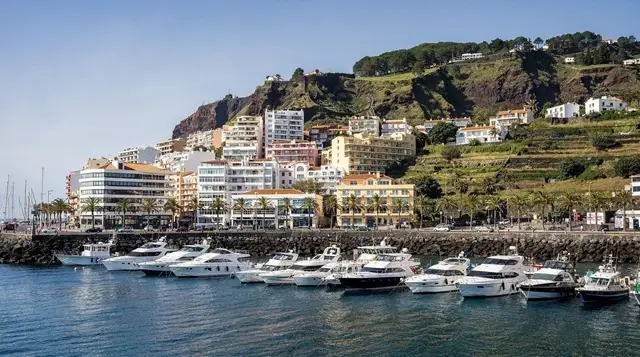
The ferry is operated by Porto Santo Line and sails between Funchal’s port area, close to the Funchal Marina, and Porto Santo’s harbour at Vila Baleira. Outside the busiest weeks of summer, expect a single daily rotation each way; in peak season this can rise to two. That schedule matters more than it sounds: with only one or two sailings a day, your outbound and return times effectively fix the length of your visit, and there is little room to change plans once you are on the island.
Tickets can be booked online in advance, and this is worth doing rather than turning up on the day, particularly in July and August when demand from both tourists and Porto Santo residents heading home is high. One clear advantage the ferry holds over the flight is that you can bring a hire car aboard, which opens up the island’s quieter western end and the climb to Pico do Facho without relying on local buses or a second rental on arrival. If you plan to explore Porto Santo properly rather than stay near the beach, factor the vehicle fare into your budget alongside the passenger fare, and check current prices directly with the operator, since fares are adjusted between seasons.
Arrive at the terminal with a reasonable buffer before departure, particularly if you are bringing a car, as vehicle loading takes longer than boarding on foot. The terminal itself is unglamorous — a functional port building rather than a destination in its own right — so there is little reason to arrive hours early beyond the practical need to check in and load.
Why the crossing gets cancelled in winter
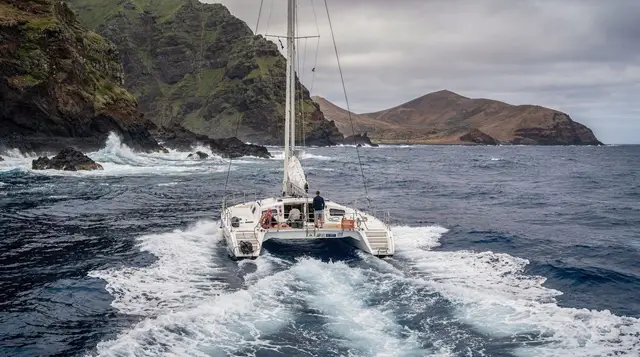
This is the detail most guides to Porto Santo skip, and it is the one that actually changes how you should plan a trip. The channel between Madeira and Porto Santo is open Atlantic water, with no sheltering landmass to soften the swell, and from autumn through winter that swell regularly rises to a level where Porto Santo Line suspends sailings altogether. This is not a rare, exceptional event: in the winter months, cancellations happen with real frequency, sometimes for a single sailing, sometimes for several days in a row during a prolonged spell of rough weather.
The practical consequence is simple and worth repeating, because it is so often left out: never treat the Porto Santo ferry as guaranteed transport, especially outside May to September. If your visit to Porto Santo is the centrepiece of a short trip, or if you have a flight home to catch immediately afterwards, build in slack — either a spare day before your return flight, or a genuine willingness to switch to the flight at short notice if the sea forecast turns. Travellers who assume the ferry will simply run because it is scheduled to are the ones who end up stuck on the wrong island with a missed connection.
Spring and summer sailings are considerably more settled, which is one reason the best time to visit Porto Santo tracks closely with the calmest months for Madeira generally. Anyone weighing up a winter visit to Madeira should treat a Porto Santo side trip as a hope rather than a fixed plan, and build the itinerary so that losing the day costs nothing.
The flight alternative
The alternative is a short domestic flight connecting Madeira Airport with Porto Santo’s own airstrip, covering the same 43 kilometres in around 15 minutes rather than two-plus hours. Several flights run most days, giving considerably more flexibility than the ferry’s one or two rotations, and the short inter-island hop is far less prone to the kind of blanket cancellation that swell brings to the sea crossing — light aircraft still face their own weather limits, but disruption is markedly less common.
The trade-offs are the ones you would expect. Flying costs more than the ferry for most travellers, particularly if you were planning to bring a car across, since a flight means renting a separate vehicle on Porto Santo itself or getting by without one. You also skip the crossing experience entirely — no time on deck, no chance of dolphins, none of the slow reveal of Porto Santo’s coastline as you approach. For a traveller short on time, or nursing a booked hotel and dinner reservation waiting on the mainland side of Madeira, the certainty the flight offers is usually worth the extra cost and the smaller aircraft.
| Ferry (Porto Santo Line) | Flight | |
|---|---|---|
| Duration | About 2h15 | About 15 minutes |
| Frequency | 1–2 sailings a day, seasonal | Several flights most days |
| Vehicles | Can be booked aboard | Not applicable |
| Winter reliability | Frequently cancelled by swell | Far more consistent |
| On-board experience | Open sea, possible dolphins | None — a short hop |
| Typical cost | Lower | Higher |
On board: what the crossing is actually like
For those who do get a calm sailing, the ferry crossing is one of the more pleasant transfers in the archipelago rather than a dead two hours to endure. Most of the route runs in open water with Madeira’s coastline receding behind and Porto Santo’s low, pale profile slowly resolving ahead — a useful preview of how different the two islands look, since Porto Santo is flatter and far drier than Madeira’s green, mountainous interior. Dolphins are seen on a meaningful minority of crossings, though never guaranteed, and the deck is worth stepping out onto rather than staying seated inside for the full 2h15.
The crossing can also be genuinely rough even on days when it is not cancelled outright, and travellers prone to seasickness should treat this as a real crossing rather than a scenic harbour cruise — take the same precautions you would for any open-water ferry, and sit low and central in the vessel if you are uncertain how you will fare.
Getting to the terminal and timing your day
Funchal’s ferry terminal sits within easy reach of the city centre, close to the Funchal Marina and a short taxi ride or walk from most hotels in the old town area. It is a separate facility from the cruise port further along the waterfront, so double-check which terminal your booking confirmation names if you are arriving on foot without local knowledge. There is no meaningful reason to build sightseeing time around the terminal itself; it exists to get you onto the boat, not to be lingered in.
If you are day-tripping, work backwards from the return sailing rather than forwards from the outbound one. With only one or two rotations a day, missing the return crossing is a far bigger problem than arriving on Porto Santo slightly later than planned, so build a comfortable margin before the last sailing back rather than trying to extract every possible hour on the island.
What is waiting on the other side
The crossing delivers you into Vila Baleira, Porto Santo’s low-key capital, within walking distance of the island’s headline feature: nine uninterrupted kilometres of golden sand along the south coast, the only proper sand beach in the entire archipelago. History enthusiasts can detour to the Columbus House, where Christopher Columbus is thought to have lived before his voyages west. None of that is covered in depth here — the island itself has its own page, and is worth reading before you book, since it shapes how many days the crossing is actually worth taking.
Those who want a structured way into the island once they arrive can look at a guided option covering Porto Santo’s UNESCO-recognised landscape on foot: a guided walking tour through Porto Santo’s Unesco Biosphere Reserve gives a framed introduction to the island’s drier, rockier terrain in a single outing. For a look at the coastline from the water rather than the sand, a rigid inflatable boat ride around Porto Santo’s coast covers ground a beach day alone will not.
Day trip or overnight: budgeting the crossing
A single day on Porto Santo is achievable and plenty of travellers do exactly that, particularly in the calmer months when the ferry timetable is at its most generous and the risk of a cancelled return sailing is lowest. But the maths is tight: with a 2h15 crossing each way and only one or two sailings a day, a day trip can leave as little as four or five usable hours on the island once transfers and terminal time are accounted for. An overnight stay, even just one night, removes the pressure entirely and lets you see the beach at both ends of the day, when the light and the crowds are at their best.
Budget for the crossing itself, plus food and any activities once you arrive; a reasonable day-trip allowance for one person, transport included, sits somewhere in the €80–150 range depending on whether you fly or take the ferry and whether you book anything beyond the beach. Those wanting a broader sense of what a longer visit costs should look at the wider cost of a week in Madeira, which puts the Porto Santo add-on in context against the rest of an island-hopping trip, and the dedicated Porto Santo day trip guide for a fuller breakdown of how a single day plays out.
If you are trying to decide whether the crossing is worth building into a broader Madeira trip at all, the honest comparison in is Porto Santo worth a day tackles that question directly, and the Madeira and Porto Santo week itinerary shows how the two islands combine over a longer stay without either one feeling rushed.
Mistakes to avoid with the crossing
The single biggest mistake is assuming the ferry runs like clockwork year-round. It does not, and treating a Porto Santo day trip as a fixed, non-negotiable part of a tight itinerary — particularly one booked for autumn or winter — is how travellers end up either missing the island entirely or getting stranded on it overnight without a booking. Build a buffer day, or be genuinely prepared to switch to the flight if the forecast turns against you.
A second, smaller mistake is booking the ferry with a car when you had no real plan to use one, or without a car when you actually wanted to reach the island’s quieter western side. Decide how much of Porto Santo you want to see before you book, since retrofitting a car hire once you are already on the island, without a reservation, is far less certain than arranging the ferry’s vehicle option in advance.
Finally, do not schedule a same-day connecting flight home from Madeira immediately after a Porto Santo day trip in the shoulder or winter months. A delayed or cancelled return sailing has real consequences if there is no slack left in the day, and the modest saving from squeezing everything into one day rarely outweighs the risk of missing an international flight over it.
Porto Santo ferry: your questions answered
How long is the ferry from Madeira to Porto Santo?
The Porto Santo Line crossing takes around 2 hours 15 minutes each way, sailing between Funchal and Porto Santo’s harbour at Vila Baleira.
Is the Porto Santo ferry cancelled often?
It is cancelled with real regularity in autumn and winter, when Atlantic swell makes the open crossing unsafe or simply too rough to be pleasant. Spring and summer sailings are far more reliable, though never guaranteed.
Is it better to fly or take the ferry to Porto Santo?
The ferry is slower but lets you bring a car and enjoy the crossing itself, including the chance of dolphins. The 15-minute flight is faster and far less likely to be disrupted, which matters if your Porto Santo visit is squeezed into a short trip.
How many ferries run to Porto Santo per day?
Typically one rotation a day outside peak summer, rising to two a day in the busiest months. This is not a frequent shuttle service, so the outbound and return times usually dictate how long you stay.
Can you do Porto Santo as a day trip from Madeira?
Yes, but it is tighter and riskier than it looks: a single delayed or cancelled sailing can strand you overnight with no spare clothes or hotel booked. Many visitors prefer at least one night on the island as insurance.
Can you take a hire car on the Porto Santo ferry?
Yes, vehicles can be booked onto the Porto Santo Line ferry, which is one of its advantages over flying if you want to explore the island by car rather than on foot or by local transport.
Where does the Porto Santo ferry leave from in Funchal?
Sailings depart from Funchal’s port area near the marina, within easy reach of the city centre by taxi or on foot from most central hotels.