Why Calheta is different from the rest of the coast
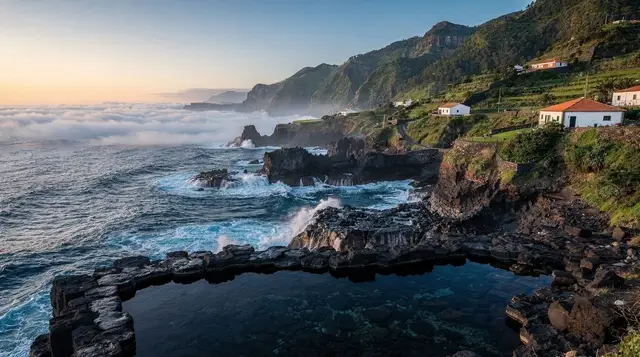
Most of Madeira’s coastline is volcanic: black basalt shingle, sheer cliffs, and natural lava pools carved into rock rather than proper beaches. That is true right along the west coast, from Câmara de Lobos through Ribeira Brava and Ponta do Sol. Calheta breaks that pattern. It has an actual stretch of pale gold sand, gently sloping into the sea, backed by a small marina and a run of restaurant terraces — which is exactly why it has become the west coast’s default beach day for anyone based between Funchal and Paul do Mar.
The town of Calheta itself sits a little further along the coast from the beach and marina complex, and the two are often treated as one destination by visitors staying nearby, since a short walk or drive connects them. This page covers the beach and marina specifically: the sand, the swimming, the setting, and how to plan a visit around it.
What’s established about the sand — and what isn’t
Calheta’s beach is one of only two places on the main island of Madeira with a genuine sand beach that a visitor would recognise as such — the other being Machico at the opposite end of the island. Both stand out precisely because they are the exception: elsewhere on Madeira, “beach” almost always means volcanic shingle or the engineered lava pools of places like Porto Moniz or Seixal.
What’s worth being precise about is the sand itself. Madeira’s own beaches are naturally dark and stony, a direct result of the island’s volcanic origin, so a soft golden beach like Calheta’s did not simply appear on its own — beaches like this are created and maintained rather than found.
Where exactly the sand came from and how it is topped up isn’t something this guide will pin down with a specific figure or date, because that detail isn’t reliably confirmed. What is established, and what actually matters for a visit, is more straightforward: the beach is real, it’s managed, it’s popular, and it draws a steady crowd through summer. Treat any confident claim about the sand’s precise origin with a little scepticism if you read it elsewhere.
The marina and the seafront
Calheta’s beach sits right beside the Marina da Calheta, a modern harbour with moorings for yachts and the small boats that run trips along the west coast. It gives the beach a different character to Madeira’s older seaside towns: instead of a working fishing harbour, you get a landscaped promenade, palm trees, and a row of restaurant terraces looking straight out over the moorings and the bay.
Boats operating out of the marina are one of the more relaxed ways to see this stretch of coast, and they don’t require a full day’s drive to reach a departure point in Funchal. A private charter on a luxury boat out of Calheta is a straightforward way to combine the beach with time on the water, and works well as a half-day plan for a small group or a family that wants the sea without a swimming pool queue.
The promenade itself is the pleasant part of an evening here: a flat walk between the beach and the marina, lined with places to eat, that stays busy well after the sand empties out at sunset.
Getting there and parking
Calheta sits on the VR1 expressway corridor that runs along Madeira’s south coast, which makes the drive from Funchal more straightforward than almost any other west coast destination — no mountain passes, no single-track roads, just a coastal run through tunnels past Ribeira Brava and Ponta do Sol. Budget around 35 to 45 minutes each way depending on traffic and where in Funchal you start.
A rental car is the practical way to get here; Madeira’s bus network reaches the town but not on a schedule that suits a spontaneous beach day. If you’re driving yourself for the first time on the island, this is a gentler introduction than the routes further north or up into the mountains. There is parking near the beach and marina, though it fills up on hot summer weekends, so arriving before mid-morning is the safer plan in July and August.
Swimming, sunbathing and safety
The appeal here is simple: you can walk into the sea over sand rather than picking your way across volcanic rock, which makes Calheta genuinely easier for small children, older relatives, or anyone who finds Madeira’s natural pools intimidating underfoot. The bay is sheltered compared with the open Atlantic swell that hits more exposed parts of the coast, which is part of why it has become the west’s go-to swimming spot rather than just a place to look at the water.
That said, this is still the open Atlantic, not a Mediterranean-style calm lagoon, and conditions do shift with the weather and season. If you’re new to swimming on this coastline, it’s worth reading a general guide to Atlantic swimming safety before you get in, rather than assuming a sand beach automatically means gentle water on every visit.
Sunbeds and umbrellas are available to hire directly on the sand in season, which is not something you’ll find at most of Madeira’s pebble or lava-pool spots — another reason Calheta reads as more of a conventional beach resort than the rest of the island.
Why it works for families
Calheta is consistently one of the destinations parents ask about when planning a family trip to Madeira. The combination of sand underfoot, a sheltered bay, sunbed hire, and food within walking distance solves several problems that other Madeira beaches don’t: no scrambling over rocks with a toddler, no long walk back to the car with wet children, and somewhere shaded and easy to eat close by when everyone’s had enough sun.
It’s a reasonable base for a slower, beach-led day rather than the hiking- and viewpoint-heavy itinerary most of the island rewards. Pair it with a gentler activity rather than a full mountain day: the easier levada walk near Serra d’Água is a manageable half-day add-on for a family already based on the west coast, well short of the exposed high-mountain routes further east.
Eating and drinking on the seafront
The terraces along Calheta’s promenade are built for exactly this kind of day: tables angled toward the marina and the bay, straightforward Madeiran menus, and a pace that suits lingering rather than turning tables quickly. Expect the island staples — grilled fish, espetada skewers, bolo do caco — alongside the more resort-style options a beach destination tends to attract. It’s a fair spot for a lazy lunch after a swim, and busy enough in summer that arriving outside the main midday window helps if you want a table with a sea view.
For a more structured look at where to eat around here and further along the coast, the where to eat by area guide covers Calheta alongside the rest of the west.
Calheta as a base for the west coast
Because it sits on the fast coastal road, Calheta works well as a stop within a longer loop of the west rather than a destination that needs a dedicated trip. From here it’s a short run to Jardim do Mar and Paul do Mar, both former fishing villages with a very different, rockier character to Calheta’s own beach, and inland toward Rabaçal and the levada trails around the 25 Fontes valley.
If you’d rather have the waterfalls sorted for you than navigate the shuttle and trailhead logistics yourself, a guided tour to 25 Fontes and Risco waterfall departing from Calheta combines neatly with a beach morning or afternoon, since it starts from the same part of the coast. Further east, a half-day wine-tasting trip to Cabo Girão and Câmara de Lobos covers the dramatic cliff and wine side of the west coast that Calheta itself doesn’t offer.
Drivers who want the coast at golden hour rather than midday sun sometimes head further west toward Paul do Mar for the evening light; if that appeals, it’s worth timing it as its own outing rather than trying to fold it into the same day as a full beach visit.
Calheta versus Machico
Calheta and Machico are the two places on Madeira most visitors mean when they ask “is there a sand beach?” — and they get compared constantly, so it’s worth being clear about how they differ rather than treating them as interchangeable.
| Calheta | Machico | |
|---|---|---|
| Coast | South-west | East |
| Drive from Funchal | ~35–45 minutes | Similar range, opposite direction |
| Setting | Marina, promenade, restaurant terraces | Town beach, closer to the airport |
| Best paired with | West coast villages, levada trails inland | East coast sights, Ponta de São Lourenço |
The two aren’t a straightforward “which is better” choice so much as a question of which side of the island you’re already on. If your base or itinerary leans west toward Câmara de Lobos and Cabo Girão, Calheta is the beach that fits without a long detour. If you’re spending time around Machico itself or near the airport, that beach makes more sense logistically — this page won’t repeat its specific figures, since it isn’t the subject here, but the short version is that the two beaches solve the same problem from opposite ends of the island.
Either way, neither is a wild, undeveloped cove — both are managed, developed beach resorts, which is precisely what makes them reliable rather than a gamble.
When to go
Summer — roughly June through September — is when Calheta functions best as a beach destination: warm sea, dependable sun, sunbeds available, and the promenade restaurants at their busiest and liveliest. Outside that window, Madeira’s mild climate still makes a walk along the marina pleasant, but swimming becomes more a matter of personal tolerance than a given, and some of the seasonal beach services scale back.
Mornings are generally calmer than afternoons, when a sea breeze tends to pick up along this stretch of coast, so an earlier start suits anyone prioritising flat water over people-watching.
A practical day at Calheta
| Element | What to expect |
|---|---|
| Getting there | Rental car via the VR1, ~35–45 minutes from Funchal |
| Parking | Available near the beach/marina; arrive early on peak summer days |
| On the sand | Sunbed and umbrella hire in season |
| Food | Promenade terraces facing the marina |
| Good pairing | 25 Fontes waterfall tour, or a boat trip from the marina |
| Not ideal for | Wild, undeveloped-cove seekers — this is a resort beach |
Calheta beach: your questions answered
Is Calheta beach natural or man-made?
The sand itself is not typical of Madeira’s naturally dark, volcanic coastline, and beaches like this on the island are generally created and maintained rather than occurring on their own. The precise details of how Calheta’s sand was sourced aren’t reliably confirmed, so it’s more accurate to say the beach is a managed one than to claim a specific origin.
How does Calheta compare to Machico?
Both are Madeira’s two proper sand beaches, on opposite coasts. Calheta is on the south-west, paired with a marina and restaurant promenade, and suits anyone already exploring the west coast; Machico sits in the east, closer to the airport, and suits an itinerary built around that side of the island.
Can you swim at Calheta beach?
Yes — the bay is relatively sheltered compared with more exposed parts of Madeira’s coast, and the sand makes entering the water far easier than at the island’s rocky beaches or natural pools. It’s still the Atlantic, so it’s worth checking conditions on the day rather than assuming it’s always calm.
Is Calheta good for children?
It’s one of the better family beach options on Madeira, largely because of the sand, the sheltered water, sunbed hire, and nearby restaurants. Combined with a gentle activity like an easier levada walk, it makes a manageable family day without a long hiking commitment.
Do you need a car to get to Calheta?
Realistically, yes. Calheta sits on the fast VR1 coastal road, which makes driving straightforward, but public transport connections don’t suit a flexible beach day in the way a rental car does.
Is there parking at Calheta beach?
There is parking near the beach and marina, though it can fill on busy summer days, particularly weekends in July and August. Arriving in the morning avoids most of the difficulty.
What else can you do near Calheta besides the beach?
The marina hosts boat trips and charters, the promenade has restaurant terraces for a longer lunch, and inland routes lead toward the levada trails and waterfalls around Rabaçal. It also works well as a base for exploring further along the west coast toward Paul do Mar and Jardim do Mar.
Is Calheta busy in summer?
Yes, it’s one of the more popular beach spots on the island through June to September, particularly around midday and on weekends. Visiting earlier in the day is the simplest way to find both parking and a quieter stretch of sand.