A village built on sun and bananas
Ponta do Sol sits where a steep ribeira meets the Atlantic on Madeira’s south-west coast, roughly halfway between Ribeira Brava and Calheta. The name means “point of the sun”, and it earns it: this stretch of coastline records some of the highest sunshine hours on the island, sheltered from the wetter north by the central mountains and angled to catch the light for most of the day. Locals will tell you, half-joking, that Ponta do Sol has its own weather system — while cloud sits over Curral das Freiras an hour inland, the village can be in full sun.
That warmth is not a curiosity for the tourist board; it is the reason the village exists in its current shape. The valley walls above the river are cut into narrow terraces, and on almost every one of them grows a stand of bananas, their broad leaves catching the wind in a way that is unmistakable from the coast road. Madeira banana is a recognised, protected product, smaller and sweeter than the imported fruit sold on the mainland, and Ponta do Sol is one of the parishes most associated with it. Vines share the lower terraces, feeding into the island’s wine trade explained in more depth on our Madeira wine guide.
This is a page about that village and its terraces specifically — not about the coastline either side of it. Calheta, a short drive further west, has the imported-sand beach and marina that visitors often expect Ponta do Sol itself to offer; Paul do Mar, further still, is the surf village with its own separate character. Treat this as the stop between them, not a substitute for either.
No natural beach, and why that matters
The single most useful fact to know before visiting: Ponta do Sol does not have a natural bathing beach. The village occupies a river mouth backed by cliffs and terraces, and the shoreline here is rocky rather than sandy. Visitors who come expecting a Calheta-style day of swimming and sunbathing are usually disappointed, because that is simply not what this village is for.
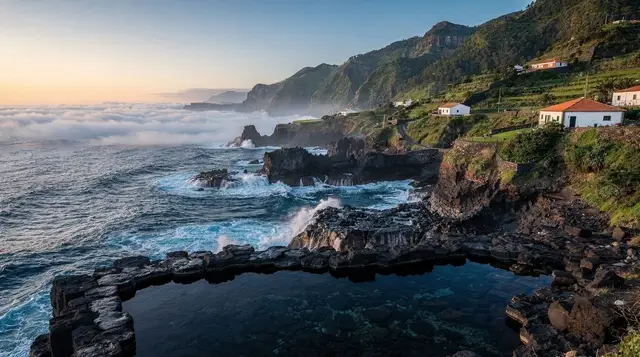
What Ponta do Sol offers instead is a small seafront promenade and a natural pool area used mainly by residents rather than a maintained tourist bathing spot, plus river-mouth views that are attractive to look at rather than swim in. If a beach day matters to your itinerary, build it around Calheta beach and treat Ponta do Sol as the cultural and scenic stop either side of it — a lunch, a walk, a photograph — not the main event of a swimming day. Confusing the two villages is the single most common mistake visitors make on this stretch of coast, and it is worth saying plainly: Ponta do Sol’s identity is agricultural and climatic, not coastal recreation.
Walking the old centre
The historic core of Ponta do Sol is compact enough to see on foot in under an hour, which makes it an easy add-on to a longer west-coast drive covered in our west Madeira day trip guide. Cobbled lanes run back from the seafront past whitewashed houses with black basalt trim, a small parish church, and a scattering of cafés that make the most of the sun with outdoor seating even in the cooler months.
The village’s most photographed building is the Estalagem da Ponta do Sol, a clifftop hotel built into the rock at the edge of the village, its dark stone and glass a deliberate contrast to the whitewashed centre below. You do not need to be a guest to appreciate it from the coast road or the seafront — it is one of the more striking pieces of contemporary architecture on the island, and photographers regularly stop for the view of it against the ocean.
Below the old centre, a short river walk follows the ribeira inland a little way, giving a closer look at the banana terraces that climb the valley sides. This is not a levada walk in the formal sense — for those, see our guide to how levadas work — but a level, easy stroll suited to visitors who want the scenery of the terraces without committing to a hiking trail.
The terraces up close
To understand why the terraces look the way they do, it helps to see them from more than one angle. From the coast road above the village, the whole valley opens out in tiers, each one a narrow strip of cultivated land held by a dry-stone retaining wall — a landscape shaped by centuries of manual terracing on ground too steep to farm any other way. From below, walking the lanes near the river, you get close enough to see the individual banana plants, their trunks wrapped in protective sacking on some terraces to guard the developing fruit from wind and insects.
Late afternoon is the best time to see this properly: the low sun rakes across the terraces and picks out the texture of the stone walls and the leaves in a way that flattens out at midday. Photographers who plan their west-coast route around light, rather than convenience, tend to save Ponta do Sol for the last stop of the day rather than the first, timing it to land here as the sun drops toward the Atlantic.
A privately guided route through this landscape and the villages around it is one of the more relaxed ways to see the west coast without driving it yourself.
an open-top private cabriolet tour of the west coast, with stops timed around villages like this one rather than a fixed coach schedule, works well if you’d rather look at the terraces than watch the road.
Getting here and moving on
Ponta do Sol sits directly on the VE4 expressway that links Funchal to the west coast, roughly 35 to 40 minutes from the capital by car, and about 10 minutes past Ribeira Brava heading west. The expressway bypasses the village on a viaduct high above the valley, so the turn-off down into the old centre is easy to miss if you are not watching for it — take the signed exit rather than continuing on toward Calheta and doubling back.
Parking in the old centre is limited to a handful of small streetside spaces and one public car park near the seafront; on a busy Saturday, especially during produce-market hours, arriving before mid-morning avoids circling for a space. Public buses on the Rodoeste network connect Ponta do Sol to both Funchal and Calheta, but schedules are infrequent enough that a hire car remains the practical option for most visitors, a point covered more generally in our car rental guide.
| From Ponta do Sol to | Approx. drive time |
|---|---|
| Funchal | 35-40 minutes |
| Ribeira Brava | 10 minutes |
| Calheta | 15-20 minutes |
| Paul do Mar | 30-35 minutes |
| Porto Moniz | 45-55 minutes |
Most visitors combine Ponta do Sol with other west-coast stops rather than treating it as a standalone destination. A day that strings together Câmara de Lobos, Cabo Girão, Ponta do Sol and Calheta makes a sensible loop, and our west Madeira day trip lays out a version of that route with timings.
A 4x4 route through the west and further afield is a practical option for visitors who want the coastal villages and the mountains in a single organised day.
a two-day 4x4 excursion covering the west and east of the island takes in this stretch of coast alongside villages further out that are hard to reach independently in a single afternoon.
Food, produce and where the sun does the work
Because of its climate, Ponta do Sol has long been associated with produce that ripens earlier and sweeter here than elsewhere on the island — not just bananas but avocados, passion fruit and custard apple in season, much of which turns up on menus in the village’s small cafés and restaurants. A handful of restaurants along the seafront specialise in fresh fish and the terraced-grown produce, and prices tend to run a little lower than the equivalent meal in central Funchal, since this remains a working village rather than a resort. For a fuller picture of what to expect on menus across the island, see our Madeira food guide.
The village also hosts a small local market, more geared toward residents buying weekly produce than a tourist experience, but worth a look if your visit lands on a market morning — it is a straightforward way to see what the terraces actually produce, sold by the people who grow it.
For visitors who want a more structured introduction to the region’s food and drink beyond the market stalls, a guided tour pairing local produce with a wellness element is available nearby.
a yoga session paired with a banana museum visit and mead tasting departs from Funchal and gives a more structured look at the crop that defines this stretch of coast, including the honey-based drink made from it.
Where Ponta do Sol fits in a wider itinerary
On its own, Ponta do Sol rarely justifies more than half a day, and most visitors see it as one stop among several rather than a base for a longer stay. It works well as:
- A late-afternoon photography stop on a west-coast loop, timed for the low sun on the terraces
- A lunch break between Cabo Girão and Calheta
- A quiet counterpoint to busier stops like Porto Moniz or Câmara de Lobos
- One leg of a self-drive day covered step by step in our west Madeira day trip guide
It is not, on current evidence, a base for a beach holiday, a hub for levada walking (the nearest official trails are inland and covered in our levada walks explained guide), or a nightlife destination. Visitors who arrive expecting any of those will be looking in the wrong village.
Ponta do Sol: your questions answered
Does Ponta do Sol have a beach?
No. Ponta do Sol has a rocky river-mouth shoreline and a small seafront promenade, but no natural sand beach suitable for swimming. The nearest sand beach is at Calheta, about 15-20 minutes further west along the coast, where the sand itself is imported rather than natural.
Why is Ponta do Sol known for bananas?
The village sits on a south-facing coastal slope with one of Madeira’s warmest, sunniest microclimates, and its valley walls are cut into centuries-old stone terraces that suit banana cultivation particularly well. Madeira banana is a recognised local product, and Ponta do Sol is one of the parishes most closely associated with growing it.
How long should I spend in Ponta do Sol?
Half a day is enough for most visitors: an hour or so walking the old centre and seafront, plus time to view the terraces from the coast road and, ideally, to time a visit for late-afternoon light. It combines naturally with other west-coast stops on the same day rather than needing a full day of its own.
Is Ponta do Sol worth visiting if I only have a week on Madeira?
It’s a worthwhile short stop rather than a priority destination. If your week is tightly scheduled, prioritise Cabo Girão, Câmara de Lobos and Calheta first, and add Ponta do Sol if your west-coast day has room for one more village, particularly for the light on the terraces in late afternoon.
How do I get to Ponta do Sol without a hire car?
Rodoeste buses connect Ponta do Sol to Funchal and to Calheta, but services are infrequent and not well suited to a single flexible day out. A hire car or a private/guided tour is the more practical option for most visitors, especially if you plan to combine several west-coast villages in one day.
Can I see the banana terraces up close, or only from the road?
Both. The coast road above the village gives a wide view over the full terraced valley, while a short, level walk along the ribeira from the old centre brings you close enough to see individual plants and the stone retaining walls. Neither requires a formal hiking trail or permit.
Is Ponta do Sol the same as Calheta?
No, and mixing the two up leads to disappointment. Ponta do Sol is a terraced farming village with no natural beach; Calheta, a short drive further west, has the area’s main sand beach and marina. They sit on the same coast road but serve different purposes on an itinerary.