Madeira Food Guide
What should I eat in Madeira?
Start with espetada (beef skewered on a laurel branch), bolo do caco (garlic bread cooked on a hot stone) and espada com banana (scabbard fish with banana). Round it out with limpets, honey cake and passion fruit, and try at least one dish at the Mercado dos Lavradores or in Funchal's old town.
What Madeiran food actually tastes like
Madeiran cooking is shaped by three things: an Atlantic coastline that produces a small number of very good fish, terraced south-facing slopes that grow fruit found almost nowhere else in Europe, and a farming tradition built around beef, garlic and the laurel wood that still gives espetada its name. None of it is elaborate. Most of the island’s best-known dishes are built from two or three ingredients, cooked simply, and served the same way they have been for generations.
This page is a first look at what shows up on the plate — where each dish comes from, what it should taste like, and where to try it — rather than a full recipe or a restaurant list. For the two dishes visitors ask about most, espetada and bolo do caco, there is a dedicated guide with more detail than fits here.
If you want the fastest possible introduction to the island’s food, a guided walk through Funchal that stops at several kitchens in one outing does the job better than reading about it: a private walking food tour with a local guide covers several of the dishes below in a single afternoon, with a local doing the ordering.
Espetada: the beef skewer that defines a Sunday lunch
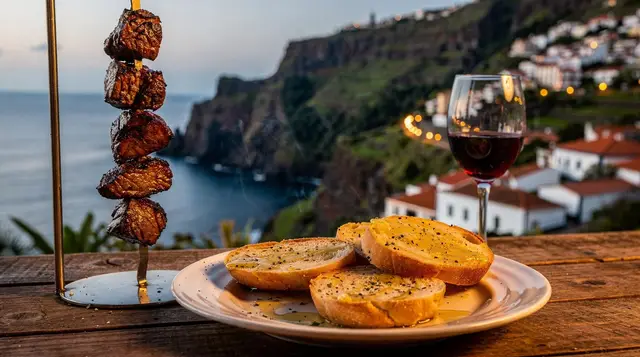
Espetada is Madeira’s signature dish and the one nearly every visitor eats at least once. Beef is cut into rough cubes, seasoned with sea salt and crushed garlic, and threaded onto a length of laurel wood — the branch itself flavours the meat slightly as it cooks over hot coals. It is brought to the table still on the skewer, often hung from a small metal stand so it drips onto the bread below. Traditionally it was a dish for Sundays, festivals and outdoor gatherings in the villages of the west; today it is on the menu of almost every restaurant on the island, from simple grill houses to hotel dining rooms.
The best-regarded versions are still associated with the grill bars of Camara de Lobos and the small towns along the south-west coast, where the meat is cooked over an open wood fire rather than gas. Portions are generous and meant for sharing, and it is almost always ordered alongside bolo do caco to mop up the garlic butter and the meat juices. For the full picture on cuts, sides and where locals actually order it, see the dedicated espetada and bolo do caco guide.
Bolo do caco: the bread that comes with everything
Bolo do caco is a flat, round bread made from wheat flour and mashed sweet potato, traditionally cooked on a caco — a flat stone heated over a fire, which is where the bread gets its name. It is split open while still hot and filled with a butter mixed with garlic and parsley, then usually cut into wedges and passed around the table as a starter. It shows up before almost every meal in Funchal, whether or not you order anything else, and a version wrapped around a strip of grilled meat has become a popular Madeiran take on a steak sandwich, sold from small stalls in the old town and the Mercado dos Lavradores.
It is worth knowing what a good one feels like: warm, slightly chewy rather than crusty, and clearly flavoured with sweet potato rather than tasting like ordinary white bread. A bolo do caco served cold or reheated in a microwave is a sign the kitchen is not making it fresh.
Espada com banana: scabbard fish from the deep
Espada — black scabbard fish — is one of the odder ingredients you will find on a European menu, and one of the most distinctively Madeiran. It is caught at depths of 800 metres or more off the island’s coast, has a long, eel-like black body, and is almost always filleted, dusted in flour and pan-fried. The classic preparation pairs it with a slice of banana, fried or grilled alongside the fish, sometimes with a passion fruit sauce spooned over the top. It sounds like an unlikely combination on paper; in practice the sweetness of the banana balances the mild, firm white flesh of the fish, and it is a genuine island pairing rather than something invented for tourists.
You will see espada com banana on menus across Funchal, and it is a reasonable dish to order on a first night as an introduction to how the island’s kitchens treat fish. It is not, however, the only fish worth trying — tuna, limpets and fresh prawns are all common, and a market visit or a walking tour is the easiest way to see what else is landed that day.
Lapas, prawns, and the rest of the catch
Lapas — limpets — are grilled in their shells with garlic butter, lemon juice and fresh coriander, and served as a starter in most seafood-focused restaurants. They are closer in texture to a firm mussel or clam than anything unusual, and they are a completely normal order rather than a dish that needs bravery. Alongside them, expect grilled prawns, octopus salads and whatever tuna or espada came in that morning — Madeira’s restaurant menus tend to change with the catch rather than staying fixed.
The best place to see the raw ingredients before they reach a plate is the fish floor of the Mercado dos Lavradores, the Art Deco market building from 1940 in central Funchal, where espada and other deep-water species are laid out each morning. The full market guide covers opening times and how to navigate the building; the one thing worth flagging here is that some fruit stallholders on the floor above the fish hall offer free tastes and then charge by weight for whatever was sampled, so agree a price — or a small piece — before you taste anything.
Bolo de mel, queijadas, and the sweet side of the table
Bolo de mel, Madeira’s honey cake, is not actually made with honey but with cane sugar molasses, spiced with cinnamon, cloves and orange peel, and dense enough to keep for months. It was traditionally baked once a year in the weeks before Christmas and shared with family and neighbours; tradition holds that it should be broken by hand rather than cut, which is still how it is served in most homes. It is available year-round in Funchal’s bakeries now, but it carries the most weight — and the freshest batches — in the run-up to Christmas.
Queijadas are small, sweet cheese tarts, usually made with fresh cheese, sugar, egg and cinnamon and baked in a light pastry shell, and they turn up in nearly every bakery window alongside bolo de mel. Neither is difficult to find; the difference between an ordinary and a memorable version usually comes down to freshness, so buying from a bakery with visible turnover beats a supermarket shelf.
For a closer look at how bolo de mel is actually made, a sensory visit built around the process — mixing the spices, watching it baked, tasting it warm — goes well beyond what a bakery counter can show: a sensory visit to a Bolo de Mel museum in Funchal walks through the full process by hand. A hands-on version of the same idea, aimed more at doing than watching, is available as a Funchal honey cake making workshop where you bake it yourself.
Maracujá, anona, and the fruit that only grows here
Madeira’s terraced south coast, warm and sheltered, grows fruit that is genuinely hard to find fresh elsewhere in Europe. Maracujá — passion fruit — is the one you will meet constantly: in juices at breakfast, folded into dessert sauces, and spooned over fish. Anona, a custard apple also known outside Portugal as chirimoya, has a soft, custard-like flesh under a knobbly green skin and a short season, usually in the autumn and early winter, when it appears at market stalls and on dessert menus. Beyond those two, look out for tamarillo, guava, and the small, intensely flavoured local bananas, shorter and sweeter than the imported fruit sold in most of Europe.
The fruit stalls of the Mercado dos Lavradores are the obvious place to see the full range in one visit, arranged in the market’s characteristic pyramids of colour. Buying a piece of fruit to eat on the spot, rather than a tasting from a stallholder offering free samples, avoids the pricing trap mentioned above while still getting you the fruit itself.
Where to eat it all: Zona Velha, Camara de Lobos, and beyond
For a single evening covering several dishes, the Zona Velha — Funchal’s old town, centred on Rua de Santa Maria with its row of painted doors — has the highest concentration of restaurants on the island, ranging from simple grill houses to smarter dining rooms, most within a short walk of each other. It is the easiest place to arrive without a plan and still eat well.
Outside Funchal, Camara de Lobos is worth the short trip for its espetada bars and for poncha — the island’s rum, honey and lemon drink, covered in full in the poncha guide — served in the same small bars fishermen have used for decades. For a broader answer to the question of which part of town suits which kind of meal, the where-to-eat-by-area guide breaks Funchal down by neighbourhood rather than by dish.
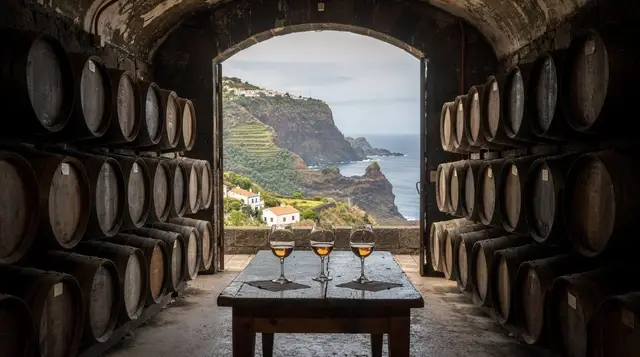
If wine is part of the plan for the same evening, Madeira’s fortified wine deserves its own reading before you order — the basics are in the Madeira wine guide, tasting rooms in Funchal are covered in the wine tastings guide, and the island’s wine calendar sits in the vineyards and wine festival guide. A single day built around both food and wine, without having to plan the logistics yourself, is laid out in the food and wine weekend itinerary.
Booking a guided food experience
A guided walk is the most efficient way to cover several of the dishes above without guessing which restaurant is worth the detour. a Funchal guided walking tour built around several tastings moves between a handful of stops in the old town and the market in a few hours, with a guide doing the ordering and the explaining. It suits a first evening on the island better than trying to plan a food crawl from scratch, and it leaves the rest of the trip free for the dedicated guides above once you know what you actually liked.
Two accounts from people who have eaten their way through the island are also worth a read before you go: what nobody tells you about levada walking touches on how much a proper espetada matters after a long hike, and eating scabbard fish for the first time is a first-person account of the exact dish described above.
For a lighter, more social evening, a poncha crawl in Camara de Lobos covers the drink that usually accompanies all of this. And for a single day that puts Funchal’s food stops alongside its main sights, the Funchal in one day guide sequences a market visit, a Zona Velha lunch and an evening in the old town into one manageable route.
Madeiran food: your questions answered
What is espetada and where should I try it?
Espetada is beef, cut into rough cubes and threaded onto a laurel branch, seasoned with sea salt and garlic and grilled over hot coals, then served hanging over the plate. It began as a Sunday and festival dish, cooked outdoors, and it is now on nearly every Madeiran menu. The most-cited version is served in the bars of Camara de Lobos and the villages of the west, though good versions exist all over Funchal too.
What is bolo do caco?
Bolo do caco is a flat, round sweet-potato bread cooked on a caco, a flat volcanic stone, and split open while hot to be filled with garlic-and-herb butter. It arrives at the table as a starter almost everywhere, and it is also sold folded around a slice of espetada as a Madeiran version of a steak sandwich.
Is Madeira’s scabbard fish really served with banana?
Yes. Espada, the black scabbard fish, is a deep-water species caught off Madeira’s coast and usually pan-fried, then served with a slice of fried or grilled banana and sometimes passion fruit sauce. The combination of firm white fish, sweet fruit and a squeeze of lime is one of the island’s genuine local pairings, not a tourist invention.
What are lapas and are they safe to eat?
Lapas are limpets, grilled in their shells with garlic butter, lemon and coriander, and served as a starter in most seafood restaurants. They are a normal, widely eaten menu item on Madeira and not a specialist or risky order — treat them the way you would grilled mussels elsewhere.
What is bolo de mel and when should I try it?
Bolo de mel, or honey cake, is a dense, spiced cake made with sugarcane molasses rather than actual honey, traditionally baked once a year in the run-up to Christmas and kept for months, since it is meant to be broken by hand rather than cut with a knife. It is sold year-round in Funchal now, but it carries the most meaning in the weeks before Christmas.
What fresh fruit is Madeira known for?
Maracujá (passion fruit) and anona (a custard apple, also called chirimoya) are the two fruits most associated with the island, both grown on the terraced south coast. You will see them as juices, in desserts and folded into sauces for fish; the fruit stalls at the Mercado dos Lavradores sell both in season alongside bananas, guava and tamarillo.
Where in Funchal is best for trying lots of dishes at once?
The Zona Velha, Funchal’s old town around Rua de Santa Maria, has the densest concentration of restaurants for an evening of grazing, while the Mercado dos Lavradores is the place to see the ingredients — and the fish — before you eat them. A guided walking food tour is the fastest way to cover several dishes and a few unmarked spots in one outing.
Do I need to worry about the fruit sellers at the market?
Some stallholders at the Mercado dos Lavradores offer free tastes of fruit and then charge by weight for whatever you sampled, which can add up quickly if you are not paying attention. Agree a price or a small quantity before tasting, or buy from a stall with clearly marked prices.
Food, wine and poncha tours on GetYourGuide
Verified deep-linked GetYourGuide tours. Book through these links and we earn a small commission at no cost to you.
GetYourGuide does not provide a product photo for this activity — the image shows the meeting point, photographed by us.