Madeira Wine Explained: Grapes, Styles and How It's Made
What is Madeira wine and how is it different from port?
Madeira is a fortified wine that is deliberately heated during ageing, which port never is. That heating, called estufagem or canteiro, is what gives Madeira its caramelised, slightly smoky character and lets an opened bottle last for months.
Why Madeira Wine Tastes Like Nothing Else
Most fortified wines are made and then left alone. Madeira is made and then, on purpose, heated. That single decision, taken by Madeiran producers centuries ago, is the reason a glass of Madeira tastes faintly of caramel, walnut and something almost smoky, and it is the reason a bottle you’ve already opened will still be good to drink at Christmas. If you visit Blandy’s Wine Lodge in central Funchal, or read a bottle label in any shop on Rua de Santa Maria, understanding that heating step will make more sense of what you’re looking at than anything else in this guide.
This page explains what Madeira wine actually is: how it’s made, what the four noble grape names on a label mean, and why the workhorse grape behind most bottles you’ll actually drink isn’t one of those four at all. It does not cover where to taste it in Funchal or how to book a cellar visit — that’s a practical question answered on its own page, linked at the end.
A Wine Born from a Sea Voyage
The story usually told on the island, and it’s a good one, is that Madeira wine as we know it was discovered by accident. Barrels of local wine, fortified with a splash of grape spirit to survive long sea voyages, were shipped out to India and the Americas and back as ballast. Some barrels came home unsold. Merchants noticed that after months in a ship’s hold, crossing the equator twice, baking in tropical heat, the wine tasted better, not worse. It had softened, deepened, and picked up a slightly cooked, nutty edge.
Producers on the island began to recreate that effect deliberately rather than wait for a ship to do it for them. That’s the seed of everything that follows: Madeira is the one major wine style where oxidation and heat, the two things winemakers everywhere else fight to prevent, are the entire point.
Estufagem: The Industrial Way of Heating Madeira
Most Madeira you’ll find on a supermarket shelf, and a good deal of what’s poured in casual tastings around Funchal, is aged using a method called estufagem. The wine is pumped into large stainless steel tanks, sometimes with internal heating coils, sometimes housed inside heated rooms, and held at a controlled temperature, typically somewhere in the 45-50°C range, for a period usually measured in months rather than years.
It’s a compressed, engineered version of that original sea voyage: heat the wine deliberately, over a defined and repeatable schedule, and you get a broadly similar transformation without waiting for a ship. Estufagem is cheaper, faster and far more consistent than the alternative, which is exactly why it’s used for the everyday, entry-level bottles that make up the bulk of what’s actually sold and drunk.
It is not, however, considered the prestige method. Wine writers and the producers themselves are usually upfront that estufagem trades some complexity for consistency and cost. If a bottle doesn’t say otherwise, assume estufagem.
Canteiro: The Slow, Traditional Method
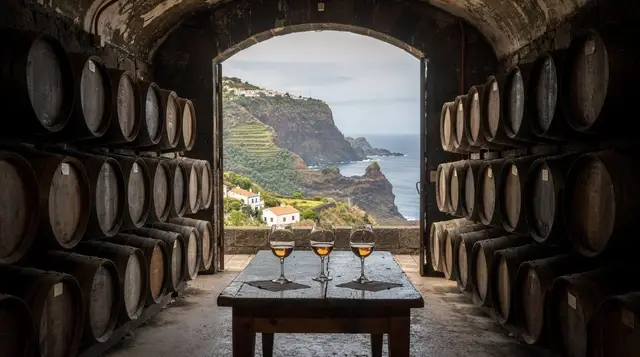
The other method, reserved for the better and older Madeiras, is canteiro. Instead of tanks and coils, the wine ages in wooden casks stacked in warm attic lofts, the canteiros that give the method its name, directly under the roof of a lodge like Blandy’s in Funchal. There’s no artificial heating. The wine simply sits through the natural cycle of Madeira’s climate, warming in summer and cooling in winter, for years rather than months. Three years is a rough minimum for something labelled canteiro; the best examples age for decades, occasionally longer.
The result is a slower, more layered version of the same transformation estufagem achieves quickly. Canteiro-aged Madeira is what shows up in vintage bottlings and the reserve wines you’ll be offered if you go looking for a serious tasting rather than a quick glass. It costs more, and it should.
Not Port: Why the Comparison Trips People Up
It’s an easy mistake to make on a first trip to Madeira, and worth correcting early: Madeira wine is not a regional variant of port, even though both are Portuguese fortified wines with similar alcohol strength and similar sweet-to-dry ranges.
The difference that actually matters is the heating. Port is fortified and then aged carefully to avoid oxidation and heat exposure; a good vintage port is stored cool and dark for exactly that reason. Madeira is fortified and then deliberately heated and oxidised, either fast in a tank or slowly in a warm loft, as described above. That’s not a minor technical footnote — it’s the entire reason the two wines taste different, age differently, and behave differently once opened. If someone on the island describes Madeira as “like port but cooked,” they’re pointing at the one detail that actually explains everything else.
The Four Noble Grapes, Dry to Sweet
Traditional, higher-quality Madeira is labelled by grape variety, and there are four “noble” grapes recognised for this purpose. They run in a fixed order from driest to sweetest, and that order is worth memorising before you taste, because it tells you roughly what to expect before the glass reaches you.
| Grape | Style | Typical use |
|---|---|---|
| Sercial | Driest, high acidity, pale | Aperitif, often served slightly chilled |
| Verdelho | Medium-dry, tangy, smoky edge | Aperitif or with soup, light starters |
| Boal (Bual) | Medium-sweet, rich, raisiny | With cheese, or on its own after dinner |
| Malvasia (Malmsey) | Sweetest, dark, treacly | Dessert wine, on its own |
Sercial sits at the dry end, grown mostly at higher altitude where the grape keeps its acidity. It’s the one Madeira that works well as a genuine aperitif, served cool, closer in spirit to a dry sherry than to a dessert wine.
Verdelho is medium-dry, with a slightly smoky, tangy character that makes it a flexible middle ground — dry enough to open a meal, with enough weight to sit alongside a starter.
Boal, sometimes spelled Bual on English-language labels, moves into medium-sweet territory. It’s rich and raisiny, and it’s the classic pairing with hard cheese, something you’ll see echoed in tours that combine a Madeira tasting with local cheese.
Malvasia, sold in English-speaking markets as Malmsey, is the sweetest and darkest of the four, thick enough to sip slowly after dinner in place of a dessert. It’s also the name most casual visitors already half-recognise, thanks to Shakespeare’s fondness for “a cup of Malmsey.”
All four names refer to the grape variety and, by convention, to the style of wine it produces — a bottle labelled Sercial will be dry, a bottle labelled Malvasia will be sweet, without exception.
Tinta Negra: The Grape That Actually Fills Most Bottles
Here’s the detail that catches people out: despite the attention the four noble grapes get, most Madeira wine actually produced and sold — the everyday bottles, the cooking Madeira, a large share of what you’ll be poured in an informal tasting — is made from a fifth grape, Tinta Negra, not from Sercial, Verdelho, Boal or Malvasia.
Tinta Negra is a red grape, high-yielding and reliable, and it does the heavy lifting for the volume end of the market. It can be vinified across the same dry-to-sweet spectrum as the noble grapes and labelled accordingly (dry, medium-dry, medium-sweet, sweet), but a bottle made from it won’t carry one of the four noble grape names — by regulation, only wine made from at least 85% of a single noble grape can be labelled with that grape’s name.
None of this makes Tinta Negra a lesser experience by default; a well-made Tinta Negra can be a perfectly good introduction to the style, and it’s usually the cheapest way into Madeira wine. But if a label doesn’t name one of the four noble grapes, it’s very likely Tinta Negra underneath, and it’s worth knowing the difference before you compare prices in a shop.
Reading a Madeira Label
A few conventions are worth knowing before you’re standing in front of a shelf:
- Age statements (5 Year Old, 10 Year Old, 15 Year Old) indicate an average blended age and generally use canteiro-aged wine.
- Vintage or Frasqueira Madeiras are made from a single year’s harvest, aged at least 20 years in cask before bottling, and are the most serious, most expensive category.
- Rainwater is a lighter, medium-dry blended style, historically popular in the American market, typically made mostly from Tinta Negra.
- Solera system bottlings, less common today, blend vintages together in a fractional system similar to sherry.
None of this needs memorising in detail before a trip — it’s here so a shelf full of unfamiliar words doesn’t feel like a wall.
Why an Opened Bottle Doesn’t Spoil
One practical, and genuinely useful, consequence of everything above: because Madeira has already been through deliberate oxidation and heating during ageing, it doesn’t degrade the way a normal opened wine does. A bottle of Sercial or Malvasia can sit on a shelf, cork back in, for months after opening and still taste much as it did on day one. It’s one of the few wines in the world that rewards buying a bottle purely as a souvenir rather than something to finish before you fly home.
Tasting It in Funchal
Reading about grapes and heating methods only goes so far. Several producers in Funchal, including Blandy’s Wine Lodge, run cellar visits and guided tastings that walk through this same dry-to-sweet range in person, usually alongside a short explanation of the estufagem and canteiro methods and a look at the lofts or tanks themselves.
a guided Madeira wine tour that walks through the production process and finishes with a tasting is the most direct way to see this in practice, and a sommelier-led tasting session in Funchal is worth booking if you want a more structured, guided comparison of the four grape styles side by side.
For where exactly to go, how to book, and what a typical tasting costs and includes, the practical side of this is covered in full on our separate guide to Madeira wine tastings in Funchal — this page is deliberately just the “what is it” half of the story.
If you’d rather combine the wine with food, a guided wine and artisan cheese tasting pairs Boal and Malvasia styles against local cheese, which is one of the more traditional ways Madeirans actually drink it. And for a lighter, more scenic introduction, a tuk-tuk tour through Funchal that includes a Madeira wine and honey cake stop works well as a first taste before a longer, more formal tasting later in the trip.
Beyond the Glass: Poncha and the Wine Festival
Madeira wine isn’t the island’s only drink worth knowing before you arrive. Poncha, the local cane-spirit cocktail stirred with honey and lemon using a wooden caralhinho, is a completely different tradition, closer to a bar culture than a wine culture, and it has its own guide. If your trip lines up with late August or September, the island’s wine festival adds tastings, folk costume and harvest events around Funchal and the wine-growing villages, covered separately in our guide to vineyards and the wine festival.
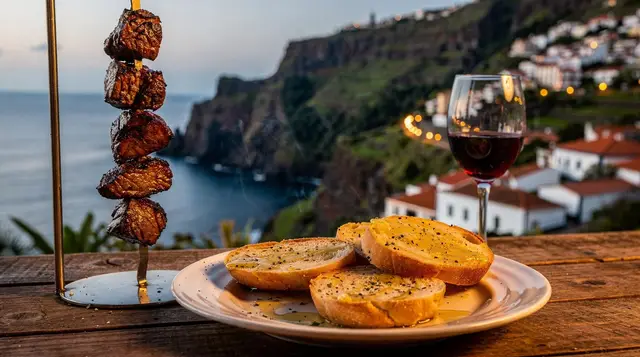
For the wider food picture — espetada, bolo do caco, and what to actually order alongside a glass of Sercial or Boal — see our Madeira food guide and the more specific espetada and bolo do caco guide.
Madeira Wine, Explained
Is Madeira wine the same as port?
No. Both are fortified Portuguese wines, but port is never deliberately heated during ageing, while Madeira always is. That heating step, not the fortification, is what defines Madeira’s flavour.
What are the four main grapes used in Madeira wine?
Sercial, Verdelho, Boal and Malvasia (also called Malmsey), ordered from driest to sweetest. Most everyday Madeira, however, is made from a fifth grape, Tinta Negra, which is not one of the four noble varieties.
What does estufagem mean?
Estufagem is the industrial method of heating Madeira wine in stainless steel tanks, usually to around 45-50°C for a set number of months, to replicate the effect of a long sea voyage through the tropics.
What is the canteiro method?
Canteiro is the traditional, slower method of ageing Madeira in wooden casks stored in warm lofts under the roof, called canteiros, where the wine heats naturally over years rather than months.
Which Madeira wine is the sweetest?
Malvasia, also sold as Malmsey, is the sweetest of the four noble grapes. Sercial is the driest, with Verdelho and Boal (Bual) sitting between them in that order.
Does an opened bottle of Madeira go off?
No, and this is one of Madeira’s defining traits. Because the wine has already been heated and partly oxidised during ageing, an opened bottle keeps well for months rather than days.
Can you visit a Madeira wine lodge in Funchal?
Yes. Several lodges in central Funchal, including Blandy’s, run tastings and cellar visits. Practical details on where and how to taste are covered separately, not in this guide.
Food, wine and poncha tours on GetYourGuide
Verified deep-linked GetYourGuide tours. Book through these links and we earn a small commission at no cost to you.
GetYourGuide does not provide a product photo for this activity — the image shows the meeting point, photographed by us.