A black-sand village on Madeira’s wildest coast
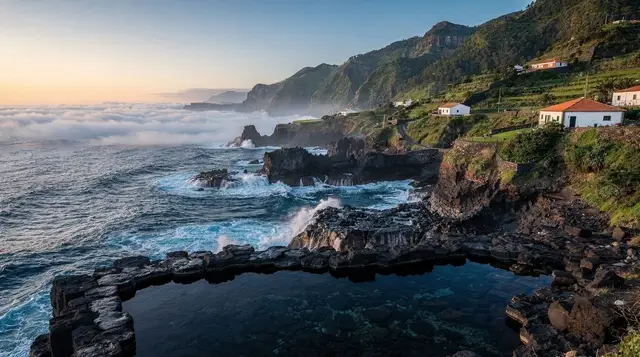
Seixal sits on the north coast between Sao Vicente and Porto Moniz, on the stretch of road most Madeira visitors remember even when they forget its name — the one where waterfalls drop straight onto the tarmac and the sea below is the colour of dark glass. It is a small farming and fishing village first, and a viewpoint second, but it is the viewpoint that draws the crowds: a black-sand beach backed by terraced vineyards, and a set of natural pools carved into the lava shelf at the foot of the cliffs.
Unlike Porto Moniz a few minutes further west, Seixal has no purpose-built pool complex with changing rooms and a ticket booth. What you get instead is closer to the raw version: volcanic rock, seawater, and whatever mood the Atlantic happens to be in that day. That rawness is exactly why photographers rate it as the most striking point on the whole north coast, and exactly why it is not somewhere to promise a swim in advance.
This page covers Seixal on its own terms — the beach, the pools, the waterfalls on the approach road, and how to fit it into a west Madeira day. For the lava tubes just along the coast, see the separate Sao Vicente caves guide; they are a different attraction with their own entrance and are easy to combine with Seixal but worth treating separately here.
Getting there: the drive is part of the destination
From Funchal, the fastest way to Seixal is west on the VE1 dual carriageway to Ribeira Brava, then north on the ER101 over the Encumeada pass and down the far side toward Sao Vicente and Seixal — around an hour in normal traffic. An alternative is the west-coast road through Ribeira Brava, Ponta do Sol and Calheta before cutting north, which is slower but scenic in its own right.
The final approach into Seixal, coming from Sao Vicente, is the section people photograph before they even reach the village: a narrow stretch of road squeezed between the cliff face and the sea, with two or three seasonal waterfalls tumbling down beside or directly onto the carriageway. In wet weather the road can be genuinely wet underfoot here, and it is common to see cars slow to a crawl or pull into a lay-by for photos — do the same only where there is a safe, marked place to stop, since the road is narrow and blind bends are frequent.
There is no practical bus connection that makes a same-day round trip from Funchal realistic; a hire car is close to essential for Seixal, as it is for most of the north coast. If you are new to Madeira’s mountain roads, the guide to driving in Madeira is worth reading before you set off — the Encumeada crossing involves tunnels, tight hairpins and sudden weather changes between the sunny south and the cloudier north.
For visitors without a car, a guided option covers the ground without the anxiety of the drive: the guided walking tour of Seixal, which finishes with a pastel de nata, takes care of transport and adds a local pastry stop into the bargain. A broader option that pairs Seixal with the misty forest further inland is the jeep tour combining west Madeira, Fanal forest and Seixal beach, which is a good fit if you want the coast and the mountains in a single day without driving either yourself.
The beach: real black sand, not imported gold
Seixal’s beach is one of only a handful on Madeira with naturally occurring sand rather than sand trucked in from elsewhere. Where Machico and Calheta both import pale sand to create resort-style beaches, Seixal’s is the genuine volcanic product: dark grey through to black, coarse underfoot, and noticeably hot in direct summer sun. It sits in a small cove below the village, reachable by a short road down from the main coast road, with limited parking near the water.
The beach itself is modest in size and works best as a place to walk, photograph the cliffs, and watch the swell rather than as a sunbathing destination on the scale of Porto Santo’s nine kilometres of gold sand. Facilities are basic — a café or two nearby rather than a full beach complex — which is part of its appeal for travellers who have already done the more developed pools at Porto Moniz and want something quieter.
The natural pools — and the honest truth about swimming here
A short walk or drive from the beach, Seixal’s natural pools are pockets and channels worn into the lava shelf by centuries of wave action, filled and refreshed by the sea itself. On a calm day, with a gentle swell and clear water, they are one of the best free swimming spots on the island — cooler and less crowded than the managed pools at Porto Moniz, and set against a genuinely dramatic backdrop of black cliffs and green terraces.
The essential point, and the one worth repeating rather than glossing over: these pools are open to the north Atlantic, and the north coast swell closes them regularly. Waves can surge over the rock shelf with real force, and what looks like a calm pool from the road can become dangerous within an hour as the tide or swell shifts. There is no lifeguard.
Local advice, and the advice in this guide, is the same as for any of Madeira’s natural lava pools: check the sea state on arrival, watch how the water is moving for a few minutes before getting in, and skip swimming entirely if the surface looks agitated or if waves are breaking over the rocks. Never assume a day trip to Seixal will end with a swim — treat it as a bonus if conditions allow, not a guarantee. The general principles in the Atlantic swimming safety guide apply here as much as anywhere on the island.
Late spring through early autumn generally brings calmer seas and warmer water to this coast, which is why that window is listed as the best season above — but even in August, a big Atlantic groundswell can shut the pools down for a day or two. Autumn and winter bring rougher seas more often, though the waterfalls on the approach road are usually at their fullest and most photogenic in the wetter months, which is its own trade-off worth planning around.
The waterfalls on the road in
The section of the ER101 between Sao Vicente and Seixal carries several seasonal cascades that drop from the cliffs above straight onto or beside the carriageway, feeding the streams that eventually reach the sea near the village. After heavy rain — common on this side of the island, which faces the wet north — these waterfalls swell considerably and the road can carry a genuine sheet of running water across it in places. It is dramatic to see and to photograph, but drive slowly through wet sections, keep headlights on, and be ready for spray reducing visibility on a blind corner.
This stretch of road is frequently cited as the single most photographed viewpoint on Madeira’s north coast, ahead even of the cliffs at Porto Moniz or the black rock at Sao Vicente. If you only have time to stop once between Sao Vicente and Porto Moniz, this approach into Seixal is the place to do it.
What to combine Seixal with
Seixal sits naturally inside a longer loop of Madeira’s west and north coasts rather than as an isolated outing, and most visitors pair it with at least one or two nearby stops.
| Combine with | Distance from Seixal | Why |
|---|---|---|
| Sao Vicente caves | About 10 minutes | Underground lava tubes, the volcanic counterpart to Seixal’s coastal pools |
| Porto Moniz | About 15-20 minutes | Managed natural pools with facilities, a useful backup if Seixal’s pools are closed |
| Fanal | About 30-40 minutes inland | Misty laurel forest with the island’s famous ancient til trees |
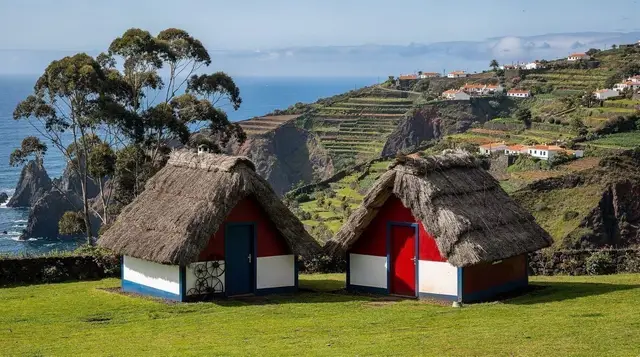
| Santana | About 30 minutes | Traditional triangular thatched houses |
| Ribeira Brava | About 25 minutes | Coastal town on the return route toward Funchal |
A full west Madeira day covering several of these stops is laid out in the west Madeira day trip guide, which sequences the driving so you are not backtracking across the island. If Fanal’s atmospheric forest is on your list, note that it only delivers its famous eerie look in mist — see the honest take in Fanal without the fog before building a whole day around it.
For travellers who want more than sightseeing on the same coastline, Seixal is also a hub for adventure activity. The ravines feeding the waterfalls above the village are used for canyoning, and the Seixal canyoning level 3 adventure is one of the better-known routes on this side of the island — a serious activity requiring a guide, not a casual add-on to a beach visit. Anyone considering it should first read the general canyoning in Madeira guide to understand what the grading actually means before booking.
For a slower, food-and-wine angle on the same village, the private small-group tour of a family vineyard in Seixal, with tasting is a good option for an afternoon that trades the pools for a terrace and a glass of local wine instead.
Practical notes: parking, timing and what to bring
Parking at Seixal is limited, particularly around the beach access road and near the natural pools, and it fills up on sunny weekends and in peak summer months. Arriving mid-morning on a weekday gives the easiest access; arriving in the early afternoon on a summer Saturday can mean a longer walk from wherever you find space.
Bring proper footwear rather than flip-flops if you plan to walk onto the lava shelf around the pools — the rock is uneven, sometimes slippery with algae, and unforgiving on bare feet. A swimsuit and towel are worth packing on the off chance the sea is calm, but so is a plan B, since the honest expectation should be “we might swim” rather than “we will swim.” Sun protection matters even on a coast known for cloud, since the black sand and dark rock both radiate heat strongly once the sun breaks through.
There is no permit or entrance fee for Seixal’s beach or natural pools, which sets it apart from Madeira’s paid official hiking trails covered in the hiking permits and trail fees guide — Seixal is a coastal stop you can visit freely at any time, weather and swell permitting.
Those who prefer a fully guided, driver-led version of the west coast — useful if you would rather not navigate the Encumeada pass or the narrow waterfall stretch yourself — can look at the private Land Rover tour with a custom itinerary, which can be built to include Seixal alongside other north and west coast stops in a single private day.