My Rainy Day Plan for Madeira
The morning I nearly cancelled the whole day
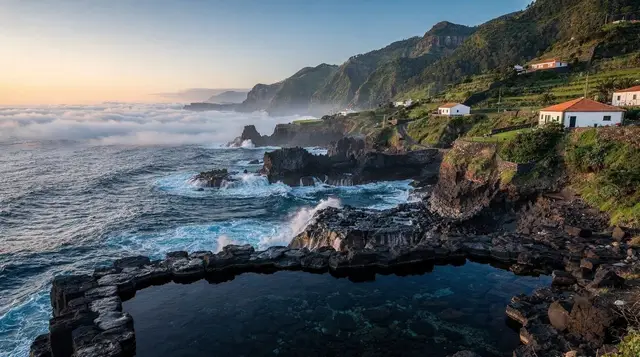
I woke up in Porto Moniz to the sound of rain hammering the roof of the rental, the kind of rain that makes you reconsider every plan you made the night before. We’d booked a levada walk near /destinations/sao-vicente/, and from where I was standing it looked cancelled before it had even started. What I didn’t do, and what I’d tell anyone to do first, is assume the whole island was under the same cloud. It wasn’t.
Why I stopped trusting one weather app for the whole island
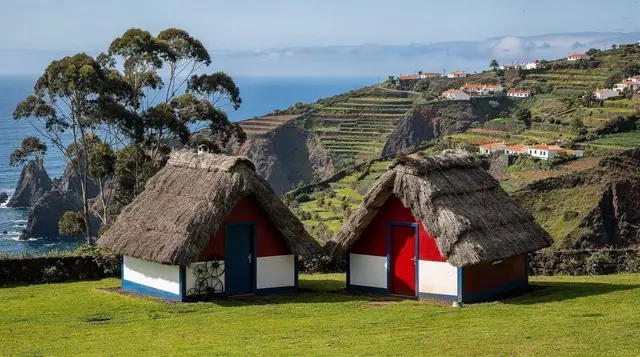
Madeira is small on a map and genuinely two different climates in practice. The north coast, from /destinations/porto-moniz/ round through /destinations/sao-vicente/ and /destinations/santana/, catches the moisture coming off the Atlantic and holds onto it. The south, sheltered by the central mountains, is often dry and bright at the exact same hour.
I checked a second forecast, this time for Funchal specifically rather than “Madeira” as a whole, and the picture changed completely: cloudy, but no rain expected until evening. That gap between north and south is the single most useful thing to understand about a wet morning here, and it’s the bit most guides skip entirely. Before you write off the day, read up on /guides/mountain-weather-and-what-to-wear/, because the mountains add a third weather system on top of the two coasts.
So instead of sitting in the car waiting for a gap in the clouds that might not come, we drove south. It’s roughly forty minutes from the north coast down through the tunnels to Funchal, and I watched the windscreen wipers slow down and stop somewhere around /destinations/campanario/. By the time we reached the capital, the road was dry.
Funchal as the rainy-day fallback
This is the part I now build into every itinerary without being asked: Funchal is the answer to a wet morning, not a last resort. The city has enough covered, indoor and semi-sheltered things to fill a full day, and most of it sits within walking distance once you’re parked near the marina.
We started at /destinations/funchal-old-town/, wandering /destinations/mercado-dos-lavradores/‘s covered halls before the crowds arrived. The flower stalls on the ground floor and the fish counter upstairs, where you can see the espada preta laid out, are both under a solid roof, and the whole building has the kind of atmosphere that makes a grey morning feel like part of the plan rather than a disruption. One thing worth knowing: the fruit vendors who offer tasters are working an old routine, and the sample is rarely as free as it looks, so agree a price before anything gets sliced.
From the market it’s a short walk to the painted doors of /destinations/funchal-old-town/‘s Rua de Santa Maria, which work just as well, arguably better, under a soft grey sky as they do in full sun; the colours don’t wash out the same way. There’s a full write-up at /guides/funchal-old-town-and-painted-doors/ if you want the background on the project. We ducked into a couple of the smaller restaurants along there for coffee, waited out a short shower under an awning, and kept moving once it passed.
Museums and the indoor hour I didn’t expect to enjoy
I’ll admit the /destinations/cr7-museum/ wasn’t on my original list, but it’s a genuinely good option when the sky won’t cooperate: entirely indoors, close to the old town, and over inside an hour if you’re not a football obsessive. For something slower, /destinations/blandys-wine-lodge/ runs tastings of Madeira wine right in the centre, and it’s a sensible way to spend a wet hour learning what Sercial, Verdelho, Boal and Malvasia actually taste like before you order a glass with dinner. Neither of these needs good weather, which is exactly the point.
If the rain had let up by early afternoon, and it usually does in the south, I’d have taken the cable car up to /destinations/monte/ instead; it’s covered for most of the ride, and the gardens up top are worth it even under a light drizzle. On a properly wet day, though, I left Monte for a clearer morning.
More ways to fill a wet day around Funchal
If you’d rather keep the whole day under cover, the Mercado dos Lavradores guide and the Funchal in one day plan both stitch together well with the stops above. Funchal Cathedral is a quiet, dry half hour between showers, and a wine tasting in Funchal turns a grey afternoon into the best part of the trip. For the background on what you’re sipping, Madeira wine explained is worth reading beforehand.
Lunch is easy to improvise. The where to eat by area guide and the espetada and bolo do caco page cover the dishes that suit a rainy afternoon, and the Madeira food guide has the wider picture. If you’ve never tried the fish on the market counter, eating scabbard fish for the first time tells you what to expect. A poncha is the other obvious answer to a wet evening.
Gardens are best kept for a clearer window, but it helps to choose between them in advance: Monte Palace versus the Botanical Garden lays out the trade-offs, and the Monte cable car and toboggan page explains the ride. I’d also point you to cable car or taxi to Monte if you’re deciding how to get up there.
What I skip completely when it’s raining
I don’t attempt the levadas on a genuinely wet day, and I wouldn’t suggest anyone else does either. The paths that follow the water channels are narrow, often without a barrier above a drop, and rain makes the stone surface treacherous in a way that isn’t obvious from photos. The trails officially close after heavy rain and landslips, and the IFCN publishes trail status for exactly this reason, so I check it rather than guessing. I also skip anything at altitude, since a grey drizzle at sea level can mean genuine fog and near-freezing wind up around /destinations/cabo-girao/‘s higher approach roads or further into the peaks. None of that is worth forcing.
Before you set out on any trail afterwards, levada safety, tunnels and vertigo is the page to read, and what nobody tells you about levada walking is the honest version. The best levada walks list helps you pick one for the dry day, and hiking permits and trail fees explains what to check on the way. If a short outing appeals more, family-friendly walks are gentler options.
Booking the clear day that usually follows
Madeira’s weather turns over fast, and a soaked morning is often followed by a properly clear evening or the next day entirely. Rather than losing the outdoor plans, I just moved them. We rebooked our hike for the following afternoon with a guided hike in the hills once the system had cleared through, and added on a sunrise tour above the clouds for the morning after that, since clear skies at altitude often follow a wet front by a day.
If you’re staying long enough, it’s also worth locking in a levada walk to the mountain lakes for whichever day the forecast actually agrees with you.
The one thing I’d change about how I used to plan
I used to build a single fixed itinerary before arriving and just hope the weather cooperated with it. Now I keep the outdoor days flexible and treat Funchal, the market, the old town and a museum or two as the plan I can drop in whenever the north is grey and the south isn’t. It’s not a downgrade. Some of the best conversations I’ve had on the island happened over coffee under an awning on Rua de Santa Maria, waiting for a shower to pass that never actually reached Funchal at all.
Planning around the weather
If you want more on how the seasons play out, the best time to visit Madeira, Madeira in winter and the truth about Madeira’s off-season all deal with wet-weather odds honestly. What to pack for Madeira covers the rain layer, and north versus south Madeira explains the split that made this whole plan work. If you’re building the trip from scratch, three days in Madeira leaves room to shuffle days around the forecast.
tours.Planning
Verified deep-linked GetYourGuide tours. Book through these links and we earn a small commission at no cost to you.
GetYourGuide does not provide a product photo for this activity — the image shows the meeting point, photographed by us.