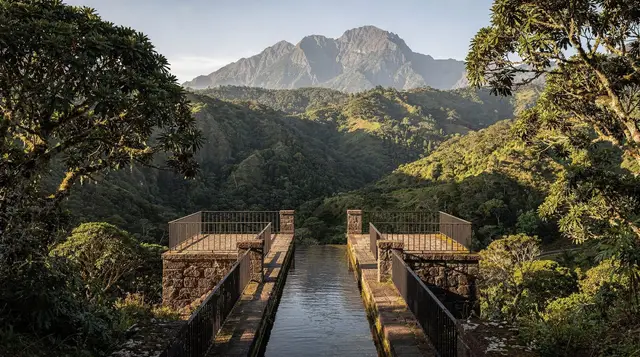
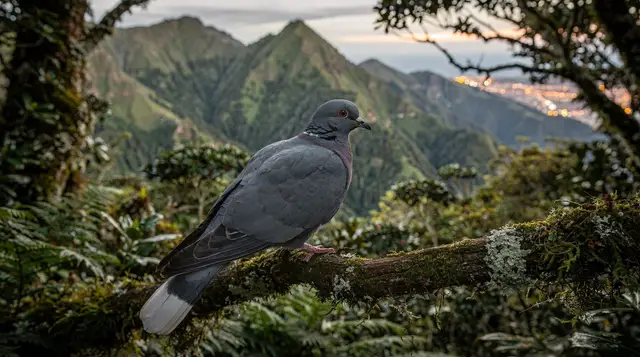
The Best Photography Spots in Madeira
What are the best photography spots in Madeira?
Fanal for its misty, twisted til trees, Pico do Arieiro for sunrise above the clouds, Cabo Girão for the cliff-edge skywalk, Seixal for black sand and roadside waterfalls, and Ponta de São Lourenço for its red volcanic ridge. Each rewards a different time of day, and the mist at Fanal is never guaranteed.
Beyond the postcard: five places worth the walk
Every visitor to Madeira ends up with the same five photographs on their phone by the end of the week, and there’s a reason for that: the island genuinely does have five or six locations that outperform everywhere else for a camera. This guide sets out where they are, what makes each one work, and — just as importantly — when to be there. It is not a substitute for our dedicated sunrise and sunset guide, which covers exact timings by month; here the focus is on which spot suits which light, and what to expect when you arrive.
The five anchors are Fanal for its misty, ancient forest, Pico do Arieiro for sunrise above the clouds, Cabo Girão for its cliff-edge skywalk, Seixal for black sand and roadside waterfalls, and Ponta de São Lourenço for a landscape that looks like nowhere else on the island. Between them they cover forest, mountain, coast and volcanic ridge, and no two look alike in a photograph.
Fanal: the shot everyone wants, and the one that isn’t guaranteed
Start with the one that needs the biggest caveat. Fanal sits at the north-western edge of the Paul da Serra plateau, a stand of centuries-old til trees (Ocotea foetens, part of the ancient Laurissilva forest) whose trunks have been bent and twisted by wind into shapes that look almost deliberate. On a clear day it’s a pleasant paddock with some interesting old trees. Wrapped in fog — which happens often, but not on demand — it becomes the most photographed scene on the island: pale trunks fading into white, no horizon, no sense of scale.
The mist is genuinely unpredictable. It tends to build through the morning as moist air is pushed up from the north coast and condenses on the plateau, and it can lift within the hour, so arriving early improves your odds without guaranteeing anything. Check conditions before you drive up, and read the full Fanal forest guide for the walking routes through the grove itself, which reward a slower pace than most people give them. If you want a guided route in that direction with transfer included, the Vereda do Fanal PR13 hiking route with transfer from Funchal covers this stretch of the plateau on foot.
The one thing to never do here is promise yourself, or a travelling companion, that the fog will show up. Build a backup into the day — Fanal is a short detour from the Porto Moniz natural pools or the São Vicente caves — so a clear day still produces a full itinerary rather than a disappointment.
Pico do Arieiro: first light above the clouds
If Fanal is about atmosphere, Pico do Arieiro is about scale. At 1,818 metres it’s the only one of Madeira’s three highest peaks with a road to the summit, and on most mornings the cloud layer sits well below it, so sunrise here means shooting down onto a sea of white rather than up towards a horizon. It is, by a distance, Madeira’s most photographed sunrise, and also its most crowded one — cars start arriving from Funchal around 4:30am to claim a spot on the viewing platform.
The best light is genuinely in the first thirty minutes after the sun clears the cloud layer, when the ridgeline towards Pico Ruivo picks up warm colour and the mountain’s own shadow stretches out across the cloud below. After that the light flattens quickly. For exact sunrise times by season, defer to the sunrise and sunset guide rather than guessing — Arieiro’s summit weather changes fast enough that a five-minute misjudgement can mean missing the best five minutes of the day.
Beyond the viewpoint itself, the first stretch of the Vereda do Arieiro (PR1) towards Pico Ruivo gives a different angle back at the summit and its cable-stayed platform, though the trail itself needs the same booking and fee as any other official PR route — see hiking permits and trail fees before you commit to walking any distance along it.
For photographers who’d rather not manage the drive and the dark in one go, both the sunrise tour above the clouds and the private sunrise hike at Pico do Arieiro are built around exactly this window, with a guide who knows where the light lands first.
Arieiro also has a second life after dark. With almost no light pollution and clear air at altitude, it’s one of the better stargazing spots in the Atlantic, and the stargazing tour at Pico do Arieiro is worth building into a trip if you’re carrying anything capable of a long exposure.
Cabo Girão: the cliff, the glass, and the colour of the water
Cabo Girão, above Câmara de Lobos, is one of the highest sea cliffs in Europe at around 580 metres, and since 2012 it has had a glass-floored skywalk cantilevered out over the drop. Photographically it works two ways: the skywalk shot looking straight down through the glass at the terraced fields and ocean below, and the wider shot from the clifftop path taking in the whole sweep of coastline towards Funchal.
Unlike Fanal or Arieiro, timing here is less about weather luck and more about light angle and water colour. Midday sun, disappointing everywhere else on this list, is actually the best window at Cabo Girão: it lights the water from directly above and brings out the turquoise shallows near the base of the cliff, which look flat and grey in low, raking light. Overcast days mute the whole scene. The full walkthrough, including where to park and how the glass floor behaves in different light, is in the Cabo Girão skywalk guide, and it’s a useful stop alongside our broader roundup of Madeira’s best viewpoints and miradouros.
Entry to the skywalk is free, and it’s one of the few spots on this list reachable directly by car with parking metres from the platform — no trail fee, no booking, no walk longer than the path from the car park.
Seixal: black sand and roadside water
The north-coast village of Seixal is a quieter inclusion, but it earns its place for one reason: it’s the most photogenic short stop on the whole north coast road, combining a black sand beach, natural rock pools, and waterfalls that drop directly onto the roadside within a couple of kilometres of each other. Where Arieiro and Cabo Girão demand a dedicated outing, Seixal is what you shoot on the way to or from Porto Moniz or São Vicente without adding real time to the day.
Late afternoon suits it best. The village faces roughly north, so the low sun in the last two hours before sunset rakes across the black sand and lights the spray from the Seixal natural pools from the side rather than flattening it from above. It’s also worth checking swell conditions before planning a shoot at the pools themselves, since the same Atlantic houle that closes the pools at Porto Moniz affects Seixal too — see swimming safety in the Atlantic for what to look for. A camera with a fast shutter captures the black sand and spray well even without getting near the water’s edge.
Ponta de São Lourenço: the island that doesn’t look like Madeira
At the extreme eastern tip of the island, Ponta de São Lourenço is the odd one out on this list, and that’s exactly its value. Where the rest of Madeira is green, terraced and shaded, this volcanic peninsula is bare red and ochre rock with almost no vegetation and no shade at all along its roughly 8-kilometre round-trip path (marked as PR8). It looks more like a stretch of the Canary Islands or the Azores than the rest of Madeira, which is precisely why it photographs so differently from everything else on this list.
Light here works best low and raking rather than overhead — early morning or the last couple of hours before sunset bring out the layered red and grey strata in the cliffs, while midday sun flattens the colour into a uniform brown. Wind is a constant here, often stronger than anywhere else on the island, so a lens hood and a firm stance matter more than usual.
As with the Arieiro-Ruivo traverse, this is an official PR trail and needs the same advance booking and daily fee as any other — confirm current requirements on hiking permits and trail fees before setting out, and check mountain weather and what to wear, since the exposed ridge offers zero shelter if the forecast turns.
Building a photography day around these five spots
None of these locations sit conveniently close together, so trying to hit all five in one day means a lot of driving and very little shooting. A more realistic approach groups them by geography: Fanal and Arieiro both sit inland and can, with an early start, be combined into one long mountain day, while Cabo Girão and Seixal fit naturally into a west-coast loop. Ponta de São Lourenço, at the opposite end of the island, is really its own half-day.
| Spot | Best light | Access | Trail fee |
|---|---|---|---|
| Fanal | Morning, if misty | Short walk from car park | No |
| Pico do Arieiro | First 30 minutes after sunrise | Road to viewpoint | No (fee applies past the viewpoint) |
| Cabo Girão | Midday | Car park at the skywalk | No |
| Seixal | Late afternoon | Roadside | No |
| Ponta de São Lourenço | Early morning or late afternoon | 8km round-trip walk | Yes |
For a broader sweep of the island’s photogenic corners beyond these five, our photography spots itinerary strings several of them together across a longer stay, and best time to visit Madeira is worth reading before booking if the weather window matters as much as the calendar date to you.
Frequently asked questions about photographing Madeira
Is the mist at Fanal guaranteed?
No. It rolls in off the Paul da Serra plateau on its own schedule, often building through the morning or after rain, and can clear within the hour. The til trees are worth seeing regardless, but the ghostly, fog-wrapped look is down to luck on the day, not something a schedule can promise.
What is the single best time of day for photography in Madeira?
It depends entirely on the spot: Arieiro rewards the first light after sunrise, Cabo Girão suits midday for clear water colour, Seixal is best in late afternoon, and Ponta de São Lourenço works better in low, raking light early or late. For exact times by month, see the sunrise and sunset guide.
Do I need a permit to photograph on Madeira’s trails?
If the route follows an official PR-numbered trail, yes — since August 2021 these need an online booking and a small daily fee. Fanal, Cabo Girão and the Seixal roadside spots don’t require this, but the Ponta de São Lourenço path and the Arieiro-Ruivo traverse do.
Can I drive to all of these viewpoints?
Cabo Girão and Pico do Arieiro both have car parks close to the viewpoint itself. Seixal’s best angles are visible from the coast road. Fanal needs a short walk from a parking area on the plateau, and Ponta de São Lourenço is a there-and-back walk with no road access to its outer point.
What should I pack for a photography day in the mountains?
Layers and a windproof shell, plus a head torch even for a daytime walk, since Arieiro’s summit trail passes through unlit tunnels. A lens cloth is worth carrying at Fanal and Arieiro, where fine mist and cloud condensation settle on glass quickly.
Is a tripod necessary?
Not for most daytime shots, but it helps for low light around sunrise at Arieiro and for slower shutter speeds on Seixal’s waterfalls. Some viewpoints, including the glass floor at Cabo Girão, restrict tripod use on the platform itself, so it’s worth checking on arrival.
Where does Ponta de São Lourenço fit for photography?
It’s the most different-looking landscape on this list: a bare, red and ochre volcanic peninsula with almost no shade, a real contrast to the green interior most visitors expect. It photographs best in low, raking light and stays exposed to full sun and wind for the entire round trip.
Photography tours on GetYourGuide
Verified deep-linked GetYourGuide tours. Book through these links and we earn a small commission at no cost to you.
GetYourGuide does not provide a product photo for this activity — the image shows the meeting point, photographed by us.