A Black Beach and Wild Pools on the Coast Road
Seixal sits on Madeira’s north coast between Porto Moniz and São Vicente, where the ER101 coast road runs close enough to the cliffs that streams fall directly onto the tarmac after rain. It is a small village built around two things: a rare stretch of black-sand beach and a set of natural pools carved into the lava rock at the water’s edge. Neither is managed, ticketed, or fitted out with facilities. That is the whole point of the place, and it is also the trap first-time visitors fall into — arriving expecting something like the pool complex at Porto Moniz and finding instead a beach and a set of rock basins with nothing around them but the sea.
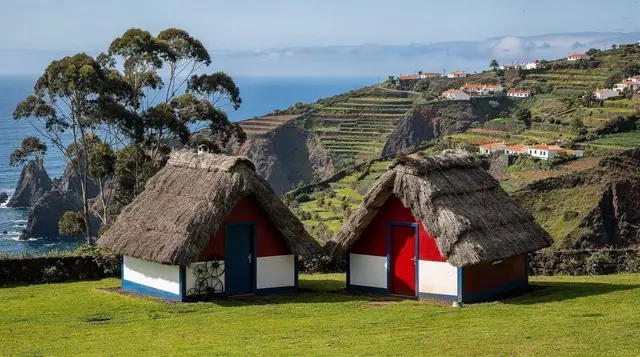
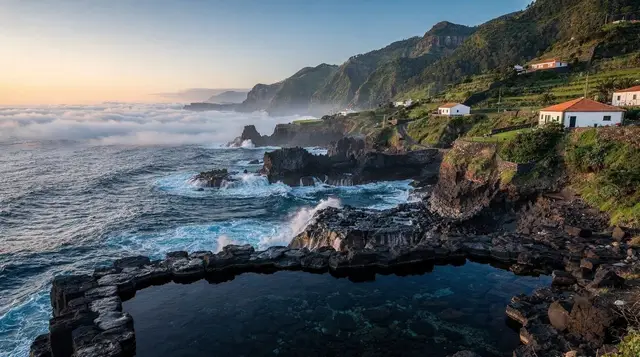
Most travellers reach Seixal as one stop on a north-coast loop that also takes in Porto Moniz’s natural pools, the caves at São Vicente, and often the thatched houses of Santana further east. Seixal earns its place on that route for the view alone: black sand against dark volcanic cliffs, a small green headland, and — with any luck — a waterfall crossing the road a few hundred metres from where you park.
The Black-Sand Beach
Madeira has almost no natural sand beaches, and Seixal’s is one of the few genuine ones, distinct from the imported golden sand laid at Machico and Calheta. The sand here is volcanic black, coarse rather than fine, and the beach itself is short and sits directly beneath cliffs that funnel wind and swell straight onto it. On a calm day it is a striking, uncrowded spot to walk or sit; on a rough one, the same exposure that makes it photogenic makes it unsafe to get close to the water. There is no lifeguard station and no flag system in the way a resort beach would have one — read the sea yourself, or ask locally, before deciding whether it is a swimming day.
The Natural Pools
A short walk from the beach, lava rock forms a series of pools that fill and empty with the tide and the swell. On calm days they hold clear, cold Atlantic water and are genuinely swimmable; on rougher days, waves break over the rocks and the same pools become dangerous to approach. This is the central fact to hold onto about Seixal: the pools are not engineered. There is no concrete edge, no ladder, no attendant checking conditions each morning. What you find depends entirely on the sea that day.
That is the direct contrast with Porto Moniz, ten minutes further along the same road. Porto Moniz has a developed pool complex — a paid, managed area with changing rooms and defined pool edges — sitting alongside its own free, wilder natural pools. Seixal has no equivalent developed side at all.
It is worth repeating because guides and blog posts routinely blur the two: Seixal is not a free, quieter version of Porto Moniz. It is a different kind of place — rougher, unstaffed, and better suited to a look and a careful dip than a planned afternoon of swimming with children or non-swimmers. If what you actually want is a managed pool day with facilities, that is what Porto Moniz’s natural pools page describes, and it is the better stop for it.
The Waterfalls on the Road
The detail that makes Seixal the most photographed stop on this stretch of coast is not the beach or the pools but the water that falls onto the road itself. After rain — which is common on this side of the island — streams draining the cliffs above the village cascade directly down onto the ER101, close enough that cars pass beneath or beside the spray. There is no channel, no levada, no managed drop; it is simply where the water goes. Photographers stop here specifically for this, often pulling into the small lay-bys that appear along this stretch. Traffic is usually light but not absent, so treat the roadside itself with the same caution as any working road, particularly with a camera in hand.
Getting There and Parking
Seixal sits on the ER101 coast road, roughly an hour and fifteen minutes from Funchal via the VR1 motorway and then the winding coast road west from São Vicente, or reached in the other direction from Porto Moniz. Driving in Madeira on this stretch means narrow lanes with a cliff on one side and a drop on the other in places, so a small hire car rather than a large one makes the drive noticeably easier. Free roadside and village parking exists near the beach and pools, but space is limited and fills by mid-morning in high season — arriving early is the simplest way around this, and it also means calmer light for photographs.
There is no public transport route built for a short stop like this one; the buses that reach the north coast (EACL) are aimed at connecting villages, not at timing a pool visit, so a rental car or an organised tour is the practical way in for most visitors.
When to Go
Season and sea state matter more here than almost anywhere else in this guide. Winter swell along the north coast regularly closes the pools outright, either by making them dangerous to enter or by burying the access rocks under breaking waves. Late spring through early autumn gives the best odds of calm mornings and swimmable conditions, and mornings generally beat afternoons for both light and a rising wind later in the day.
Even in the right season, do not treat a calm forecast as a guarantee — swimming safety on Atlantic pools is worth reading before getting in anywhere on this coast, Seixal included, since rock pools with open sea access can have currents and swell that a sheltered bay would not.
If the pools are closed or rough when you arrive, the beach and the waterfall view are still worth the stop on their own — plan the visit as flexible rather than pinned entirely to swimming.
Combining Seixal with the Rest of the North Coast
Seixal works best as one stop on a longer loop rather than a destination on its own, since the drive to reach it is a meaningful part of any day from Funchal. A common route pairs it with Porto Moniz for the managed pools and lunch, then continues to São Vicente and its lava-tube caves, sometimes extending to Santana’s thatched houses or the plateau at Fanal if the weather up top is clear.
A full day trip along the north coast is the easiest way to see the logic of this route laid out stop by stop, including which sections of road take longer than the map suggests.
Travellers coming from the east side of the island sometimes fold in Cabo Girão or Encumeada’s mountain pass on the way over, turning the day into a full circuit of the island’s cliffs, viewpoints, and coast rather than a there-and-back drive. For anyone without their own car, an organised route removes the parking and narrow-road questions entirely — a guided run along this stretch typically groups Seixal with Porto Moniz and São Vicente in a single loop.
a guided 4x4 route along the Porto Moniz and north coast road, taking in Seixal’s viewpoints without the parking searchFor a version with more time spent off the tarmac and along the cliff edges above the village, an off-road option covers similar ground with more stops.
an open-air buggy tour along the north coast, including the cliffside stretch past SeixalAnyone extending the day inland toward the mountains, rather than staying on the coast road, can pair a Seixal stop with a guided walk to one of the island’s waterfalls further east.
a guided levada walk to the Caldeirão Verde waterfall, a different kind of water stop than Seixal’s roadside cascadesPhotography
Seixal’s combination of black sand, dark cliffs and roadside water makes it one of the most reliably photogenic short stops on the island — more on where to shoot across Madeira covers how this fits alongside other north-coast viewpoints. Morning light works better than midday here, both for the beach and for catching the waterfalls with less traffic in the frame. If the cliffs above the village are wrapped in cloud, which happens often on this side of the island, the pools and black sand still hold their own without the wider view — it is a spot that rewards patience with the weather rather than a single perfect visit.
What to Bring and How to Pace the Stop
Because nothing at Seixal is provided for you, the stop goes better with a little preparation. Bring a towel, water shoes or sandals with a grip, since the lava rock is sharp and can be slick with algae, and a dry bag or a spare layer for the car. There is no kiosk on the rocks themselves, so carry water and a snack, and keep valuables out of sight in the car rather than on the beach. A light windproof jacket is useful even in summer, because the cliffs funnel wind and the north coast is often cooler than Funchal. The packing list for Madeira covers the wider kit.
Allow an hour and a half to two hours on the ground. That is enough to walk the beach, look at the sea from the rocks, take photographs of the road waterfalls and, if conditions allow, a short dip. Rushing it in twenty minutes on the way to somewhere else wastes most of the drive, while stretching it into half a day rarely adds anything unless you plan to eat locally.
Families, Non-Swimmers and Cautious Visitors
Seixal suits families only if the adults are comfortable reading the sea and the children stay close. The pools are shallow in places but the edges drop off without warning, and a wave can arrive from nowhere on an otherwise calm day. Young children and weak swimmers are better served by a managed pool, so for a relaxed swim with facilities look at Porto Moniz’s natural pools or the sheltered beaches of Madeira, and use Seixal as a place to look rather than a place to spend the afternoon in the water. Madeira with kids has more ideas for days that suit younger travellers.
If you do get in, enter slowly, stay within easy reach of the rocks you came down, never turn your back on the swell, and do not swim alone. Leave if the sea changes. These are the same rules set out in the Atlantic swimming safety guide, and they matter more here than at a lifeguarded beach because nobody is watching on your behalf.
Eating and Staying Near Seixal
The village is small, with a handful of cafés and restaurants close to the beach and along the coast road, and fresh fish is the natural choice after a morning by the sea. For a wider sense of what to order, the Madeira food guide and the page on where to eat by area are useful, and the classic local fish is explained in eating scabbard fish for the first time. Opening hours in small north-coast villages can vary by season, so do not plan a tight lunch around one particular place.
Most visitors base themselves in Funchal or on the south coast and treat the north as a day out, but staying nearer the coast makes early starts and calm-morning swims easier. The guide to where to stay in Madeira compares the areas, and north versus south Madeira explains why the two coasts feel so different in weather and mood.
A Sensible Plan for the Day
A workable order is to leave Funchal early, reach Seixal while the light is soft and the car park still has space, spend the first part of the morning on the beach and pools, then continue to Porto Moniz for lunch and a second swim with proper facilities. From there the road leads east to São Vicente and its caves, or back inland across the plateau. If rain is forecast, the roadside waterfalls will be at their best but the pools may not be, so keep the day flexible, and see a rainy day plan for Madeira for alternatives. Anyone planning a longer trip can slot this stretch into a week in Madeira or into a photography itinerary.
What Not to Expect
Set expectations before arriving and Seixal delivers exactly what it promises: a dramatic, unpolished stretch of coast with a striking beach and swimmable pools on the right day. Expect a developed facility, guaranteed calm water, or an easy alternative to Porto Moniz, and it will disappoint. There are no changing rooms, no showers, no staffed entry, and no guarantee that the pools will be usable on the day you show up — pack a towel, check the sea before getting in, and treat the roadside waterfalls with the same care as any live traffic lane. Judged on those terms, it earns its reputation as the most photographed few hundred metres of Madeira’s north coast.
Seixal Natural Pools FAQ
Are the Seixal natural pools free to visit?
Yes. Unlike the developed pool complex at Porto Moniz, which charges an entry fee and provides changing rooms, Seixal’s pools are open lava-rock formations with no ticket, no gate and no staff on site.
Is Seixal safer than Porto Moniz for swimming?
No — it is less controlled. Porto Moniz has a managed pool area with defined edges; Seixal’s pools are natural rock basins exposed to open swell, with no lifeguard and no barriers, so conditions change with the tide and the day’s sea state.
Can you swim at Seixal all year round?
Only when the sea allows it. Winter swell regularly closes the pools by making them dangerous or by covering the access rocks entirely; late spring to early autumn, on a calm morning, gives the best and safest chance of getting in.
Where do the waterfalls on the road at Seixal come from?
Streams draining the cliffs above the village fall directly onto the ER101 coast road after rain, rather than into a channelled levada, which is why they appear right beside passing traffic rather than on a marked trail.
Is there parking at Seixal?
There is free roadside and village parking near the beach and pools, but it is limited and fills quickly in high season and on weekends, so arriving early in the day makes finding a space far easier.
How do I combine Seixal with Porto Moniz in one visit?
Both sit on the ER101 coast road roughly ten minutes apart, so most visitors treat them as a single north-coast stop: the wilder pools and beach at Seixal, then the developed pool complex and facilities at Porto Moniz, or the reverse order.