Madeira’s summit you don’t have to earn
Most of Madeira’s high peaks demand a walk to reach them. Pico do Arieiro doesn’t. At 1,818m it’s the third-highest point on the island, after Pico Ruivo and Pico das Torres, and the only one of the three with a paved road running to a car park a few minutes’ walk from the top. That single fact makes it the busiest viewpoint in the mountains, the default sunrise destination for anyone staying in Funchal, and the trailhead for one of Madeira’s best-known — and most demanding — hikes.
It’s worth being precise about what you’re getting. This isn’t a wilderness summit reached after hours of effort; it’s a short, often crowded walk from a car park, over a paved or well-built path, to a genuinely spectacular volcanic viewpoint. The reward-to-effort ratio is about as good as anywhere on the island, which is exactly why it draws the crowds it does, especially before dawn.
Getting there
Pico do Arieiro sits roughly in the centre of the island, about 35–45 minutes’ drive from Funchal on a road that climbs steadily through forest and then above the treeline into open volcanic terrain. If you’re renting a car — and for the mountains, you should — check our notes on car rental in Madeira and on driving in Madeira before you go: the road up is well-surfaced but has hairpins, thin verges, and no crash barrier in places, and it is a different kind of driving from the tunnels of the VR1 along the coast.
There’s a car park at the top, which fills fast for sunrise and on any clear weekend afternoon. If you’re not driving yourself, several operators run transfers and guided visits, which also solves the problem of driving on unfamiliar mountain roads in the dark. A private option is the Pico do Arieiro private sunrise hike, which collects you from your hotel at an unsociable hour so you don’t have to navigate the road yourself, half-asleep, before dawn.
The sunrise — and why nobody can promise it to you
Pico do Arieiro’s reputation rests on one image: the sun coming up over a sea of clouds, with only the summits of Arieiro, Pico das Torres and Pico Ruivo breaking the surface. It is genuinely one of the best sunrise views in Europe when it happens. It is also entirely weather-dependent, and no guide, driver, or tour company can promise it on any given morning.
The effect needs a temperature inversion: warm air sitting above a layer of cool, moist air trapped below around 1,000–1,400m, so cloud pools in the valleys while the peaks stay clear. Some mornings deliver it perfectly. Others bring open sky with no clouds at all below you — still a fine view, just not the famous one. And some mornings the cloud sits right at summit height, meaning you stand at 1,818m inside a grey fog and see nothing. There’s no reliable forecast for the exact effect; checking general conditions the evening before narrows the odds but doesn’t settle them.
Given that uncertainty, it helps to have someone reading the mountain weather for you rather than guessing from a phone forecast written for the coast. Group sunrise trips such as the Pico do Arieiro sunrise tour are run by operators who watch conditions daily and know when the odds are genuinely good, which takes some of the gamble out of the very early start. Our own notes on mountain weather and what to wear go into the inversion pattern in more depth.
Departures for any sunrise trip are typically 4am to 5am from Funchal, arriving with enough time to find a spot before first light. Come without hotel pickup and you’ll want to leave earlier than you think, both for parking and for a decent vantage point once you’re up there.
What it’s actually like at the top before dawn
The gap between Funchal and the summit isn’t only altitude — it’s climate. While the city sits around 18–20°C for much of the year, the summit car park at 5am can be only a few degrees above freezing, sometimes below it in winter, and wind chill makes it feel colder still. People regularly arrive in a T-shirt because it was warm when they left the hotel, then spend forty minutes shivering on a viewing platform. Bring a proper layer — fleece or down, plus something windproof — a hat, and gloves if you run cold, even between May and September. A torch or phone light also helps on the walk up from the car park in the dark, since the path isn’t lit.
The viewpoint area itself is short: a paved and stepped path of a few hundred metres from the car park up to the main platform, manageable for most fitness levels and most ages. There’s a small café near the car park serving coffee and simple food, useful for warming up once the sun is up, plus toilets. None of that changes how exposed the summit itself is to wind, so treat the walk up as a genuinely cold-weather outing regardless of the season.
The start of the Vereda do Arieiro — where the real trail begins
Beyond the viewing platform, a gate marks the start of the PR1, the Vereda do Arieiro, Madeira’s best-known high-mountain trail. It runs from here toward Pico das Torres and on to Pico Ruivo, crossing tunnels cut through the rock and exposed ridgeline with genuine drops on either side. It is not a casual extension of the sunrise visit — the full route is a serious undertaking of several hours each way, and it deserves its own planning rather than a paragraph here. We cover the route itself, timing, and what it demands in our dedicated guide to the PR1 from Arieiro to Pico Ruivo, and the destination page for Pico Ruivo covers the summit at the far end.
What matters here is knowing the gate exists and what it commits you to. Since 2021, Madeira’s official PR-numbered trails, including this one, require an online-booked permit costing around €3 per person, per trail, per day, checked at the trailhead — see our guide to hiking permits and trail fees before you assume you can simply walk on.
Trails also close after heavy rain or rockfall, so checking current status matters as much as booking the permit itself. If you only want the taste of the trail rather than the full traverse, a guided version such as the Pico Areeiro to Pico Ruivo guided hiking tour handles the logistics, permit, and pacing for you, with a guide who knows the tunnels and the exposed stretches.
Two ways to reach Pico Ruivo, and this isn’t either of them in detail
It’s worth being clear about what this page is not. There are two established ways up to Pico Ruivo, Madeira’s true highest point: the long traverse from here at Arieiro, and a separate, shorter and considerably easier route from a different trailhead. Both deserve their own planning rather than a rushed summary. The short route is covered in full on our Pico Ruivo short route guide, and it’s the one most casual walkers should look at first. If Arieiro’s own sunrise and viewpoint are all you’re after, you don’t need either route — just the drive up and the short walk to the platform.
Alternative ways to see the same views
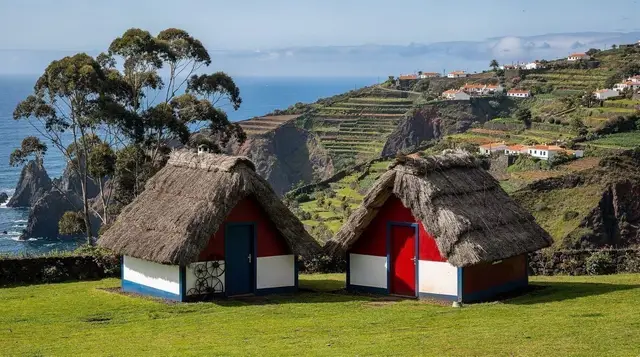
Not everyone wants to walk even the short path up from the car park before dawn, or drive mountain roads in the dark themselves. A tuk-tuk option exists nearby at a related viewpoint: the Winston Churchill observation deck at Pico da Torre by tuk-tuk takes in mountain views from Funchal without the early start or the summit crowds, useful if sunrise logistics don’t suit your trip. For a longer day that combines the summit with more of the interior, the private full-day tour to Pico do Arieiro and Santana pairs the peak with the thatched houses of the north coast in a single guided day.
Planning around the weather, not just the clock
Because so much of the experience depends on conditions, treat any Arieiro sunrise as a plan with two possible outcomes, not a booking with one guaranteed result. If your trip includes several days on the island, it’s worth keeping a spare early morning in reserve rather than staking everything on a single attempt — our guide to the best time to visit Madeira and the seasonal notes in Madeira in winter both cover how conditions and crowds shift through the year.
A short article on whether the Arieiro sunrise is worth the alarm is also worth a read if you’re weighing a 4am start against a lie-in.
If you’re building the mountains into a longer stay rather than a single early start, our Madeira hiking week itinerary places Arieiro alongside the island’s other trails in a sensible order, rather than trying to fit everything into one exhausted morning. Two nearby stops worth pairing with a visit here, on a clearer day rather than at dawn, are Ribeiro Frio, a short drive further along the mountain road, and the things to do at Pico do Arieiro page, which lists activity options in one place if you’d rather compare tours side by side than read through the full guide.
Quick comparison: viewpoint visit versus trail start
| Sunrise or daytime viewpoint visit | Starting the PR1 toward Pico Ruivo | |
|---|---|---|
| Distance on foot | A few hundred metres from the car park | Several kilometres one-way, hours of walking |
| Permit needed | No | Yes, booked online in advance |
| Fitness required | Low | High — tunnels, exposure, sustained effort |
| Weather risk | View may be lost to cloud | Trail may be closed outright |
| Typical time | 1–2 hours including the drive | Half a day or more each way |
A realistic day budget
| Item | Typical cost per person |
|---|---|
| Self-drive, no tour | Fuel only, roughly €10–15 |
| Guided sunrise hike or tour | €45–80 |
| Full-day guided tour with other stops | €70–110 |
| PR1 trail permit, if continuing on foot | Around €3 |
| Coffee and snacks at the summit café | €5–10 |
FAQ: visiting Pico do Arieiro
Can you drive all the way to the top of Pico do Arieiro?
Yes. A paved road climbs from Funchal to a car park right below the summit at 1,818m, with a short walk of a few minutes up to the viewpoint itself. It’s the only one of Madeira’s three highest peaks reachable by car.
Is the sunrise at Pico do Arieiro guaranteed to be above the clouds?
No. The sea-of-clouds effect depends on a temperature inversion that forms on some mornings and not others. Plenty of visitors arrive to clear open sky instead, or to cloud sitting at summit level with no view at all.
How cold does it get at the top for sunrise?
It can be close to freezing in winter and only a few degrees above it for much of the year, even when Funchal is a mild 18–20°C. Wind adds a real chill factor, so warm layers and a hat matter more than people expect.
Do you need to book a permit for Pico do Arieiro itself?
No permit is needed to drive up and stand at the viewpoint. A paid permit only applies if you continue on the official PR1 trail toward Pico Ruivo, which costs around €3 per person, per day, booked in advance online.
How long does the walk from Pico do Arieiro to Pico Ruivo take?
The full Vereda do Arieiro traverse is a demanding route of several hours each way, with tunnels and exposed sections, and it has its own dedicated guide. It is not something to attempt on a whim without checking conditions and timing first.
Is there an easier way to reach Pico Ruivo than from Arieiro?
Yes, a separate short route starts from a different trailhead and is considerably less demanding. It’s covered on its own page rather than here, since the two approaches suit very different levels of walker.
What facilities are at Pico do Arieiro?
There’s a car park, a small café-restaurant with basic food and hot drinks, and toilets. It gets crowded at sunrise and on clear afternoons, so arriving early secures both parking and a quieter viewpoint.
Is Pico do Arieiro suitable for children or people who don’t hike?
The viewpoint area itself is short and paved enough for most people, making it accessible without hiking experience. Anything beyond the immediate viewpoint, including the marked trail, involves uneven terrain, drops, and tunnels that aren’t suitable for young children.