Pico do Arieiro Sunrise: The Complete Guide
What time do you need to leave for sunrise at Pico do Arieiro?
Most tours and self-drivers leave Funchal between 4am and 5am, depending on the season and how far sunrise is off. The drive up takes 45–60 minutes, leaving time to park and walk the short distance to the viewpoint before the sky lightens.
Why Arieiro, and Not Pico Ruivo
Madeira has three peaks above 1,800m, and only one of them has a road to the top. Pico Ruivo, the island’s true summit at 1,862m, is walk-in only. Pico das Torres, at 1,851m, sits between the two and is walked, not driven. Pico do Arieiro, at 1,818m, is the one with a car park a few steps from the viewing platform, which is exactly why it became Madeira’s sunrise spot rather than either of its taller neighbours. You do not need boots, a torch, or a fitness plan to stand on that platform at dawn. You do need to get there in the dark, on a mountain road, at an hour most holidays never touch.
That accessibility is the whole appeal, and it’s also why Arieiro sunrise trips fill up fast in high season. There is no other place on the island where you can go from hotel bed to above-the-clouds in under an hour with zero hiking required.
What Time to Leave Funchal
Sunrise times shift by roughly two hours across the year in Madeira, and your departure time should shift with them. As a working guide:
| Season | Approx. sunrise | Leave Funchal |
|---|---|---|
| Winter (Dec–Feb) | 7:30–7:45am | 6:00–6:15am |
| Spring / Autumn | 6:45–7:15am | 5:15–5:45am |
| Summer (Jun–Aug) | 6:15–6:30am | 4:30–5:00am |
The drive from Funchal to Pico do Arieiro takes 45 to 60 minutes depending on where in the city you start and how the road is running. Build in extra time beyond that: you want to be parked, wrapped up, and standing at the viewpoint at least 20 minutes before the sun is due, because the sky does most of its best work in the half hour before the sun itself appears. Arrive at the moment of sunrise and you have already missed the part everyone came for.
Most organised trips run on a fixed pickup window that a guide has already calibrated to the date, which is one less thing to calculate at 4am. If you’re driving yourself, check the actual sunrise time for your date rather than trusting a rough seasonal rule, since a 20-minute miscalculation is the difference between catching the colour and missing it entirely.
The Sea of Clouds: Common, Not Guaranteed
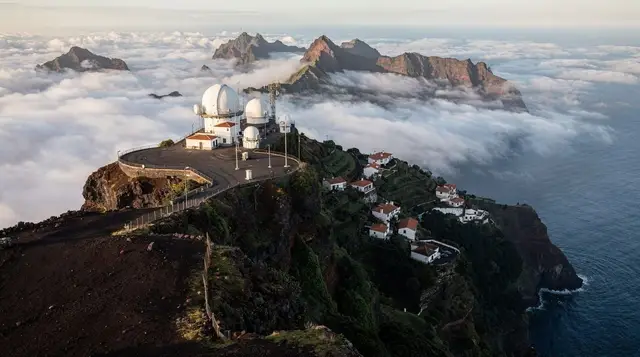
This is the single most important thing to understand before you set an alarm for 4am: the sea of clouds is common at Pico do Arieiro, not certain. It happens when a temperature inversion traps moist air below the peak, so a solid white layer sits beneath you while the summit stands clear in open sky. On a good morning, it looks like the mountain is an island in a cloud ocean, and it’s one of the most photographed sights on Madeira for good reason.
But it is weather, not a fixture. Some mornings the air is dry and you get a clean, clear view straight down the ridgelines to the coast and the sea beyond, which is a completely different and still spectacular sight. Other mornings the cloud sits too high and simply wraps the platform in mist, killing the view in both directions. Nobody, including your driver or guide, can promise you which one you’ll get. Anyone who guarantees the sea of clouds in advance is telling you what you want to hear, not what the mountain will do.
If the cloud layer is what you’re chasing specifically, a guide with local knowledge and a look at the day’s forecast can improve your odds, but “improve” is the ceiling. Go in accepting that a clear-air sunrise or even a misted-out one is a real possible outcome, and you’ll enjoy whichever one you get.
The Cold Nobody Warns You About
Funchal in winter sits around a mild 19–21°C, which is part of the island’s appeal. Pico do Arieiro, 1,818m higher and in the dark before dawn, is a different climate entirely. Temperatures at the summit can sit close to 0°C on winter mornings, and even in shoulder season it’s routinely 10–15°C colder than the coast, before wind is factored in. On an exposed platform at altitude, wind chill regularly makes it feel colder still.
This catches out a striking number of visitors who leave their hotel in a T-shirt because it was warm when they left, and who arrive at Arieiro shivering within minutes. It is genuinely one of the most common complaints about the trip, and it is entirely avoidable. Pack as you would for a winter morning at altitude, whatever the season and whatever the coastal forecast says, and layer up properly rather than relying on a single jacket. For a full seasonal breakdown of what to actually pack, see our guide to mountain weather and what to wear.
A short, non-negotiable list for anyone heading up regardless of season:
| Item | Why |
|---|---|
| Insulating mid-layer (fleece or similar) | Coastal warmth doesn’t reach the summit |
| Windproof outer shell | The platform is exposed; wind chill bites |
| Hat and gloves | Extremities suffer first at altitude before dawn |
| Closed, non-slip shoes | Uneven volcanic rock, often damp |
| A hot drink or flask | Many tours bring one, but it’s worth checking |
Getting There: Tour or Self-Drive
The road to Pico do Arieiro is well-maintained but mountainous: switchbacks, few barriers in places, and driven almost entirely in darkness for a sunrise run. Confident night drivers with mountain-road experience can self-drive and use the car park directly by the viewpoint, but this isn’t the road to learn on.
Most visitors book a dedicated sunrise tour, and there’s real value in it beyond just not driving: local guides know which mornings tend to deliver cloud and which don’t, they’ve done the timing calculation already, and several set up a warm drink or blanket while you wait. A sunrise jeep tour to Pico do Arieiro is the standard option and covers hotel pickup, the drive, and time at the viewpoint before returning to Funchal. If you’d rather not share the vehicle with other guests, the private sunrise tour to Pico do Arieiro runs the same format on your own schedule.
If you’re staying somewhere without easy transport and just need the lift, a sunrise hiking transfer from Funchal is built for hikers who want dropping at the top and, in some cases, collecting elsewhere later. And if dawn isn’t the draw so much as the dark sky beforehand, a stargazing trip to Pico do Arieiro uses the same clear, light-pollution-free summit for the hours before sunrise instead.
At the Viewpoint
The main platform at Pico do Arieiro sits a short, paved walk from the car park, no real hiking involved. It gets busy: this is one of the most visited sunrise spots in Portugal, and in peak season you’ll share the rail with a genuine crowd, tripods included. Arriving with the buffer time mentioned above buys you a decent spot before it fills in.
Underfoot is uneven volcanic rock in places even on the paved sections, and it’s still dark when most people arrive, so a phone torch or small head torch helps on the walk in even though this isn’t a hiking route. The platform itself has railings, but edges nearby do not always, so keep to marked paths, especially with children, and especially in the dark.
Once the light starts to build, the show is quick. The best colour is often in the 20–30 minutes before the sun clears the horizon, not after, so don’t spend that window setting up a tripod you haven’t tested. After the sun is fully up, most people linger 20–30 minutes for photos and coffee before the drive back down, by which point the mountain looks like an entirely different, ordinary place in daylight.
What Comes After: PR1 to Pico Ruivo
Pico do Arieiro is also the starting point for PR1, the Vereda do Arieiro, the trail that crosses to Pico Ruivo across three tunnels and a dramatic ridge. It’s tempting to think a sunrise visit and this hike pair naturally, since you’re already at the trailhead at dawn. They don’t, not casually. PR1 is a serious mountain route: roughly 7km one way, three to four hours, exposed sections, and tunnels that need a proper head torch, not a phone light.
Attempting it straight off a pre-dawn drive, in the cold, without having planned for it, is a common mistake and a genuinely risky one if weather turns. If the crossing interests you, treat it as its own separate day, properly equipped and planned for, and read the full route breakdown before committing. It deserves its own trip, not a bolt-on to a sunrise photo stop.
Booking Notes and Practical Tips
Sunrise slots are date-specific by nature, since the pickup time changes with the calendar, so book a day or two ahead where you can rather than assuming a same-day space. Cancellation is common too: the whole trip depends on weather cooperating enough for a safe mountain drive, and operators will reschedule or refund if conditions turn genuinely unsafe, though a merely cloudy forecast usually isn’t grounds for cancelling since the cloud is often the point.
Bring a fully charged phone or camera; battery drains faster in cold air, and you don’t want it dying two minutes before the colour peaks. A few sips of water and something to eat afterward isn’t a bad idea either, since most tours return to Funchal by mid-morning and breakfast at the hotel will already be well underway by the time you’re back.
Frequently Asked Questions About Pico do Arieiro Sunrise
What time do you need to leave for sunrise at Pico do Arieiro?
Most tours and self-drivers leave Funchal between 4am and 5am, depending on the season and how far sunrise is off. The drive up takes 45–60 minutes, leaving time to park and walk the short distance to the viewpoint before the sky lightens.
Is the sea of clouds guaranteed?
No. It’s common, especially when a stable high sits over the island, but it depends on the day’s temperature inversion and cloud height. Some mornings you get a clear view straight down to the coast instead, and both are worth seeing.
How cold does it get at the top?
Temperatures at 1,818m can sit close to 0°C on winter mornings before dawn, even while Funchal is a mild 18°C at sea level. Wind adds a real chill factor on the exposed platform, so this is not a place for a light jacket.
Do I need a car, or should I book a tour?
A hire car works if you’re comfortable on narrow mountain roads before dawn in the dark, with hairpins and no barriers in places. Most visitors book a jeep or minibus tour, which handles the drive, timing, and often coffee or a blanket.
Can I walk from Pico do Arieiro to Pico Ruivo after sunrise?
Yes, but that’s a separate full-day hike (PR1), not a sunrise add-on. It demands a head torch, water, sturdy boots, and three to four hours one way, so treat it as its own trip rather than something to tack onto a pre-dawn visit.
Is the viewpoint accessible without hiking?
Yes. Pico do Arieiro is the only one of Madeira’s three highest peaks reachable by road, with parking right by the viewpoint, which is why it’s the sunrise spot rather than Pico Ruivo or Pico das Torres.
What should I wear?
Layers, including a proper insulating layer and a windproof shell, plus a hat and gloves in winter. See our dedicated mountain weather and clothing guide for a full breakdown by season.
For the wider context of Madeira’s high mountains, our guides to Pico do Arieiro itself, the short route up Pico Ruivo, and hiking permits and trail fees fill in what this page leaves out.
If you’re building a wider trip around the mountains, our things to do at Pico do Arieiro hub and the best viewpoints and miradouros guide are good next stops, alongside the east versus west jeep tour comparison if you’re weighing up which guided route suits you, and the 4x4 jeep tours explained primer if this is your first time booking one.
For timing your whole trip around clear skies, best time to visit Madeira and Madeira in winter both cover how sunrise odds shift across the year, and Ribeiro Frio makes a good onward stop later the same morning if you don’t drive straight back to Funchal.
tours.mountain-peaks
Verified deep-linked GetYourGuide tours. Book through these links and we earn a small commission at no cost to you.
GetYourGuide does not provide a product photo for this activity — the image shows the meeting point, photographed by us.