Canyoning in Madeira: Where and How It's Done
What is canyoning in Madeira and where does it happen?
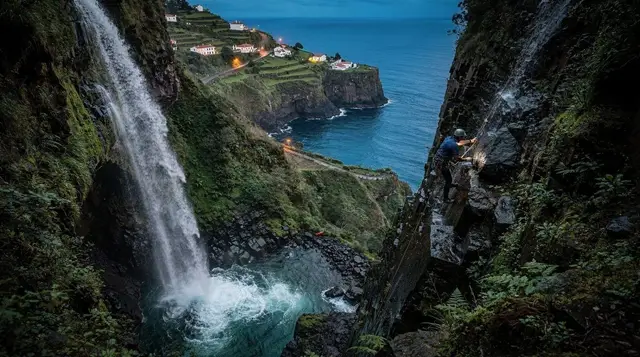
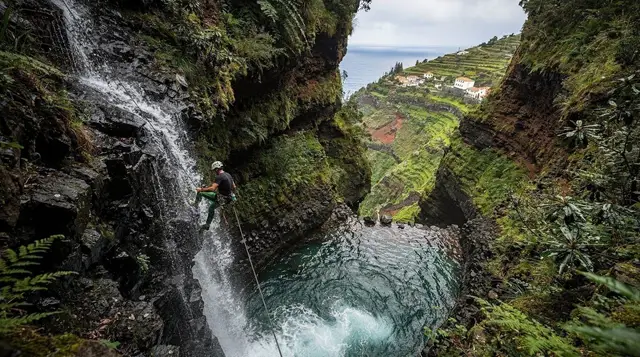
Canyoning in Madeira means descending steep, water-carved ravines (ribeiras) by abseiling down waterfalls, jumping into pools and sliding down natural rock chutes. It's concentrated in the Rabaçal area and the wetter ribeiras of the north, always led by a certified guide, since difficulty and risk vary enormously between canyons.
An Island Built for It
Madeira didn’t set out to become one of Europe’s reference destinations for canyoning; its geology did that for it. Every drop of rain that falls on the wet, forested north has to find its way down to the sea, and over millions of years it has carved the island’s volcanic rock into a network of steep, narrow ravines known locally as ribeiras. Where a levada walk asks you to follow a gentle, engineered channel along the side of a hillside, canyoning takes the opposite route: straight down the ravine itself, through waterfalls, plunge pools and smoothed rock chutes that the water has been polishing since long before anyone thought to walk beside them.
That combination of volume, verticality and year-round water is rare in Europe, and it’s why Madeira sits alongside the Alps and the Pyrenees on the shortlist of the continent’s serious canyoning destinations, in a fraction of the space. You can be swimming through a plunge pool in the morning and drinking a coffee in Funchal by early afternoon.
What Canyoning Actually Involves
Canyoning is a composite activity, built from a handful of core movements that get combined differently depending on the canyon:
- Abseiling (rappelling) down waterfalls and rock faces, on a rope fixed and controlled by the guide, sometimes alongside the falling water itself.
- Jumping from rock ledges into pools below, at heights the guide selects and clears in advance — always with the option to abseil instead if a jump doesn’t appeal.
- Natural slides, where smooth, water-polished rock lets you slide down a chute into a pool, essentially a waterpark flume carved by the ribeira itself over thousands of years.
- Swimming and scrambling through the sections in between, moving with the current rather than against it.
No single canyon uses all four in equal measure. Some routes are heavy on abseiling and light on jumps; others are the reverse. This is one of the reasons a guide matters as much as it does: they know which combination a given canyon offers and can match it, or a different canyon altogether, to what the group is comfortable with.
Where It’s Practised
The two areas that anchor Madeira’s canyoning scene are the Rabaçal plateau in the west and the ribeiras of the wetter north.
Rabaçal sits at the head of several of the island’s best-known watercourses, in the high forest above 25 Fontes and Levada do Risco. The same abundant rainfall that feeds those famous walking routes also feeds the canyons that drop away from the plateau, which is why so many operators use Rabaçal as a base or a meeting point.
To the north, the ribeiras running down through and around São Vicente, Serra de Água and the hills above Porto Moniz carry more consistent flow than most of the south, thanks to the north coast’s higher rainfall. These are the canyons operators reach for when they need reliable water outside the driest summer weeks.
Exactly which canyon a tour runs on a given day depends on recent rainfall, group experience and the season, and operators will often only confirm the specific location once conditions are checked. That flexibility is a feature, not a shortcoming — it’s part of how a responsible operator keeps a trip within the group’s ability.
Guided, Always
This is worth being direct about: canyoning in Madeira is not something to attempt without a professional guide, and no reputable operator on the island offers anything else. A few reasons this matters more here than it might elsewhere:
- Anchors are fixed and maintained by professionals. The bolts and ropes used for abseils aren’t waymarked or obvious; guides know where they are, inspect them, and carry backup equipment.
- Water levels change quickly. Rain falling on the mountains upstream can raise a canyon’s flow within the hour, long after the sky above the canyon itself has cleared. Guides check upstream conditions before and during a descent.
- Every canyon is different, and the difference isn’t cosmetic. A route considered straightforward for one operator’s clients can be genuinely serious terrain for another group, depending on current flow, the specific line taken, and recent changes to the canyon bed after storms. Guides who run a canyon regularly know it in a way a first-time visitor simply can’t.
- Rescue is specialised. If something goes wrong deep in a ravine, getting a person out safely is a skill set separate from general hiking or climbing rescue, and it’s one canyon guides train for specifically.
For the level system operators use to grade canyons, and for a full breakdown of the safety practices worth expecting from any operator you book, see the dedicated guide to canyoning levels and safety in Madeira — it covers the grading scale and what separates a well-run trip from a corner-cut one in more depth than belongs on this page.
Choosing a Tour
Operators generally split their canyoning trips by two things: how much prior experience they assume, and how many days the trip runs over. A short private outing with a private canyoning guide suits anyone who wants the pace and canyon chosen around their own group rather than mixed into a larger one, while a first-timer with no canyoning background is usually better served starting on a beginner-focused canyoning route built around smaller jumps and shorter abseils.
For visitors who want to progress rather than sample, some operators run structured trips over several days. A two-day canyoning trip through progressively different canyons lets a group build confidence on the first day before moving to a more committing route on the second, and a four-day version does the same over a longer arc, taking a group through a multi-day canyoning programme across increasing levels as skills and comfort build.
| Format | Suits | Typical duration |
|---|---|---|
| Beginner canyoning | First-timers, no experience needed | Half day |
| Private canyoning guide | Groups wanting a tailored pace and canyon | Half day to full day |
| Multi-canyon flow (2 days) | Visitors wanting variety and a step up in challenge | 2 days |
| Progressive levels (4 days) | Visitors who want to build skills across a stay | 4 days |
| Specific named canyon route | Those who’ve read about a particular ravine | Half day to full day |
Some operators also run trips built around one specific, named canyon rather than a general level. A route through Madeira’s own hidden ravine, sometimes marketed as a level-2 descent through a lesser-known valley, is a good example of the kind of trip worth asking about directly if you’ve already got some canyoning behind you and want something less generic than a standard beginner circuit.
Whichever format you choose, the deciding factor should be your own experience and comfort with heights and moving water, not the label alone — a “level 2” route with one operator and another with a different operator are not guaranteed to feel the same.
What to Bring, What’s Provided
Operators supply the technical equipment: wetsuit, helmet, harness, and usually canyon-specific footwear, since ordinary trainers don’t grip wet volcanic rock the way purpose-built canyon shoes do. What’s worth bringing yourself:
- A swimsuit to wear under the wetsuit.
- A towel and dry clothes for afterwards, left in the vehicle or at the meeting point.
- Sun protection for before and after the canyon itself, since Madeira’s UV can be strong even on a cloudy day.
- Nothing that isn’t waterproof and secured — watches, phones and jewellery are best left at the accommodation rather than trusted to a pocket in moving water.
Most trips include transfers from central pickup points, which matters given how narrow and steep the roads into some of the ribeiras are; see the wider guide to renting a car on the island if you’re weighing up whether to self-drive to a meeting point or rely on transfers throughout your stay.
When to Go
Canyoning runs for much of the year in Madeira, but conditions shift with the seasons. Late spring through early autumn brings the most settled water levels and the warmest temperatures, both in and out of the wetsuit, and it’s when most operators run their fullest schedule. Some operators keep offering shorter, lower-exposure routes through winter, but the same rain that makes Madeira’s ribeiras worth visiting in the first place can also close a canyon at short notice after a heavy spell, so winter bookings are best treated as flexible rather than fixed.
For a fuller picture of how conditions change across the year, the guide to the best time to visit Madeira lays out the seasonal pattern in more detail, and mountain weather and what to pack is worth a look before any activity that takes you into the island’s wetter interior.
Canyoning Versus the Island’s Other Water Activities
It’s easy to lump canyoning together with Madeira’s other outdoor water activities, but the overlap is smaller than it looks. Diving and coasteering and kayaking both happen on the coast, in open or semi-open water, with very different risk profiles from a confined inland ravine.
Canyoning is inland, vertical, and structured around the descent of a single watercourse from top to bottom — closer in spirit to via ferrata or gorge scrambling elsewhere in Europe than to anything happening at sea level. If what appeals to you is moving water and adventure more broadly rather than canyons specifically, it’s worth reading across those guides before committing to a booking, since the fitness and comfort levels they ask for aren’t identical.
It’s also worth separating canyoning clearly from levada walking, even though both take place in the same wet, folded landscape. A levada walk is a horizontal route along a maintained irrigation channel, and while some stretches are exposed and require a head for heights, the activity itself is walking. Canyoning is a vertical descent through the ravine bed, built around abseiling, jumping and swimming rather than walking on a path. Anyone drawn to Madeira’s outdoors for the levadas first and considering canyoning as an add-on should know the two ask for genuinely different things from a body and a nerve.
Booking Sensibly
A few practical points worth carrying into any canyoning booking on the island:
- Book with an operator, not a canyon. You’re not choosing a specific ravine so much as choosing a guide and a company whose judgement you’re trusting to pick the right one for the day’s conditions.
- Ask what happens if it rains. A responsible operator will have a clear policy on rescheduling or switching to a different, calmer canyon rather than pushing ahead regardless of conditions.
- Don’t assume yesterday’s grade applies today. Water levels move fast after rain in the mountains, and what was a level 1 route on Monday can be closed entirely by Wednesday.
- Mind the rest of your itinerary. Canyoning mornings tend to start early and leave you tired by early afternoon; it pairs awkwardly with a long drive or a big hike planned for the same day. If you’re building out a broader stay, the wider list of canyoning tours across the island and the activities grouped around Rabaçal are worth browsing together with the rest of your plans, and it’s also worth reading the general guide to common mistakes first-time visitors make, since overpacking an itinerary around one strenuous morning is a common one.
Madeira’s canyons reward exactly the kind of visitor who treats them with a bit of respect: turn up with the right expectations, book with a guide who knows the specific ribeira you’ll be in that day, and the descent through rock and water that the island has been carving for millions of years does the rest of the work.
Canyoning in Madeira: Your Questions Answered
Do I need experience to try canyoning in Madeira?
No. Several operators run beginner-level routes built around walking, easy jumps and short, guide-assisted abseils, with no prior canyoning or climbing experience required. What matters is a reasonable level of fitness and comfort in moving water.
Can I go canyoning in Madeira without a guide?
No, and you shouldn’t try. Madeira’s canyons are unmarked, the abseil anchors are fixed by professionals who maintain them, and water levels can change fast after rain upstream. Every legitimate operator on the island runs guided-only trips with qualified canyon guides.
How difficult is canyoning in Madeira?
It ranges from gentle, family-friendly routes with a handful of small jumps to committing multi-pitch descents with abseils of 20 metres or more. Madeira grades its canyons like the rest of Europe does, and a route rated for one level can feel entirely different from another at the same nominal grade, so always check with the operator rather than assuming.
What should I wear for canyoning?
A swimsuit under a wetsuit, which operators provide along with a helmet and a harness. Bring old trainers or water shoes with a closed toe if you have them, though many operators supply canyon-specific footwear too. Leave watches, jewellery and anything not waterproof at the hotel.
Is canyoning in Madeira safe?
It’s a controlled-risk activity, not a risk-free one. Guides carry safety and rescue equipment, brief every jump and abseil, and will change or shorten a route if water levels or weather turn against it. The risk that remains is inherent to moving through a ravine with rock, water and height, which is exactly why solo canyoning is never a sensible option here.
What’s the best time of year for canyoning in Madeira?
Late spring through early autumn gives the most reliable conditions, with warmer water and lower flood risk. Winter canyoning is offered by some operators on lower, less exposed routes, but heavy winter rain can close canyons at short notice, sometimes on the day itself.
How does canyoning compare to levada walking?
A levada walk follows a flat irrigation channel on foot and asks for a head for heights on the exposed stretches; canyoning goes down through the water itself, with abseiling, jumping and swimming as the core of the activity rather than an occasional obstacle. They’re different activities that happen to share the same wet, folded terrain.
Can children go canyoning in Madeira?
Some beginner routes accept children, usually from around 8 to 10 years old depending on the operator and the canyon, but minimum ages and requirements vary by tour, so check directly with the operator before booking a family trip.
tours.canyoning
Verified deep-linked GetYourGuide tours. Book through these links and we earn a small commission at no cost to you.
GetYourGuide does not provide a product photo for this activity — the image shows the meeting point, photographed by us.