Canyoning Levels and Safety in Madeira: A Realistic Guide
What is the difference between canyoning levels in Madeira?
Madeira's canyoning trips range from short introductory circuits with small jumps and abseils under ten metres to advanced and elite routes with sustained vertical drops of forty to sixty metres, cold fast-moving water and full-day commitment. The gap in difficulty, fitness and risk between the two ends is real, not marketing.
Why “canyoning in Madeira” is not one single trip
If you have already read our general introduction to canyoning in Madeira, you know why the island is one of Europe’s better places to try the sport: steep, water-carved ribeiras dropping off the central massif give you jumps, slides, natural water chutes and abseils in a single descent, most of it within reach of Seixal and the villages of the north coast.
What that overview does not do — and what trips people up when they book — is spell out how different one canyoning trip can be from another under the same umbrella word. This page fills that gap: the levels, the kit you are actually handed, who should not book which trip, and the two hazards that matter more than any of the jumps — sudden flooding and cold water.
The levels, in plain terms
Operators in Madeira do not all use the same grading language, but in practice the trips on offer fall into three tiers, and treating them as interchangeable is the single most common mistake first-time bookers make.
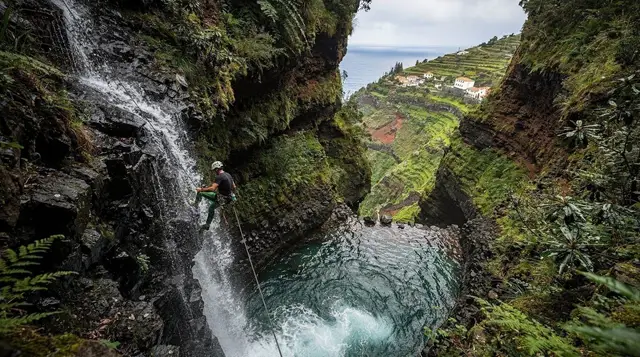
Introductory and Level 3 circuits. These are built to be approachable: a walk-in of twenty to forty minutes, then a sequence of small jumps (typically one to four metres, always with a guide checking the pool depth first), a few short slides down smoothed rock, and abseils generally under twelve metres, each one talked through step by step. Total time in the canyon is usually two and a half to three and a half hours. This is where most first-timers, and most families with older children, should start.
Advanced routes. Longer days, less hand-holding at each obstacle, abseils that combine into longer drops, and canyons chosen for continuous water flow rather than calm pools between features. Groups are kept small deliberately, because the guide-to-client ratio that works for a gentle introductory circuit is not tight enough once the terrain gets more serious.
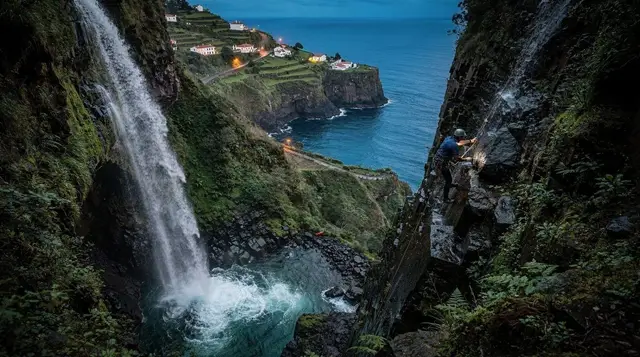
Elite and specialised routes. Built around one headline feature rather than a varied sequence — most notably a sustained vertical abseil in the sixty-metre range at Ribeira Funda, done in stages or as a single free-hanging drop depending on the operator’s rigging. These trips assume you can already abseil competently, follow instructions quickly under a harness, and are comfortable with real exposure for an extended period.
The point worth repeating, because guidebooks routinely blur it: a Level 3 adventure and a sixty-metre elite vertical descent are not the same activity wearing different marketing. The equipment overlaps, the general skill of abseiling overlaps, but the fitness required, the consequence of a mistake, and the amount of the day spent hanging on a rope rather than walking are all substantially different. Treat the naming on a listing as a genuine signal of what you are booking, not a flourish.
| Tier | Typical drops | Duration | Who it suits |
|---|---|---|---|
| Introductory / Level 3 | Jumps to ~4m, abseils to ~12m | 2.5–3.5 hours | First-timers, families with older children, moderate fitness |
| Advanced | Longer combined abseils, continuous flow | 4–5 hours | Fit adults, some outdoor experience helpful |
| Elite / specialised (e.g. 60m Ribeira Funda) | Single sustained vertical abseil ~60m | Half day | Confident, fit participants comfortable with height and exposure |
For a first outing near Seixal that stays inside the accessible end of that table, the Seixal Level 3 canyoning adventure is the trip most operators point beginners towards. Those who want the day built around a genuine test of nerve and technique, rather than a varied introduction, are the audience for the elite sixty-metre Ribeira Funda descent.
What equipment is actually supplied
Every reputable operator on this coast provides the same core kit, and you should not need to bring anything technical:
- Wetsuit — usually 5mm, sometimes with a separate jacket layer for colder months or longer trips, sized and fitted at the meeting point.
- Helmet — worn from the first jump to the last, non-negotiable, adjusted before you start walking in.
- Harness — a climbing-style seat harness with the abseiling device already rigged by the guide, who checks it again at every drop.
- Footwear — either neoprene canyoning boots provided by the operator, or a requirement that you wear closed trainers with good grip that you do not mind getting permanently wet; ask which applies when you book.
- Guide-carried safety gear — first-aid kit, spare rope, and on longer or more remote routes a means of calling for help where mobile signal in a gorge is unreliable.
What you bring is simple: swimwear worn under the wetsuit, a change of dry clothes and a towel left in the vehicle or at base, and a small amount of cash for anything after. Cameras and phones stay behind unless the operator explicitly offers a waterproof case, since a dropped phone in moving water is gone for good.
Age, fitness and who should sit this one out
Minimum age varies by tier rather than by operator, which is a useful shortcut when comparing listings. Introductory and Level 3 circuits commonly accept participants from around ten to twelve years old when accompanied by a parent, since the jumps are optional (you can always take the walking bypass around a feature) and the abseils are short and coached individually. Advanced and elite routes raise that bar to sixteen or eighteen, partly for insurance reasons and partly because the descender hardware used on a long free-hanging abseil needs a minimum body weight to function correctly — worth checking directly with the operator if you are a lighter adult or a smaller teenager hoping to join an advanced trip.
Fitness matters more than raw athleticism. You need to be able to walk on uneven, wet rock for the approach and exit, climb in and out of a harness repeatedly, and — this catches people out — swim competently in moving water while wearing a wetsuit and helmet, which is more tiring than swimming in a pool. A wetsuit adds buoyancy, which helps, but panic in fast water is the real risk, not lack of upper-body strength.
Reasons to choose a gentler day, or skip canyoning altogether in favour of something like the Seixal walking tour with pastel de nata or a look at diving in Madeira instead: a heart condition, pregnancy, a recent injury to shoulders or knees, epilepsy that is not well controlled, or a fear of enclosed, wet, dark spaces strong enough that a short tunnel would cause real distress. Be honest with the operator when booking rather than on the day — a good guide would rather reroute a client at the meeting point than partway down a gorge.
The two risks that matter: flash flooding and cold water
Sudden flooding
This is the hazard that separates canyoning from most other Madeira activities, and it is worth understanding rather than just being warned about. A canyon collects water from everything upstream of it — the whole catchment on the slopes above, sometimes kilometres away and hundreds of metres higher. Rain falling on that upper catchment can turn a shin-deep stream at the entry point into a genuinely dangerous flow within thirty to sixty minutes, even while the sky directly above you at the start of the canyon looks clear.
This is why serious operators check the forecast for the whole watershed, not just the trailhead, and why a trip can be cancelled or rerouted the morning of a booking despite fine weather at the meeting point. If a guide postpones your trip because of rain that fell the previous evening somewhere you cannot see, that decision is the reason accidents in canyoning are rare here rather than the reason your day is inconvenienced. The same caution applies to the island’s levada paths, which close after heavy rain for closely related reasons — moving water and narrow terrain are a recurring theme across Madeira’s outdoor activities, not something unique to one sport.
Cold water
Madeira’s mountain streams are spring-fed and largely shaded by the ribeira walls, so surface air temperature tells you almost nothing about water temperature. Expect fourteen to eighteen degrees Celsius on most routes, all year, which is genuinely cold for sustained immersion — cold enough that hypothermia, not drowning, is the more common reason a trip gets cut short. This is precisely why the wetsuit is compulsory rather than optional kit, and why some operators add a thicker layer or a jacket for winter bookings or for routes with longer stretches of swimming. If you run cold, mention it when booking; a better-fitted or thicker wetsuit costs the operator nothing and changes your day considerably.
Choosing between the three bookable levels near Seixal
For a straightforward first canyoning day that still delivers real jumps and a couple of proper abseils, the Seixal Level 3 canyoning adventure is the sensible default — it is the trip built to be approachable without being watered down.
For a group already comfortable with the basics and after a longer, more demanding day in small groups, look at the advanced small-group canyoning route, which deliberately keeps numbers low given the terrain. And if the single reason you are reading this page is the promise of a sixty-metre abseil, the elite Ribeira Funda vertical descent is the specific trip that delivers it — read the age and weight requirements before booking, since this is the tier where they are enforced most strictly.
None of the three is a bad choice on its own terms. The mistake is picking based on price or availability alone and assuming the difficulty is roughly interchangeable — it is not, and the gap shows up in the middle of a gorge rather than on the booking page.
Practical notes before you book
- Check the forecast for several days before your trip, not just the day itself — this is what your guide is doing, and knowing why helps you understand a late cancellation rather than resent it.
- Book earlier in your stay, not the last available day. A weather-related postponement with two spare days left is an inconvenience; the same postponement on your final day is a missed activity entirely. This is one of the more common travel mistakes visitors make in Madeira.
- Pack a genuine dry change of clothes, including socks and shoes, left in the vehicle — see our general packing guidance for Madeira if you are travelling light. Guides will not be impressed by a two-hour drive home in a damp wetsuit, and neither will your hire car’s upholstery.
- Combine it with a low-key second half of the day. Seixal’s black-sand beach and natural pools sit a short drive from most canyon exits, and a jeep tour such as the west Madeira route through Fanal Forest and Seixal beach makes a reasonable pairing if you want scenery without another physical activity afterwards.
- Watch the wider mountain weather, not just the coast — our guide to mountain weather and what to wear explains why conditions at 1,000 metres can be entirely different from conditions in Funchal on the same morning, which is directly relevant to a catchment sitting above your canyon.
Canyoning Levels and Safety: Your Questions Answered
Do I need previous canyoning or abseiling experience?
No. Introductory and Level 3 routes teach the abseiling technique at the first drop and coach each person through it individually. Advanced and elite routes are still open to first-timers, but the pace is faster and less time is spent per person on technique, so some prior confidence with heights and ropes helps.
What is the minimum age for canyoning in Madeira?
Introductory routes commonly accept participants from around ten to twelve, accompanied by an adult, since jumps can usually be bypassed. Advanced and elite routes typically require sixteen to eighteen, and elite abseils may add a minimum body weight for the descender hardware to work correctly.
Is the water cold, even in summer?
Yes, consistently. Spring-fed, shaded ribeiras usually run fourteen to eighteen degrees Celsius year-round, which is why a full wetsuit is supplied and worn on every trip regardless of the weather above the canyon.
Can a canyon flood while I am inside it?
It can. Rainfall on the catchment above the canyon, sometimes far out of sight, can raise water levels within an hour. Guides check the wider forecast and will postpone or reroute if rain has fallen upstream recently, even under clear skies at the meeting point.
What equipment is provided?
A wetsuit, helmet, harness with abseiling hardware already rigged, and either canyoning boots or a requirement to wear your own closed, grippy trainers. You bring swimwear underneath and dry clothes for afterwards.
Is the Level 3 route the same difficulty as the Elite sixty-metre canyon?
No. The Level 3 circuit is designed as an accessible introduction with shorter jumps and abseils. The Elite route is a specialised trip built around a single sustained sixty-metre vertical descent and expects genuine fitness and comfort with exposure.
What should I do if I am afraid of heights?
Tell the operator when you book. Introductory and Level 3 circuits mix in jumps and slides so one nervous abseil does not define the day. Advanced and elite routes are built around sustained exposure and are not the right choice for a strong fear of heights.
How physically demanding is a typical trip?
Expect uneven wet-rock walking on the approach and exit, repeated climbing in and out of a harness, and swimming in moving water while wearing a wetsuit — more tiring than pool swimming. Reasonable general fitness is enough for introductory and Level 3 routes; advanced and elite routes ask for more.
tours.canyoning
Verified deep-linked GetYourGuide tours. Book through these links and we earn a small commission at no cost to you.
GetYourGuide does not provide a product photo for this activity — the image shows the meeting point, photographed by us.