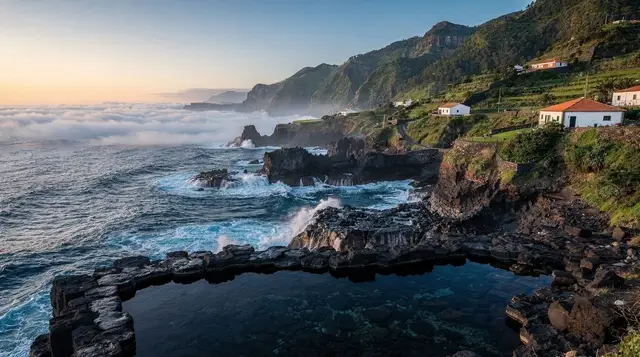
Most visitors to Madeira’s east coast are pointed straight to Machico, and for good reason: it has a wide bay, imported golden sand, cafés along the promenade and lifeguards in season. Prainha is the opposite kind of place. It is a small pocket of black volcanic sand and gravel tucked below cliffs a few minutes from Caniçal, with a handful of parasols in summer, one modest beach bar, and very little else standing between you and the open Atlantic.
A black-sand beach with a very different story to Machico
Prainha’s sand is dark grey to black because it is genuinely volcanic — the same basalt that built the rest of the island, broken down by the sea rather than trucked in. That single fact is worth holding onto, because it is also the fact most guides get wrong or skip. Machico’s beach, a short drive away, looks similar in photographs from a distance but is a different thing entirely: a bay filled with imported golden sand in 2008 to create a conventional resort beach. Prainha was never engineered. It is smaller, rockier at the edges, more exposed to swell, and it has never had the promenade, cafés and lifeguard towers that make Machico an easy family day out.
That is not a flaw to apologise for — it is the point. Prainha belongs to the same raw, treeless landscape as the nearby Ponta de São Lourenço peninsula: red-brown volcanic rock, sparse vegetation, wind, and a coastline that has not been softened for tourism. Anyone expecting sun loungers in neat rows, a lifeguard hut and a children’s play area will be disappointed. Anyone after a genuine, undeveloped stretch of Atlantic coastline will find it one of the more memorable half-days on the island.
Prainha versus Machico beach at a glance
| Prainha | Machico beach | |
|---|---|---|
| Sand | Natural, dark volcanic sand and gravel | Imported golden sand (added 2008) |
| Setting | Small cove below cliffs, exposed | Wide sheltered bay, town promenade |
| Facilities | Basic seasonal beach bar, limited shade | Cafés, showers, lifeguards in season |
| Crowds | Quiet, mostly local and hiking traffic | Busy in summer, day-trip coaches |
| Best for | Wild swimming, photography, hikers | Families, easy access, all-day comfort |
| Getting there | Car or taxi, short walk down | Bus, car, easy parking near town |
If in doubt, treat the choice as complementary rather than competing: Machico for a relaxed family afternoon, Prainha for a shorter, wilder stop on a day exploring the east.
Getting there
Prainha sits just off the road between Machico and Caniçal, roughly 35 km and around 40 minutes’ drive from Funchal on the VR1 dual carriageway, which handles most of the distance. A short, fairly steep side road drops down from the main road towards the sea, ending at a small car park; from there it is a brief walk down to the sand.
The road is manageable in an ordinary hire car, but it is narrow in places, so take it slowly, particularly if another vehicle is coming the other way. Guidance on hire cars and mountain-and-coast driving in general is covered in our car rental and driving in Madeira guides, both worth reading before your first trip down the east coast.
Public transport does not reach Prainha directly. Buses run from Funchal towards Machico and Caniçal, but you would still need to walk or taxi the final stretch down to the beach, which makes a hire car or an organised tour the more realistic option for most visitors, especially if you are combining the beach with a walk out towards Ponta de São Lourenço on the same day. If you would rather not drive at all, a guided east Madeira day trip typically threads together Caniçal, Prainha and the peninsula in a single loop — see our east Madeira day trip guide for how that usually works.
The sand, the sea and what to expect
Volcanic sand behaves differently from the golden sand most people picture on a beach holiday. It is coarser in places, heats up faster in direct sun, and the beach itself shelves more unevenly than a purpose-built bay like Machico’s. None of that makes it unpleasant — many visitors prefer the texture and the colour contrast against turquoise water — but it does mean flip-flops and a bit of care picking your spot matter more here than at a groomed resort beach.
Swimming conditions vary with the season and the swell far more than they do at sheltered Machico. From late spring through early autumn, on a calm day, the water is clear and pleasant and the cove offers reasonable protection. Once the Atlantic swell picks up — which happens often from autumn into winter, and can happen without much warning even in summer — Prainha loses its shelter quickly, and what looks swimmable from the car park can turn rough within the hour.
There is no permanent lifeguard presence to match a resort beach, so use your own judgement, watch other swimmers, and treat any sign of a strong current or breaking swell as a reason to stay on the sand. Our general guide to swimming safety in the Atlantic is worth reading before any open-water swim on this coast, and it applies especially here.
Facilities are deliberately minimal. Expect a small car park, a modest beach bar open through the warmer months serving drinks and simple food, and very little natural shade beyond what a rented parasol gives you. Bring your own water, sun protection and a hat — the sun reflects hard off dark sand and pale rock in this part of the island, and there is nowhere obvious to shelter from it in the middle of the day. For a broader look at Madeira’s beaches and where Prainha fits among them, see beaches of Madeira; if you are more drawn to the island’s volcanic swimming spots generally, our guide to natural lava pools covers the other side of that story, on the north coast.
Pairing Prainha with Ponta de São Lourenço
The single best reason to build a specific stop around Prainha is its proximity to the Ponta de São Lourenço peninsula — the exposed, red-brown finger of volcanic land at Madeira’s easternmost tip, walked on the official PR8 trail. The peninsula offers no shade at all across roughly 8 km there and back, so a common and sensible plan is to walk it in the cooler part of the morning, then head back towards Prainha for a swim and something to eat once the heat builds.
The landscapes genuinely rhyme with each other: both are bare, dry, volcanic and a world away from the laurel forest and levada walks of the island’s interior. If you are planning that walk, our things to do at Ponta de São Lourenço page has route and timing detail.
Caniçal: whales, fishing boats and the old harbour
Caniçal itself, a couple of minutes from Prainha, was Madeira’s whaling port until hunting stopped in 1981; it is now the departure point for whale-watching trips and the location of the island’s Whaling Museum, which tells that history honestly rather than glossing over it — see our whaling museum and Caniçal guide for what to expect. The harbour still has a working fishing fleet, and one of the most grounded ways to spend a morning here is on board with local fishermen rather than a tourist boat built purely for sightseeing.
a half-day guided fishing trip out of Caniçal harbourBeyond fishing and whale watching, the east of the island is well suited to 4x4 exploring, since many of its viewpoints and back roads sit above cliffs that a standard hire car should not attempt.
a guided jeep tour through the east and up towards Pico do ArieiroFor visitors basing themselves in Funchal rather than the east, a private guided day covering Caniçal, the coastline and a rum distillery stop packages the whole area into one outing without the need to navigate the narrow coast roads yourself — details are in our east Madeira day trip guide.
Photography and light
Prainha photographs well precisely because it is not manicured: dark sand, pale cliffs, and turquoise water make a strong contrast that a golden-sand beach cannot match. Early morning light, before the car park fills and while the tide is still low, gives the cleanest shots of the sand and rock together. If sunrise photography on this coast appeals, note that most of the well-known Madeira sunrise spots — Pico do Arieiro chief among them — are inland and mountainous rather than coastal, so treat a Prainha sunrise as a separate, quieter outing.
an early guided sunrise experience on the islandFor a wider view of where to point a camera across Madeira, our photography spots guide covers the island’s other standout locations, and our general what to pack for Madeira guide is useful preparation if you are combining a beach stop with a hiking day, since the kit for each is different.
Practical tips for visiting Prainha
- Go outside peak midday sun if you can. There is little shade, and dark sand gets noticeably hotter underfoot than pale sand.
- Check the swell before committing to swimming. A calm-looking morning can turn choppy by early afternoon, particularly outside the May-to-September window.
- Bring cash for the beach bar. It is seasonal and basic, not set up for anything beyond simple drinks and snacks.
- Wear proper footwear for the walk down, and sandals rather than bare feet on the beach itself — the sand mixes with gravel and small stones in places.
- Do not expect Machico-level facilities. There are no lifeguards on permanent duty, no showers to rely on, and parking is limited rather than plentiful.
- Combine it with a morning walk, whether that is Ponta de São Lourenço or a shorter loop around Caniçal, rather than treating it as a destination on its own for a whole day.
Budgeting a visit
A half-day at Prainha costs very little beyond petrol or a taxi fare if you are self-driving and bringing your own food and drink — realistically €10-20 per person once you add a snack from the beach bar. Combine it with a guided tour of the east, a jeep excursion, or a fishing trip, and a fuller day runs closer to the €40-80 per person range depending on the activity chosen. Either way, it sits comfortably within a typical east-coast day trip budget; see the wider east Madeira day trip guide for how Prainha fits alongside Caniçal, Machico and Ponta de São Lourenço in a single day’s spending.
Prainha’s questions answered
Is Prainha a natural beach in Madeira?
Yes. Prainha, just outside Caniçal, is Madeira’s only naturally occurring black-sand beach, formed from volcanic sand and gravel. It is smaller, more exposed and less developed than Machico’s beach nearby, which was built from imported golden sand in 2008.
What is the difference between Prainha and Machico beach?
Prainha is a natural volcanic beach with dark grey-black sand and gravel, tucked below cliffs with basic facilities and no real shelter. Machico’s beach was created in 2008 from imported golden sand and sits in a bay with promenades, cafés and lifeguards, making it the far more built-up, family-oriented option.
Is it safe to swim at Prainha?
Swimming is generally fine in calm conditions from late spring to early autumn, but Prainha has no permanent lifeguard cover to match a resort beach, and the open Atlantic exposure means currents and swell pick up quickly. Check conditions before you go and skip it entirely after storms or on days with a north or north-easterly swell.
How do you get to Prainha without a car?
Public buses run from Funchal towards Caniçal and Machico, but none stop directly at Prainha, so you would need to walk the last stretch down from the main road or take a taxi from Caniçal. A hire car or a guided east Madeira tour is the more practical option for most visitors.
Are there facilities at Prainha?
Facilities are basic: a small car park, a modest beach bar that opens in the warmer months, and limited shade. There are no resort-style amenities, so bring your own water, sun protection and anything else you need for the day.
Can you combine Prainha with the Ponta de São Lourenço walk?
Yes, and it is one of the best pairings on the east coast. Prainha sits close to the start of the Ponta de São Lourenço peninsula, so many visitors walk the exposed, shadeless trail first and finish with a swim to cool off.
Is Prainha suitable for young children?
It suits confident families more than very young children. The beach is natural rather than manicured, the sand shelves can be uneven, and there is less shelter and supervision than at Machico, which is the better choice for toddlers and nervous swimmers.