A Reserve Built Around a Headland, Not a Beach
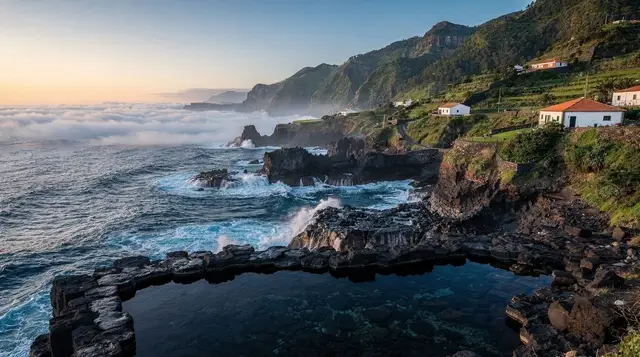
Most visitors reach the south coast of Madeira through Funchal’s hotel zone or the fishing harbour at Camara de Lobos, further west. Garajau sits on the other side of the capital, past Canico, on a headland that drops steeply into the Atlantic. There is no sand here and very little in the way of a promenade. What there is, instead, is a stretch of protected sea that has been left alone since 1986, and a statue on the clifftop that has watched over it since long before that.
Garajau is not a place people build a whole day around by accident. It rewards a specific kind of visitor: someone who wants to get in the water and see fish that have stopped being afraid of people, or someone happy to stand on a terrace above a cliff for twenty minutes and then move on. Both are legitimate ways to spend time here, and they are very different trips, so it helps to know which one you are planning before you drive out.
The Marine Reserve: Protected Since 1986
The Garajau Natural Reserve was created in 1986, making it one of the older protected marine areas in Portuguese waters. Fishing, spearfishing and the removal of any marine life are prohibited within its boundaries, and have been for close to four decades. That length of protection matters more than it might sound: fish populations that are left alone for a generation behave differently from fish anywhere they are hunted, even lightly.
The clearest sign of that difference is the reserve’s brown groupers. Elsewhere along Madeira’s coast, groupers are wary and disappear into rock crevices the moment a diver approaches. At Garajau, a number of individual fish have grown large, hold territory close to popular dive routes, and will often stay put, sometimes coming close enough to be genuinely startling on a first dive here. Local dive guides tend to know several of these groupers by sight and can point them out on request.
This is worth being precise about, because it gets flattened into “friendly fish” in a lot of casual write-ups, and that framing invites the wrong behaviour. These are wild, protected animals that have simply lost their flight reflex around calm, slow-moving divers who don’t chase or corner them. They are not there to be touched, fed or ridden for a photo, and doing any of those things inside a reserve that exists specifically to leave marine life undisturbed defeats the point of the place. Reputable operators brief this clearly before every dive; if one doesn’t, that is worth noting.
Diving Garajau: Reserve Rules, Not a Free-for-All
This is the piece that gets skipped in a lot of guides, and it shouldn’t be. Garajau is a legally protected reserve, and access to dive inside it is controlled. You cannot simply turn up with your own tank and go in wherever you like — diving is arranged through licensed dive centres that operate under the reserve’s management rules, follow set entry and exit points, and keep group sizes and routes within what the reserve allows. That structure is a large part of why the marine life here has recovered as well as it has; it is not incidental to the experience, it is the reason the experience exists.
For anyone weighing this against diving in Madeira more broadly, Garajau and its neighbour Canico de Baixo are the two sites divers on the island name first, and for good reason: both offer clear, current-sheltered water along a volcanic coastline with genuinely good visibility outside winter storm periods. See the full Garajau marine reserve guide for site-by-site detail on the dive spots themselves.
Water temperature is the other detail worth repeating, because it surprises people who assume “Madeira” means Caribbean-warm sea. It does not. The Atlantic here runs from around 18°C in the cooler months to about 24°C at the height of summer — noticeably fresh, not tropical, in any season. A 5mm wetsuit is the standard choice for most of the year, and some divers add a hood or gloves for winter dives. If a dive operator hands you a thin shorty wetsuit for a February dive, ask questions before getting in.
| Month band | Typical sea temperature | Suggested exposure suit |
|---|---|---|
| January–March | 18–19°C | 5mm wetsuit, hood recommended |
| April–June | 19–21°C | 5mm wetsuit |
| July–September | 21–24°C | 3–5mm wetsuit |
| October–December | 19–21°C | 5mm wetsuit |
Certification requirements are the usual ones for anywhere with depth and current to consider: open-water certified divers can join most standard dives on the reserve’s outer edges, while some of the deeper walls and swim-throughs are reserved for advanced or more experienced divers. Non-divers and first-timers can usually arrange a supervised introductory dive through the same centres, which is a reasonable way to see the reserve without a certification card.
Snorkellers are not shut out. The shallower fringes of the reserve, closer to the rocks below the Cristo Rei, hold enough fish and structure to make an hour with a mask and fins worthwhile, and several operators run combined snorkel-and-boat outings that pass along this stretch of coast. It is a gentler, cheaper way in, though it will not put you face to face with the reserve’s resident groupers the way a proper dive usually does.
Cristo Rei: The Statue Above the Bay
The Cristo Rei of Garajau was inaugurated in 1927, making it one of the earlier monuments of its kind anywhere — well before the far more famous statues it is sometimes compared to elsewhere in the Portuguese-speaking world. It stands on the clifftop above the reserve, arms open toward the Atlantic, and the terrace beneath it is free to visit and open every day.
The view is the real draw for anyone not getting in the water: a long sweep of coastline stretching toward Canico to the east and, on a clear day, back along the coast toward Funchal and the hills above Camara de Lobos to the west — both worth knowing as landmarks from here, though neither is really the subject of a Garajau visit.
The terrace is a natural stop for photographers, particularly in the hour before sunset when the light comes in low across the water, and it is easy enough to combine with lunch in Canico afterward. For a broader shortlist of where else on the island rewards this kind of stop, the best viewpoints and miradouros guide covers the rest of the south coast.
Parking is limited immediately at the statue and fills up around midday in high season; arriving early morning or in the late afternoon avoids the worst of it and, as a bonus, tends to give better light for photos in both cases.
Garajau and Canico de Baixo: One Coastline, Two Names
It’s worth being clear about the geography, because guidebooks and dive-shop websites use “Garajau” and “Canico de Baixo” almost interchangeably, which causes real confusion for first-time visitors trying to work out where to actually go. They are neighbouring stretches of the same protected coastline, roughly ten minutes apart by road:
- Garajau centres on the headland directly below the Cristo Rei statue, with steeper drop-offs and some of the reserve’s better-known grouper territory close by.
- Canico de Baixo, a short drive east, is where most of the area’s shore-diving infrastructure sits — purpose-built dive centres, easier shore entries, and a slightly gentler profile that suits newer divers and confined-water training.
Most dive operators based in either location run boats and shore dives across both parts of the reserve, so booking through a Canico de Baixo dive centre very often means diving Garajau’s sites on the same trip, and vice versa. If a specific grouper encounter or a particular wall dive is the goal, it’s worth asking the operator directly which site that dive covers rather than assuming from the town name on their website.
Getting There and What to Combine It With
Garajau is roughly 20–25 minutes by car from central Funchal along the VR1 and the coast road through Santa Cruz, well within range of a half-day trip. There is no meaningful public transport link direct to the reserve itself; a hire car or a taxi are the realistic options, and most dive centres also offer pickup from Funchal hotels as part of a booked dive package.
Because it sits on the way toward Madeira’s east coast, Garajau slots naturally into a longer loop rather than standing entirely alone. A common combination is Garajau in the morning, lunch in Canico, then continuing east toward Machico and out to the wind-scoured tip of Ponta de Sao Lourenco for the afternoon — a route close to what the east Madeira day trip guide lays out in full, and one that also works as a single day inside the longer Madeira adventure week itinerary.
For visitors basing themselves around the eastern half of the island rather than Funchal, the operator options widen a little. A guided tour built around this end of the coast, such as the private guided tour of east Madeira that takes in a rum distillery along the way, is a reasonable way to see Garajau’s surroundings alongside other east-coast stops without self-driving the whole loop. Anyone drawn to the fishing heritage around this stretch of coast might also look at the guided fishing trip departing from Caniçal, further along the same coastline.
Other Ways to Spend Time on the Water Here
Diving is the headline activity, but it isn’t the only reason people stop along this stretch of coast. Families or anyone not keen on scuba gear sometimes prefer a simpler, splashier option, and the banana boat ride available along the south coast is a lighter, no-certification way to get on the water nearby if diving isn’t the plan for the day. It is a genuinely different kind of outing from a reserve dive — closer to a fairground ride than a wildlife encounter — and worth knowing about as an alternative rather than a substitute.
Inland and slightly north of the coast road, the hills above this part of the island also feed several jeep routes; the jeep tour through Santana and Pico do Arieiro on the island’s eastern side is one way to pair a morning at Garajau with an afternoon in the mountains, for visitors who want both the coast and the high ground in the same day rather than splitting them across separate trips.
Practical Notes Before You Go
A few things are worth settling before driving out, because none of them are obvious from the road:
- Book the dive in advance. Garajau’s dive centres, whether based here or in Canico de Baixo, run scheduled boat and shore dives rather than walk-up trips, particularly in summer. A day or two’s notice is generally enough outside peak weeks, but August and the run-up to Christmas can fill faster.
- Bring a swimsuit even if you’re not diving. Snorkelling access points along the reserve’s edge are informal but usable, and having gear in the car means the option is there if the sea looks inviting.
- Check the sea state, not just the weather. A sunny day with a big Atlantic swell running can close shore-entry dive sites even when conditions look perfect from the clifftop. Dive centres will call this ahead of a booking rather than let divers turn up to a cancelled trip.
- The Cristo Rei terrace has minimal shade. Midday visits in summer are hot with no real cover; the earlier or later light also photographs better, so there is little reason to go at noon.
- Camara Lobos and the Funchal marina are not on this route. Both lie west of Funchal and are worth a separate visit in their own right, but they add real driving time if bolted onto a Garajau trip and are best treated as a different day out.
Garajau Reserve and Cristo Rei: FAQs
Can I dive at Garajau without a guide?
No. Garajau is a legally protected marine reserve, and diving inside it is only permitted with a licensed dive centre operating under the reserve’s rules. Independent, unguided diving is not allowed in the fully protected zone.
Is the water warm enough to dive year-round?
Diving happens all year, but the sea ranges from around 18°C in late winter to about 24°C in late summer. A 5mm wetsuit is the usual choice outside the warmest months, and some divers add a hood in winter.
Why don’t the groupers swim away from divers?
Garajau’s brown groupers have been protected from fishing since 1986 and are used to regular, respectful diver traffic, so many individuals hold their ground rather than bolt. They are still wild fish, not tame pets, and should not be touched or fed.
What is the difference between Garajau and Canico de Baixo?
They are neighbouring stretches of the same protected coastline, roughly ten minutes apart by road. Garajau centres on the headland below the Cristo Rei and its steeper drop-offs, while Canico de Baixo has the area’s main shore-diving infrastructure and gentler entry points.
Is the Cristo Rei viewpoint worth visiting without diving?
Yes. The statue and its terrace are free to visit, reachable by car in about twenty minutes from Funchal, and give one of the better coastal views on the south side of Madeira, independent of any water activity.
Can beginners or non-divers see anything at Garajau?
Snorkelling around the reserve’s edges and boat trips that pass the headland let non-divers see the coastline and often dolphins offshore, but the groupers and the reserve’s richest marine life are mostly encountered on scuba dives led by local operators.
How does Garajau compare to Camara de Lobos or the Funchal marina for a day out?
Camara de Lobos and the Funchal marina, both to the west of Funchal, are fishing-village and harbour stops built around restaurants and boat departures. Garajau, to the east, is a quieter headland built around the reserve and the viewpoint, with far less passing traffic.